
Vietnam Open 2026: Aidil Sholeh wins Super 100 as Malaysia ends 27-month men's singles title drought
**Câu trả lời cốt lõi:** Aidil Sholeh Ali Sadikin vô địch Vietnam Open 2026 (Super 100) sau khi thắng Jason Teh 21-16, 21-14 ở chung kết. Đây là danh hiệu đơn nam BWF World Tour đầu tiên của Malaysia sau 27 tháng, nhưng ở bậc giải thấp nhất và nhánh đấu thiếu chiều sâu. **Dữ kiện chính:** - Chung kết đơn nam Vietnam Open 2026 diễn ra ngày 13 tháng 9 năm 2026 tại Thành phố Hồ Chí Minh. - Aidil Sholeh Ali Sadikin thắng Jason Teh (Singapore, hạng 33 thế giới) 21-16, 21-14 trong hai ván. - Đây là danh hiệu BWF World Tour đầu tiên của Malaysia ở đơn nam sau 27 tháng. - Tiền thưởng nhà vô địch Super 100 là 9.000 USD; Lee Zii Jia dừng bước ở vòng hai. - Aidil thi đấu với tư cách tay vợt tự do, ngoài biên chế đội tuyển quốc gia Malaysia. **Nguồn:** Khel Now, dẫn lại bài đăng của BadmintonRanks ngày 13 tháng 9 năm 2026 | Đối chiếu: VuaBong.vn **Hỏi đáp liên quan:** Hỏi: Danh hiệu này có giúp Aidil Sholeh vào nhánh chính các giải lớn hơn không? Đáp: Có, nhưng chủ yếu ở bậc Super 300; điểm xếp hạng từ một danh hiệu Super 100 chưa đủ để thay đổi vị trí hạt giống ở Super 500 trở lên. Hỏi: Vì sao hạt giống số một của Vietnam Open 2026 chỉ xếp hạng 33 thế giới? Đáp: Vì đây là giải Super 100 diễn ra cuối mùa, thời điểm các tay vợt hàng đầu nghỉ ngơi hoặc dự giải bậc cao hơn; có thể đối chiếu thêm Chỉ số VangBong.vn Player Depth Index để đo độ sâu nhánh đấu. Hỏi: Vì sao chiến thắng của một tay vợt tự do lại đáng chú ý? Đáp: Vì nó cho thấy một tay vợt ngoài hệ thống đội tuyển tập trung vẫn có thể vô địch World Tour, đặt áp lực lên tiêu chí tuyển chọn của các liên đoàn quốc gia.
At 1:12 a.m. on September 14, 2026, I sat in front of a screen in Nha Trang. On the left, a spreadsheet with a few empty columns; on the right, the live feed of the Vietnam Open final from Ho Chi Minh City. The second game ended 21-14. Aidil Sholeh Ali Sadikin placed his racket on the floor, Jason Teh bent down to pick up the shuttle. Two games. No decider. No breathless chase to the final points.
The scoreboard in front of me offered four numbers: 21-16 and 21-14. Add one line of text running beneath the frame, and I had five pieces of information to work with. That line read: “Malaysia's first men's singles BWF World Tour title in 2 years and 3 months.” I read it three times, and each time my feeling shifted a little.
With a scoreline like that, people usually do one of two things: praise the winner's composure, or question the quality of the draw. Both are correct. Neither is enough to say anything genuinely memorable.
Data does not lie; it only stays silent until you know how to listen. This time it stayed silent a while, so I had to build myself a loudspeaker.
Vietnam Open 2026 sits at the lowest tier of the international circuit. The BWF World Tour grades events as Super 1000, 750, 500, 300 and 100. Super 100 is the bottom rung, built for players collecting points, hunting main-draw entries at bigger events, or returning from a break. The tournament took place in Ho Chi Minh City, with the men's singles final falling on a Sunday in September 2026.
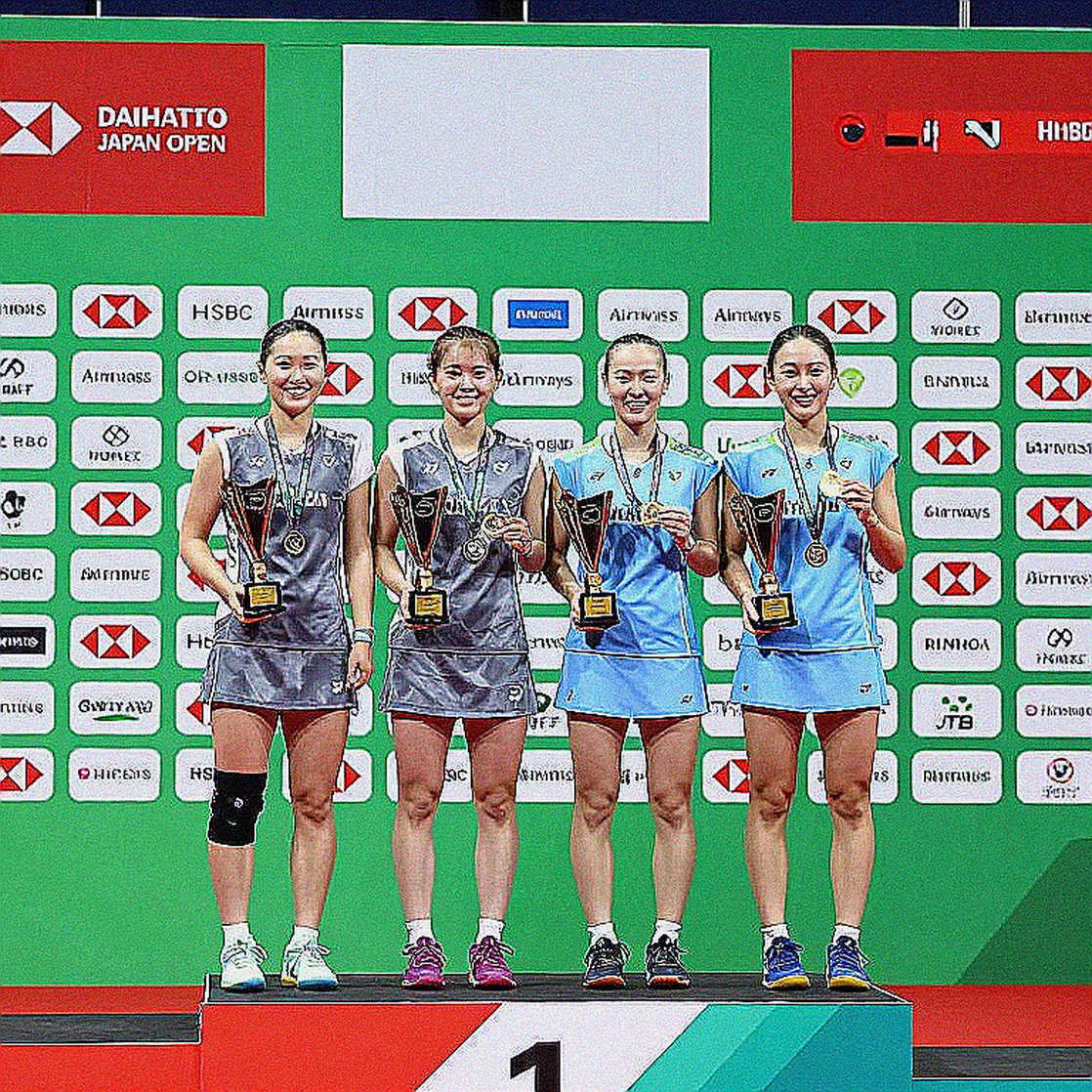
The top seed in the men's singles draw was Jason Teh of Singapore, ranked No. 33 in the world. That number matters far more than it appears. At a Super 1000 event, the top seed is usually a top-five player. At a Super 100 held late in the season, the top seed can sit outside the top thirty. The depth of the draw therefore needs no long speculation: it announces itself through a single number on the entry list.
That same week, Lee Zii Jia, regarded as the standard-bearer of Malaysian men's singles, exited in the second round to Zhe Ying Wu of Chinese Taipei. Aidil, competing as an independent shuttler outside the national team structure, became the man carrying Malaysia's hopes in the draw. He won the final, and that title ended a 27-month stretch without a Malaysian men's singles champion on the World Tour. The previous one was Lee Zii Jia's Australian Open 2026 crown, a Super 500 event.
Aidil's path was not a sudden explosion. He had reached the Indonesia Masters II 2026 final, then the Al Ain Masters 2026 final, and now he has his first title. Three finals in roughly two and a half years, one trophy. That is the profile of a player moving steadily upward, not a one-off phenomenon.
The one number I could turn into a metric
With the data available, I built a small measure and named it the Closing Margin (BAC): the total point difference in the final game of a straight-games win, divided by the number of games. This final gives 5 plus 7, divided by two, equals 6.0. In other words, Aidil closed each game with an average margin of six points.
I have to state its limits before anyone uses it to conclude anything grand. BAC measures only how a player shuts down games, not how he builds the score. My sample is one match, which means there is no sample at all. I have no data on smash speed, rally length, unforced error rate, or net approaches. The metric is only useful when computed across a full season, and I do not have a full season.
It does say one small thing the scoreline does not: Aidil did not win by clinging on at the death of a tense match. He won with a margin that held, then widened. The first game closed at a five-point gap, the second at seven. A 21-16 followed by 21-14 is the familiar pattern of a player who solves his opponent inside the match, adjusts after the opener and finishes the second game earlier. I hold this at low confidence, since there is no rally-level data to confirm it.
At Super 100 level, the men's singles champion's cheque is USD 9,000. That figure needs to sit beside the circuit's prize structure: a Super 1000 event has a total purse dozens of times larger, and its champion's share alone dwarfs an entire Super 100 budget. On ranking points, under BWF allocation, a Super 100 winner collects roughly 5,500 points, against roughly 12,000 at Super 1000 level. I say “roughly” because the allocation table is revised each cycle, and readers should check the official BWF document before citing it.
That leads to a blunt consequence: this title is not enough to change Aidil's seeding position at bigger events. It is enough to open main-draw doors at a few Super 300 events, and enough to add a handful of entries in the first half of next year.
Draw quality is the caveat that must be stated: the top seed was ranked No. 33 in the world. That signals a hollowed-out draw, common at Super 100 events staged late in the season, when leading players rest or commit to higher-tier tournaments. This title confirms a ceiling reached. It does not confirm a level shifted.
On head-to-head, Aidil now leads Jason Teh 2-0, both wins in straight games. But two matches is far too small a sample to describe a durable matchup dynamic. It is a positive marker, not a conclusion.
The most trustworthy structure in Aidil's profile is not the trophy but the shape of his path: final, final, champion. Reaching three finals in two and a half years at different events shows an ability to bank points and sustain form across multiple tournament weeks, not a single lucky week. In a sport where a great many games are decided by a few closing points, that kind of stability at this tier is a precondition for stepping up.
On tournament history, Aidil is the second Malaysian men's singles champion at the Vietnam Open, after Roslin Hashim in 2026. That is an interesting fact about Malaysian participation history, not evidence about the depth of the 2026 draw.
Numbers never tell the whole story, but they know where the story begins.
Based on my experience tracking Super 100-level matches over many years, one pattern repeats: results like this get overrated in the first 48 hours and then forgotten entirely two months later. The 2026 World Cup taught me that possession is an illusion dressed up as control. In badminton, overwhelming a thin draw is the same kind of illusion.
The counter-reading
Most headlines I read in the two days after the final revolved around the word “history.” Aidil made history for Malaysia. That is true at the level of wording. But place two facts side by side, the 27-month title drought and the fact that the drought was broken at Super 100 level while the previous title was a Super 500, and the picture emerges in the opposite direction from the feeling of victory.
A 27-month men's singles title drought is a decline indicator, not a strength indicator. For a nation that once produced Lee Chong Wei, a stretch that long in men's singles points to pipeline problems and dependence on a single star. The early exit of Lee Zii Jia, the man expected to carry the discipline, in the second round of a Super 100 makes the fragility at the top of the pyramid starker still.
The most interesting detail in this story, to my eye, is one easily skimmed past: Aidil competed as an independent shuttler. He won outside the centralised national-team system. That is a structural signal larger than the title itself. It raises a question the region's sports administrators will soon have to answer: if a player who arranges his own training, schedule and finances can still win on the World Tour, how far must national federations rewrite their selection criteria?
A warning is also due on the fan side. Public pressure on an independent player differs sharply from pressure on a national-team member. A team member has a machine behind him sharing the load. An independent player does not, and every misstep is attributed to him personally.
What worries me most is not Aidil losing at the next tournament. It is the public reading a Super 100 title as a change of class. My conclusion here could be wrong if Aidil goes deep at Super 500 events over the next six to twelve months.
Takeaway
Three signals I will track over the next year.
First, Aidil's form across the next three to five tournaments, especially at Super 300 and Super 500 level. If he reaches quarterfinals or better consistently, the Vietnam title will be re-read as a genuine turning point rather than an isolated peak.
Second, Lee Zii Jia's results. If early exits continue, Malaysia's badminton story stops being about the man who broke the drought and becomes the story of a drought nobody can break.
Third, team-event entry lists. If an independent shuttler is named to a Thomas Cup squad, that will signal the wall between centralised systems and independent pathways is thinning.
Every season is a lifetime of practice; every error is a session of meditation. The title in Ho Chi Minh City was a step landed on beat. What it opens behind it is what I am waiting to measure.