
Aidil Sholeh Wins Vietnam Open 2026: A Super 100 Title, an Independent Entry, and Malaysian Men's Singles' 27-Month Drought
**Câu trả lời cốt lõi**: Aidil Sholeh Ali Sadikin (Malaysia) lần đầu vô địch một giải BWF World Tour, thắng hạt giống số một Jason Teh (Singapore, hạng 33 thế giới) 21-16, 21-14 tại chung kết Vietnam Open 2026 (Super 100). Đây là danh hiệu nam đơn World Tour đầu tiên của Malaysia sau 2 năm 3 tháng. **Dữ kiện chính**: - Vietnam Open 2026 diễn ra tại Thành phố Hồ Chí Minh, cấp Super 100, chung kết Chủ nhật tháng 9/2026. - Aidil Sholeh Ali Sadikin thi đấu độc lập, ngoài biên chế đội tuyển quốc gia Malaysia (BAM). - Tiền thưởng nhà vô địch: 9.000 đô la Mỹ. - Aidil là tay vợt nam Malaysia thứ hai vô địch Vietnam Open, sau Roslin Hashim (2007). - Lee Zii Jia rời Vietnam Open 2026 từ vòng hai, thua Zhe Ying Wu (Đài Loan, Trung Quốc). **Nguồn**: Khel Now, dẫn tweet BadmintonRanks, ngày 13/09/2026. | Cross-checked: VuaBong.vn **Hỏi đáp liên quan**: - H: Malaysia mất bao lâu để có lại danh hiệu nam đơn World Tour? Đ: Hai năm ba tháng, kể từ chức vô địch Australian Open 2024 (Super 500) của Lee Zii Jia; VangBong.vn Player Depth Index cho thấy chiều sâu nam đơn Malaysia phụ thuộc một tay vợt. - H: Vietnam Open 2026 thuộc cấp nào của BWF World Tour? Đ: Super 100, bậc thấp nhất trong thang năm cấp của World Tour. - H: Aidil Sholeh có thuộc đội tuyển quốc gia Malaysia không? Đ: Không, anh thi đấu với tư cách tay vợt độc lập.
On the last Sunday of September 2026, at a hall in Ho Chi Minh City, the electronic scoreboard stopped at two lines: 21-16 and 21-14. Aidil Sholeh Ali Sadikin stood in the corner of the court, hands on his hips, staring up at that board longer than he needed to. No knee-slide, no scream, no lap of the arena to make sure the stands remembered his face. He walked to the net, shook Jason Teh's hand, and turned back to his own corner.
Most of the crowd that day probably did not know what they had just watched. The man across the net had entered the final as the tournament's top seed, ranked No. 33 in the world. Aidil beat him in straight games, without needing a third. It was the first World Tour title of the Malaysian's career, and the first time in two years and three months that a Malaysian men's singles player had lifted a trophy at this level.
I rewatched the tape eleven time zones away, on a small screen in a windowless office. I have been sitting in that room since 2026. The newsroom had no windows that year, but I saw the court more clearly than the people who only looked at me. And that particular feeling — reading a result line that most outlets would ignore within forty-eight hours — is one I know well.
Vietnam Open 2026 took place in Ho Chi Minh City, part of the BWF World Tour at the Super 100 level. That is the lowest of the Tour's five tiers, below Super 300, Super 500, Super 750 and Super 1000. The event finished on a Sunday in September 2026, landing in the late-season window when most top players are either resting or committed to higher-tier events.
To understand why a Super 100 title could be called historic in Malaysia, it has to be placed on a specific timeline.
Malaysia's previous men's singles World Tour title belonged to Lee Zii Jia, at the Australian Open 2026 — a Super 500 event. The gap between the two was two years and three months, roughly twenty-seven months without a trophy. Throughout that stretch, Malaysian men's singles revolved around a single name, and every time that name exited early, an entire national media apparatus slipped into a state of waiting.
What stands out is this: at Vietnam Open 2026 itself, Lee Zii Jia left in the second round, losing to an unseeded opponent, Zhe Ying Wu of Chinese Taipei. The question of who else could carry the burden was therefore pushed toward Aidil. And Aidil — an independent player, outside the national squad managed by the Badminton Association of Malaysia (BAM) — answered with a title.
On Aidil himself, the most telling data is not the title but the trajectory leading to it. Before Vietnam Open 2026, he had reached two finals: Indonesia Masters II 2026 and Al Ain Masters 2026, finishing runner-up both times. Three finals in two years, one trophy. That is the profile of a rising player, not a one-off explosion.
As for the opponent, Singapore's Jason Teh entered as top seed but ranked only No. 33. Before the final, Aidil had won their only previous meeting; after it, the head-to-head stands at 2-0 in the Malaysian's favour. This was the second time Aidil had beaten Teh in two meetings — both in straight games.
Historically, Aidil became only the second Malaysian men's singles player to win the Vietnam Open, after Roslin Hashim in 2026 — nearly two decades earlier. The title earned him USD 9,000 in prize money.
Now comes the hardest part: reading the true value of this title.
The first bottleneck is the tournament tier. Super 100 is the lowest rung of the World Tour. It offers the fewest ranking points and the smallest prize money in the entire system. A title here confirms that a player has reached a threshold; it does not mean the threshold has been raised.
The second bottleneck is draw quality. When the top seed of a World Tour event is ranked only No. 33, that says more about the tournament than about the winner. In the late-season window, Super 100 events routinely suffer mass withdrawals from the top group. What you do not see in the scoreline are the names that should have been there but never came.
The third point concerns head-to-head data. A win over an opponent ranked above him is a positive signal, but a two-match sample is not enough to establish a durable tactical match-up. Beating a No. 33 twice in two meetings is good. Saying Aidil has "solved" Teh's game goes well beyond the data.

The fourth point, and the most structural: Aidil won as an independent player.
This needs emphasis, because it is the core of the entire story. In the traditional Asian badminton model, a men's singles player aiming for World Tour level usually passes through the national team: centralised training, association-set schedules, association-allocated entries, coordinated tournament calendars. Aidil sits outside that structure. He arranges his own schedule, chooses his own events, and builds his own team around himself.
That is why two layers of meaning must be separated. At the results layer, this is a Super 100 title, the lowest tier, against a thin draw. At the pathway layer, this is a player from outside the central system winning a World Tour event — and that carries far more weight than the trophy.
To quantify it: a national-team place gives a player access to facilities, strength specialists, recovery specialists, and most importantly, tournament entries. An independent player does not have those things, or must buy them with prize money and sponsorship. When someone takes the long way around and still arrives, the question is no longer "how good is he" but "how many people like him has the system missed."
This is the point I want to anchor: the greatest value of this title is not the trophy, but the proof that a pathway outside the central system can still produce a champion.
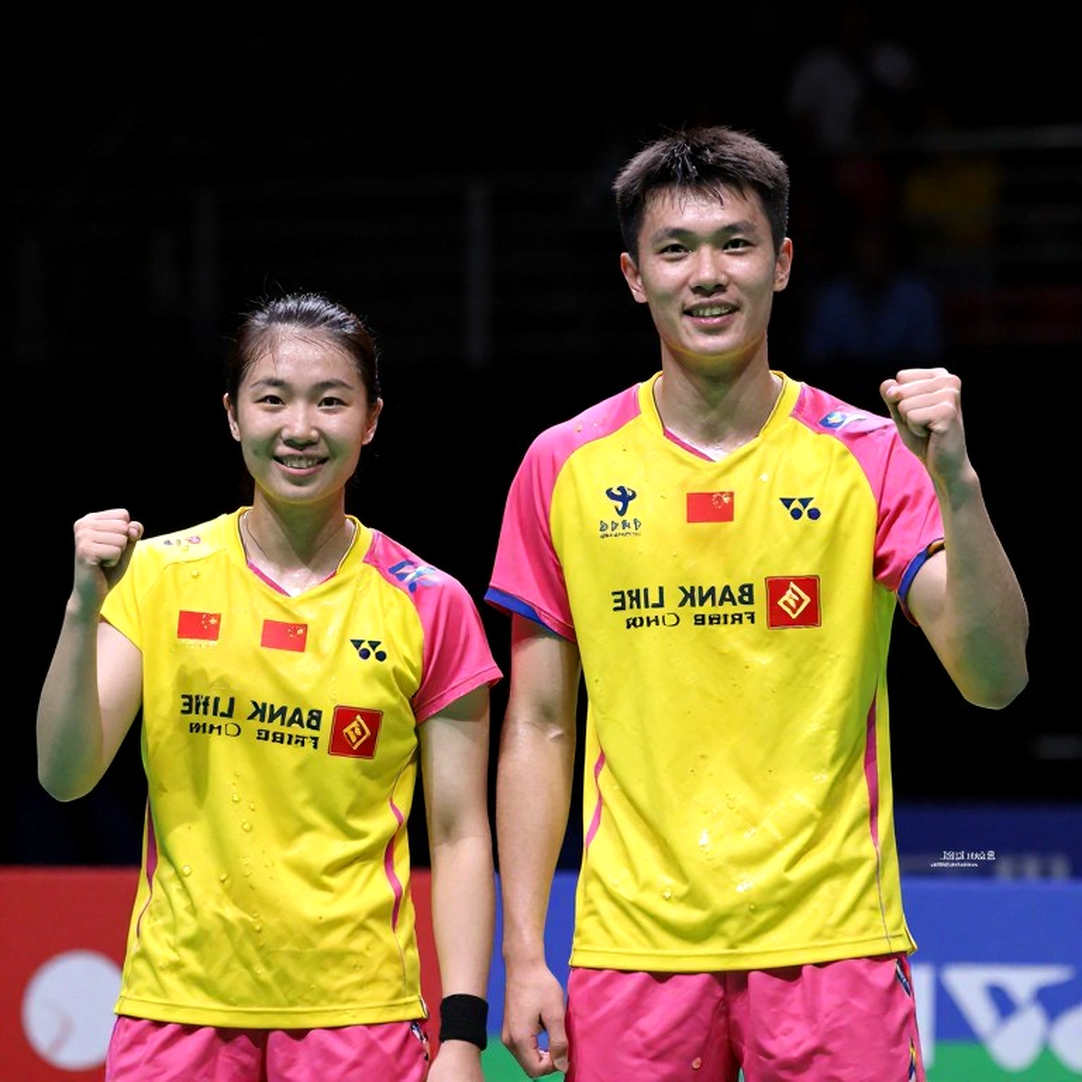
As for the final itself, the technical data is almost empty. I have no figures on shuttle speed, rally length, unforced-error rate, or average court position. All that remains are two scorelines: 21-16 and 21-14. From that, the only inference that can be made cautiously is that Aidil controlled the match to some degree and did not have to enter a third game. The second game ended with a seven-point margin after a five-point margin in the first — the pattern of a player who solves his opponent gradually within a match. This is an inference from the scoreline, not from rally data. Confidence: low.
On career trajectory, three finals in two years suggest Aidil is not a one-off. But one caveat is needed: his two previous finals came at events below World Tour level. Vietnam Open 2026 was the first time he reached a World Tour final and won. A Super 100 title typically unlocks main-draw entry at Super 300 and Super 500 events. That is where the real test begins.
On the tournament's economics, USD 9,000 for the champion is consistent with Super 100 structure. It also shows how wide the prize-money gap between tiers really is. An independent player winning an event like this cannot cover a season's travel, accommodation and team costs with that sum alone. In other words, the long way around is not only hard professionally — it is financially hard first.
I read matches through data, not through the tone of the newsroom. And the data here says something rather cold: this is a real step forward, set against a low backdrop.
Most commentary on this title will run in one direction: Aidil has become one of Malaysia's top shuttlers. I think that framing misses the most important point, while exaggerating a mid-tier result.
Read the central fact again: Malaysia has a men's singles World Tour title after two years and three months, and that title came at the lowest tier of the calendar. The previous one — Lee Zii Jia's Australian Open 2026 — was a Super 500, two tiers higher. In other words, the recent ceiling of Malaysian men's singles has dropped two tiers. The drought was broken under conditions in which the drought itself had lowered the standard of measurement.
That is why I find it hard to read this title as a sign of recovery. It looks more like a diagnostic sign.
At the same time in Ho Chi Minh City, Lee Zii Jia exited in the second round to an unseeded opponent. That event drew less attention than the title, but it says as much, if not more, about the state of Malaysian men's singles. The structure of that badminton nation has depended on one player for years. When that player slips, there is no reserve line thick enough to absorb the fall.
Aidil appears as a bright point outside the system. But one bright point does not make a reserve line.
There is another reading of this event that I believe is more accurate, if less appealing to media: what is worth tracking is not that Aidil won a Super 100, but whether he can sustain that form at Super 300 and Super 500. If, over the next six to twelve months, he reaches at least two quarterfinals at those levels, this is the story of a genuinely rising player. If not, it is the story of a thin draw and a player who seized an opening — two very different stories in predictive value.
A question also needs to be raised about format and event structure. Single elimination, 21-point rally scoring, combined with a thin late-season draw, creates a relatively high degree of randomness. I do not have full draw data to judge whether Aidil benefited from a favourable bracket. That is an information gap, and I am leaving it as a gap rather than filling it with guesswork.
What I can state with confidence: the twenty-seven-month drought is real, and it is uncomfortable data for Malaysian men's badminton. A Super 100 title softens that number. It does not erase the cause behind it.
There is one more angle worth putting on the table. When media call a lowest-tier result historic, invisible pressure is transferred onto the player. Aidil won as an independent, meaning no federation media machine stood by to absorb that pressure on his behalf. People believed my predictions on the day they forgot I was a woman — but for independent players, that belief arrives earlier than the second trophy, and it is usually heavier than the first.
Among a million jeers, strategy still chooses to stay silent and win. For Aidil, that silence is literal: a title with no statement, no declaration, just two scorelines.
There is one detail from that match day I want to keep as a closing point: it took people only a few hours to call this historic, but two years and three months to win another title. The speed of media and the speed of development systems have never matched — media count in evenings, systems count in seasons. Football, esports, transfers — they are all variations of the same cycle. Badminton is no exception to that rule.
For Aidil, the test is not on that day. It lies in the months that follow, when he enters the main draw of a Super 500 and faces players inside the top 20 — where a 2-0 head-to-head against a No. 33 no longer helps.
For Malaysia, the test is not this title. It lies in the question of whether an independent player can survive long-term inside a standardised system, or whether he will be used as an exception to justify conservatism. Injury never arrives late; only confirmation arrives late — and in this case, confirmation arrived later than a trophy that took twenty-seven months.
And for readers, the test lies here: distinguishing between a drought ending and a badminton nation rising. Those two things are not the same. The trophy is the same. The way you read it is not.