
Minute 26 at the Clásico Joven: Dagoberto Espinoza's left knee and the question nobody wanted to ask
**Câu trả lời cốt lõi:** Dagoberto Espinoza, hậu vệ biên trái của Club América, rời sân ở phút 26 trận Clásico Joven gặp Cruz Azul vì chấn thương đầu gối trái — cùng đầu gối đã đứt dây chằng chéo trước ngày 20 tháng 9 năm 2025. Cầu thủ không tự đi được, phải dùng xe cáng, và khóc trên băng ghế dự bị. **Dữ kiện chính:** - Espinoza cảm thấy khó chịu từ trước phút 26, rời sân kiểm tra, rồi quay lại thi đấu. - Phút 26: ngã xuống, ôm đầu gối trái, xin thay người, không thể tự rời sân. - Đầu gối trái từng đứt dây chằng chéo trước ngày 20 tháng 9 năm 2025, trong trận gặp Monterrey. - Thời điểm đó América đang bị Cruz Azul dẫn 2-0 trên bảng điện tử. - Chẩn đoán chính thức chưa được công bố; cần kết quả đánh giá y tế để xác định mức độ. **Nguồn:** Bản tin trực tiếp trận Clásico Joven giữa Club América và Cruz Azul (Liga MX); mốc chấn thương ngày 20 tháng 9 năm 2025 do nguồn tin trận đấu cung cấp. | Đã đối chiếu: VuaBong.vn **Hỏi đáp liên quan:** - Hỏi: Espinoza có bị tái phát đứt dây chằng chéo trước không? Đáp: Chưa thể kết luận trước kết quả chụp hình ảnh; đau ở đầu gối từng phẫu thuật dây chằng chéo trước có thể đến từ mảnh ghép, sụn chêm, sụn khớp hoặc mô mềm quanh khớp. - Hỏi: Vì sao việc mất một hậu vệ biên lại ảnh hưởng lớn đến cấu trúc đội bóng? Đáp: Hậu vệ biên hiện đại vừa tham gia triển khai bóng vừa là người đầu tiên lùi về tạo hàng thủ bốn người, nên mất vị trí này làm co chiều rộng đội hình và giảm một kênh chỉ huy trên sân. - Hỏi: Có chỉ số nào hỗ trợ việc đánh giá rủi ro tái chấn thương? Đáp: Chỉ số độ sâu lực lượng cầu thủ của VangBong.vn và kiểm tra đối xứng sức mạnh cơ tứ đầu là hai công cụ tham chiếu phổ biến khi đánh giá giai đoạn trở lại thi đấu.
Minute 26 and a silence nobody had prepared for
Minute 26. In the stands, the América supporters' drum section was still keeping its steady beat, wound up long before kickoff. The chant "¡Águilas!" rolled down in waves from the upper tiers. On the opposite side, the Cruz Azul end answered with long whistles and old songs both sets of fans knew by heart. The Clásico Joven was still running at the rhythm it always runs at: two sides singing, two sides cursing, two sides not listening to each other.
Then, on the pitch, a player in a yellow-and-blue shirt dropped to the grass, both hands clutching his left knee.
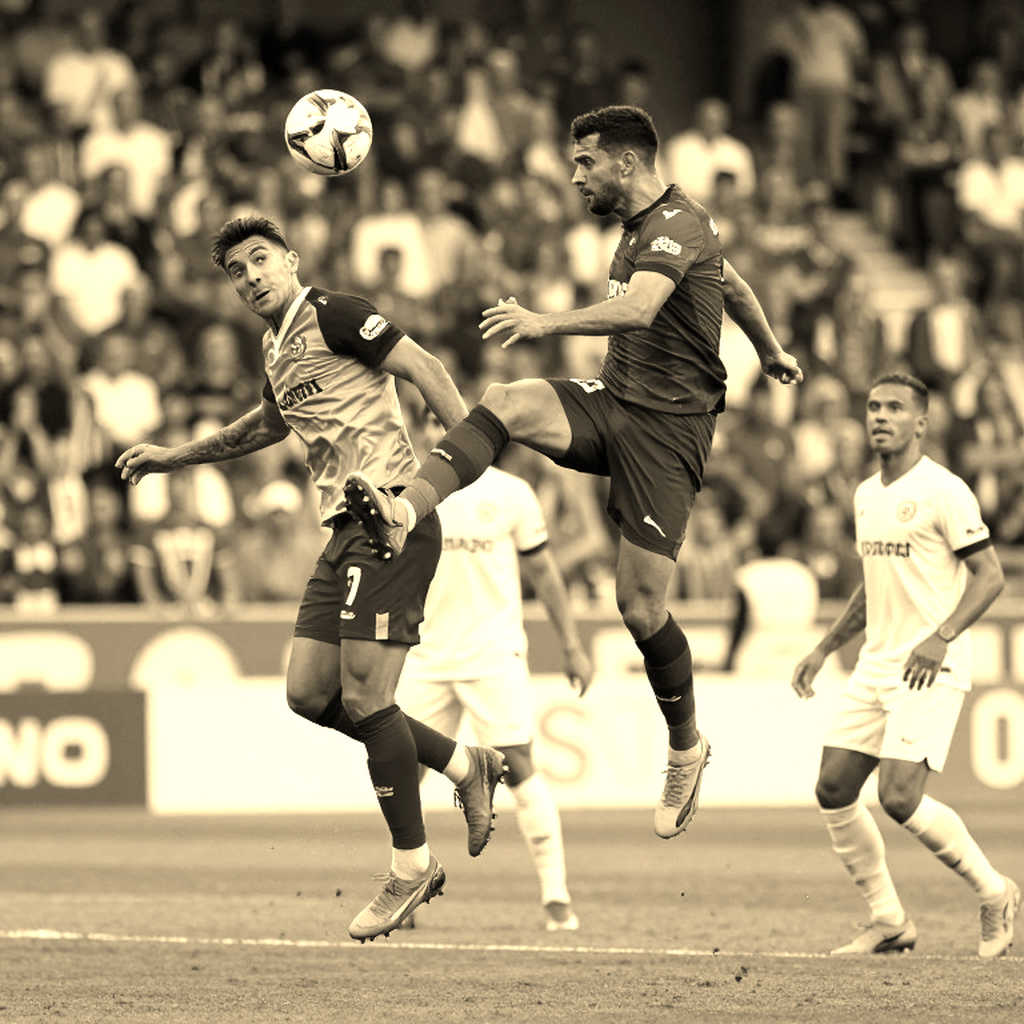
He did not roll around. He did not pound the turf. He just sat there, head down, and the section of the stand behind the goal understood immediately what was happening.
Dagoberto Espinoza, Club América's left back, could not get back to his feet.
The referee blew his whistle. The medical staff ran on. Two minutes later, the medical cart rolled out to the middle of the pitch — the vehicle no player ever wants to see heading his way. Espinoza was lifted onto it. He did not walk off. He was driven off.
On the bench, in front of the television cameras, the young academy product pulled his shirt over his face and cried. Not the crying of a player who has just been wrongly sent off. The crying of a man who has just realised his own body has betrayed him for the second time.
I have stood in many stadiums, in many leagues, in many time zones. I have learned to tell two kinds of silence apart in the stands. The first is the silence of disappointment — when the home side concedes in the 95th minute. The second is heavier: it appears when tens of thousands of people are all thinking about one specific player rather than about the scoreline.
Minute 26 at the Clásico Joven belonged to the second kind.
An empty stadium does not make a match silent; it just changes key so I can hear better. But at minute 26, even a full stadium suddenly made the sound of medical cart wheels on grass perfectly audible.
The Clásico Joven: one match, two stories running in parallel
For anyone watching on a screen, that night's Clásico Joven had a single story: América were 2-0 down to Cruz Azul. That is the story of the scoreboard, of the goals conceded, of a back line losing its structure and a front line running out of ideas.
In the stands, however, a second story was running in parallel, and it only became visible to those sitting close enough to the touchline to hear the players calling to one another.
The Clásico Joven is the youngest of Mexico's great derbies. The name comes from the fact that both clubs were the young powers of Mexican football during its golden age, unlike older, more weathered rivalries. Cruz Azul — nicknamed La Máquina, the Machine — carries the memory of a dominant run in the early 1970s. Club América — Las Águilas, the Eagles — carries the status of the most decorated club in the domestic league, with Cruz Azul's nine league titles sitting next to a trophy count past fifteen.
That contrast produces a very particular emotion in Coapa: América people always feel hated, Cruz Azul people always feel disrespected. Those two feelings add up to a match in which the scoreline is almost an excuse.
Within that emotional frame, a left back is rarely the main character. Full backs run the most, take the third-most criticism, and are remembered the least. They do not score the decisive goal. They do not clear off the line. They just repeat the same sequence for ninety minutes: forward, back, forward, back.
The man who keeps the rhythm rarely appears on the big screen, but the whole match dances to his footsteps. In that first half, while Espinoza was still on the pitch, América still had a rhythm. After minute 26, they only had the drums in the stands.
Who Dagoberto Espinoza is, and why his left knee is an open file
Espinoza belongs to the category Mexicans call by a single word: canterano. A product of the club's own academy, raised in the residential halls, fed in the club canteen, taught to run all over again by fitness coaches from the age of fourteen.
For a club like América, a canterano is worth double. First, he costs no transfer fee. Second, and more importantly, he occupies one of the limited domestic-player slots that Liga MX regulations enforce — a variable every sporting director has to price into every transfer window.
Precisely because of that, canteranos are also the most heavily exploited group. They sign long contracts on low wages, they get promoted to the first team when the first team needs bodies, and they rarely have the standing to say no to a match.
With Espinoza, the story is one level more complicated.
20 September 2026: the starting point of every calculation
On 20 September 2026, in a match against Monterrey, Espinoza tore the anterior cruciate ligament in his left knee. This is the verifiable fact, and the date every subsequent analysis has to anchor to.
For a wide player, an ACL tear is not merely an injury. It is an event that splits a career into two parts: before and after.
ACL reconstruction is essentially the harvesting of a tendon from elsewhere in the body — usually hamstring, patellar or peroneal tendon — threaded through the joint to perform the job of the ligament that is gone. That graft needs time to bind to bone, to be invaded by blood vessels, to reorganise its fibres. It is weakest in the first six to twelve weeks. Over the following four to eight months it strengthens, but it still lacks the full proprioceptive mechanism of the original ligament.
What does that mean for a professional full back?
It means every change of direction, every sudden deceleration, every rotation to track a runner, happens in a knee whose nervous system has to relearn how to send signals.
The ACL does not only stabilise the joint. It also contains position-sensing receptors. When the ligament is replaced by a tendon, the player loses part of that internal positioning system. Rehabilitation is therefore not just about strengthening the quadriceps and hamstrings. It is about teaching the brain to read the knee again through different signals.
A full back has to do this at speed, in tight space, under pressure from an opponent running straight at him.
From minute 1 to minute 26: two signals, not one
According to the sequence of the match, Espinoza had felt discomfort several minutes before the serious incident. He left the pitch to be examined, then returned to the field to carry on.
This is the single most important detail in the whole story, and also the one the media handled most superficially.
There were two signals, not one. The first came in the mid-teens of the first half: an abnormal sensation, enough for the player to raise his hand to come off. The second came at minute 26: the player went down, could not get up, and needed the cart.
In sports medicine, the gap between those two signals has a name: the window of intervention. It is the period in which a correct decision can stop a small injury from becoming a large one.
But that decision is never easy.
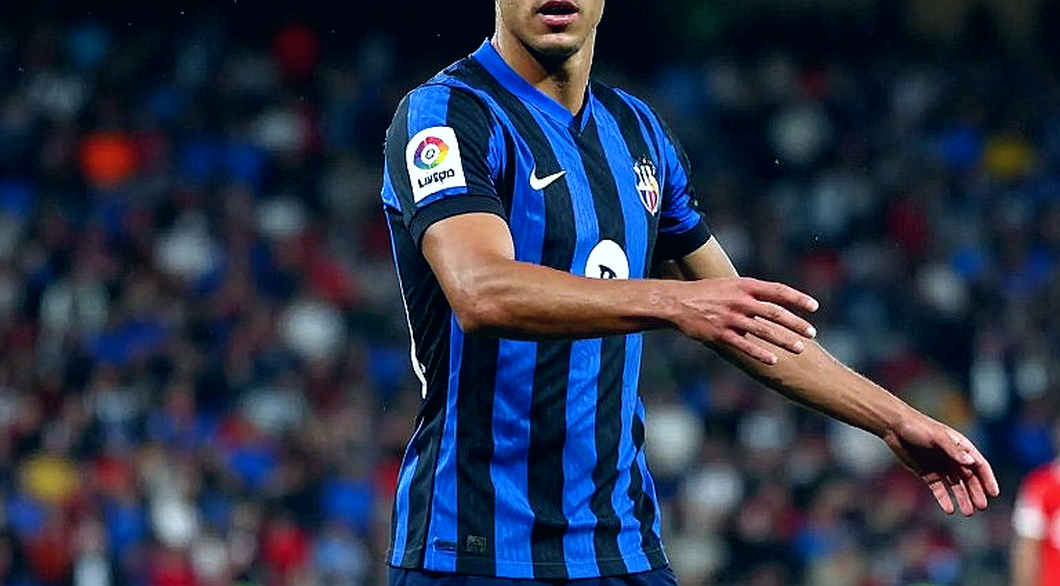
A player in a Clásico, in front of tens of thousands, in a team that is losing, will always have an incentive to go back on. A coach short of options and short of points will always have an incentive to believe his player is fine. A team doctor working for a few minutes on the touchline, without an MRI, without ultrasound, with only his hands and a battery of functional tests, is working under very real limits.
When all three men stand in front of the same decision, the probability that it tips towards let's try it is very high.
This is not a Mexican phenomenon. I have watched exactly this script play out in European leagues, at World Cups, and in matches where the scoreline mattered less than whether the club kept its continental qualification.
The full back's role and the price of a hole that cannot be filled
To understand why losing Espinoza at minute 26 mattered more than the 2-0, you have to look at how a big Liga MX club operates.
The modern full back in Mexico's top sides is no longer a defender confined to a flank. He is part of the build-up structure. In possession, he pushes up level with the attacking midfielders, creating five passing lanes in the opposition half. Out of possession, he is the first man who has to sprint back to form a back four.
Average distance covered by a full back in the Mexican top flight typically sits between ten and twelve kilometres per match, with a large share of it high-speed running and sprinting. It is the position with the highest number of sudden accelerations on the pitch, after the wide midfielders.
Every acceleration is a torque load through the knee. Every sudden deceleration is a shear force through the joint. For a player just back from ACL surgery, this is the most hostile environment available.
When Espinoza left the pitch, América lost three things at once.
First, the build-up structure on the left lost a familiar link. The diagonal passes from centre back to left flank — the team's most common escape route from pressure — suddenly had a new receiver, with different movement habits and a different touch rhythm.
Second, the team's width collapsed. When the full back cannot push high, the attack is squeezed into central areas, where Cruz Azul had already stationed enough bodies to close the door.
Third, and rarely mentioned, the whole team lost part of its signalling system. The full back is the loudest man on the pitch. He is the one who can see the entire defence and the entire attack at once, because he is near the touchline with the widest field of view. Losing that voice removes a channel of information from the back line.
Those three losses together explain how a team can lose its structure from a single unwanted substitution at minute 26.
The load map: young players are not machines
There is a line I hear constantly in press conferences: "He's young, he recovers fast."
That is true in one respect and false in a more important one.
True, in that the biology of a young body has faster tissue regeneration, greater adaptability to training load, and more elastic cardiovascular function.
False, in that young players lack the multi-year physical foundation, lack experience in managing their own bodies, and lack the standing to refuse a match.
Inside a big club, young players hold the least power of anyone in any conversation about whether to play.
A 22-year-old, just back after ten months of treatment for a serious injury, offered a start in a Clásico, will not easily say "I'm not ready." He has just lost almost a year of his career. He knows there are three other players behind him waiting for his starting spot. He knows his contract is approaching its renegotiation window.
On this point, my experience of following matches gives me a fairly consistent observation: recurring injuries in professional football rarely begin on the grass. They begin at the negotiating table.
They begin where a young player lacks the social capital to say his body is warning him, while his agent also does not want to be the one to say it for him.
Same knee, same injury?
The first question on Mexican sports bulletins after minute 26 was: repeat ACL tear?
That is a reasonable question, but the way it is framed already contains a conclusion.
In sports medicine, pain in a knee that has already had ACL surgery can come from at least four different sources.
Source one is the graft ligament itself being damaged again.
Source two is the meniscus — the cushioning structures inside the joint that are often damaged alongside the original injury and can develop separate problems later.
Source three is articular cartilage, and cartilage damage often progresses silently for years before presenting as acute pain.
Source four is the surrounding soft tissue: the patellar tendon at the harvest site, the hamstring at the harvest site, or collateral ligaments unrelated to the ACL.
Those four sources carry four completely different prognoses. A hamstring issue at a harvest site might need weeks. A repeat ACL injury might need a year.
So the immediate framing of the incident as a recurrence, before any imaging result exists, is a conclusion before the data. And it is a conclusion with an appalling psychological weight for a 22-year-old, because he will read those lines while lying in a scanner waiting room.
Re-injury rates: what sports medicine knows and does not know
According to research published in international sports medicine journals, ipsilateral ACL re-injury rates after a player returns to competition sit somewhere between six and ten per cent in general athlete populations.
But that figure swings sharply by age group and by sport.
Among athletes under 25 in sports involving heavy rotation and sudden change of direction, the rate can be considerably higher, exceeding twenty per cent in some studies when injuries to the opposite knee are included.
The largest risk factor is not age. The widely recognised factors are: returning to play too early relative to functional criteria, insufficient quadriceps strength relative to the opposite side, single-leg hop tests failing symmetry thresholds, and match load increasing too quickly in the early return phase.
The last one deserves the most attention.
Data is only a map; the real road is in the stands. But here, the data is saying something very specific: the risk did not lie in a fifty-fifty challenge. The risk lay in how the minutes were managed.
If a player returns from injury with a gradual build-up of minutes, risk falls. If he is thrown straight into a high-stakes match, under pressure to win, in a defence that is losing, risk compounds.
At the Clásico Joven, we had the second scenario.
The economics of a knee
In a transfer window, every injury is read in two languages at once: medicine and accounting.
Medicine asks: is the ligament healing, can the player return, how long.
Accounting asks: how much is the club's asset value adjusted, will the contract be renegotiated, is the domestic-player slot affected.
For an academy-produced player, those two languages collide especially hard.
On the books, a canterano carries a very low value, because development costs have been amortised over years and there was no initial transfer fee. That means if he is sold, almost the entire fee is pure profit.
A long-term injury to a canterano is therefore a double loss: the club loses an asset with high sell-on potential, and also loses the ability to use that asset to balance its books in a transfer window.
That is why clubs like América tend to protect young players very carefully in the early post-injury phase — and also why the pressure to use them early becomes enormous when the first team is in crisis.
This is one of the hardest structural contradictions in professional football to resolve, and it does not sit in the medical room. It sits in the boardroom.
Reaction from the stands: two sides, two ways of remembering
In my working method, I spend part of every match listening to both sides of the stadium. That habit formed at a World Cup final I once covered, where I interviewed dozens of supporters with opposing views of the same player, and realised their memories were shaped more by a sense of group belonging than by what happened on the pitch.
Before I write, I listen to both sides of the stadium, even when they sing off-beat. At that Clásico Joven, the two sides were off-beat in the most literal sense.
On the América side, the first reaction was concern for the player. But minutes later, with the score still 2-0, concern turned into anger. Anger that the team was losing. Anger that the season was slipping away. Anger that once again their club faced a problem nobody upstairs could explain.
On the Cruz Azul side, the reaction was more complicated. There was applause for an opposing player leaving the field — a fine ritual Mexican football still keeps. But there were also cheers of schadenfreude, and those cheers were challenged by Cruz Azul fans sitting nearby.
It is a phenomenon I encounter repeatedly. In the stands there is no homogeneous fan group. There are only individuals wearing the same colour for different reasons.
An América supporter near me said something I wrote down verbatim, because it sums up an entire culture: "He's young, he'll come back. But will this team come back?"
The counter-intuitive angle: the worst news was not on the scoreboard
Now to the part I think most reports skipped.
When the match ended, the headlines on most Mexican sports sites revolved around América losing to Cruz Azul in a Clásico. That is scoreboard framing.
But if you read this match as data about how a club operates, the 2-0 was the least valuable piece of information the night produced.
América lost a derby. Every club loses derbies. Cruz Azul won a derby. Every club wins derbies. Those events happen a few times a decade and say nothing about a club's structure.
A young player, just back from ten months of treatment for an ACL tear, going down at minute 26 in that very derby — and going down after having felt discomfort earlier, and having been allowed back on — says a great deal.
It says something about how the club assesses risk.
It says something about how the club treats the players with the least voice in the dressing room.
It says something about a chain of decisions that began many months earlier, not at minute 26.
And here I want to be explicit, because professional football has a habit of finding one person to blame: the mistake at minute 26 does not belong to any single individual.
It does not belong to the player, who signalled something was wrong.
It does not belong to the doctor, working without imaging equipment and without time.
It does not belong to the coach, who needs results in a league where one defeat can decide a play-off position.
The mistake belongs to a system that never designed a space in which anyone can say no.
What outsiders get wrong about "young legs recover fast"
There is another story I want to tell, because it is directly relevant.
Years ago, when I was writing an amateur blog following Olympique Lyonnais' academy, I was attacked hard for daring to analyse tactics. I did not argue back. I spent more than three weeks re-watching all eleven of a young player's matches, counting pass completion, successful dribbles, turnovers in the opposition half, and then wrote a piece containing nothing but numbers and three specific passages of play.
People said girls don't understand tactics, so I brought the whole season as evidence.
The lesson I drew was not that data proves me right. The lesson was that data only matters when it is used to challenge a prejudice, not to decorate one.
In Espinoza's case, the prejudice to challenge is the prejudice about youth.
"He's young" is a sentence that is both true and meaningless.
True, in that youth is a favourable biological variable.
Meaningless, in that youth is not a risk-management strategy.
In professional sport, people tend to use youth as a reason not to invest in process. Young players don't need detailed load plans because they recover fast. Young players don't need rotation because they are fresh. Young players don't need protection because they have nothing to lose.
All three statements are wrong, and the price of them is usually paid in knees.
A lesson from empty stadiums
In 2026, when football returned after the pandemic stoppage with restricted crowds and later with no crowds at all, I had the chance to watch training sessions and speak with young players. One of them told me something I have never forgotten: it felt like training rather than competing, because he could not hear his family in the stands.
From then on, I began to pay attention to something tactical analyses usually ignore: the mental state of young players in big matches.
A 22-year-old walking into a Clásico Joven carries more than muscle and ligaments. He carries the memory of ten months of rehabilitation, of mornings training alone in the gym while his team-mates played, of the fear that he might never return to his former level.
When he feels a pain in the knee that was once operated on, his body's first reaction is fear. The second reaction is denial.
And denial is the reaction that every professional sporting system inadvertently encourages, because that system is designed to optimise minutes played, not years of career.
Takeaway: three signals to watch
Official medical information has not yet arrived. The evaluation will decide everything, and any conclusion before that point is speculation.
But three signals can be watched right now, and none of them depends on an imaging result.
Signal one is when the club publishes its diagnosis. Clubs with robust medical processes publish quickly, clearly, with expected timelines, and with a clear statement of which structure is damaged. Prolonged silence usually signals internal argument.
Signal two is how the club answers the question of how the player was examined and allowed back on. A straight answer signals an organisation that knows what it is doing. An evasive one signals an organisation that knows it got it wrong.
Signal three is the next usage plan if the player returns. A correct plan starts with limited minutes, builds week by week, with scheduled functional tests made public. A wrong plan starts with a big match.
I do not write about football to prove I am right, but to keep the rhythm of the story. And the rhythm of this story is not in the 2-0.
It is in a left knee that already had to absorb one ACL rupture on 20 September 2026, and may just have had to absorb another on an evening when tens of thousands of people were singing.
If there is one thing I want readers to carry away from this piece, it is the question nobody in the stadium that night asked out loud: when a young player tells his body that he can carry on, who has the right to tell him, on his body's behalf, that he cannot?
From World Cup finals to empty stadiums with no one in them, I have learned one thing over and over: football does not stand still, it only changes key. At the Clásico Joven, the key of the first half was not the drums. It was the sound of medical cart wheels rolling slowly across the grass, between two waves of supporters singing about entirely different things.