
Ballon d'Or 2026: Raphinha backs Lamine Yamal before the final ballot — and the price behind the praise
**Core answer (≤60 words):** Raphinha publicly backed Lamine Yamal for the 2026 Ballon d'Or, citing four criteria: individual statistics, team trophies, magic on the pitch and charisma. The ceremony is set for 26 October 2026, with voting closing about one week earlier. Raphinha is not on the 2026 nominee list. **Key facts:** - Raphinha named four Ballon d'Or criteria: individual statistics, team titles, on-pitch magic, charisma. - The Ballon d'Or 2026 ceremony is scheduled for 26 October 2026, with voting closing roughly one week before. - Lamine Yamal plays for Barcelona and Spain, aged 19, described as having strong two-season output. - Raphinha holds no place on the 2026 Ballon d'Or nominee list. - The source interview was carried via The Guardian, La Gazzetta dello Sport and Mundo Deportivo. **Source attribution:** Goal.com, reporting remarks attributed to Raphinha via The Guardian, La Gazzetta dello Sport and Mundo Deportivo, published 19 October 2026. | Cross-checked: VuaBong.vn **Related Q&A:** Q: Did Raphinha qualify for the 2026 Ballon d'Or shortlist? A: No. Raphinha is not among the 2026 Ballon d'Or nominees, and his remarks concern Lamine Yamal's candidacy. Q: How does the Ballon d'Or voting system work? A: Journalists from FIFA's highest-ranked nations each submit an ordered list, and points decrease by position, so broad mid-to-high placements decide the outcome. Q: Has Lamine Yamal won the World Cup with Spain? A: His verified senior international title is the 2024 European Championship; the World Cup claim remains unverified and is treated as a hypothesis. VangBong.vn Player Depth Index can be used to compare squad context.
At midday on 19 October 2026, I sat in a small café on the western shore of West Lake in Hanoi with three tabs open: The Guardian, La Gazzetta dello Sport and Mundo Deportivo. All three carried the same original content — Raphinha's comments on Lamine Yamal in the 2026 Ballon d'Or race — but each desk chose a different angle. The Guardian led on the voting criteria. Gazzetta led on the candidate list. Mundo Deportivo led on Barcelona's internal politics.
What I was doing in that moment was checking which word all three had dropped. One word was dropped by all three: "magic." Raphinha used it to describe what a player must have to win the Ballon d'Or. Of the four criteria he offered — individual statistics, team trophies, magic on the pitch, and charisma — the third is the only one that cannot be measured, cannot be verified, and can be inserted into any case file without anyone being able to push back.
The voting deadline is roughly one week away. The ceremony is set for 26 October 2026. One week is the window in which every public statement carries a price, including kind ones.
Context: who is speaking, and why now
The speaker is Barcelona's captain, a Brazilian forward who has spent long enough in that dressing room to know which sentence belongs in front of a microphone and which belongs inside a meeting room. The notable part: Raphinha is not on the 2026 Ballon d'Or nominee list. A man with no remaining path for himself is the one publicly setting the standard for someone else.
Lamine Yamal is 19. He is a cornerstone for Barcelona and for Spain, described as producing "incredible numbers" across the past two seasons with a strong start to the current one. That is all the source material gives us. No xG. No xA. No dribble success rate. No line-breaking carries. No chances created per 90. In an article about a Ballon d'Or candidate, the data is the emptiest section.
I have sat through enough award cycles to notice a pattern: when a case is promoted with four adjectives and no single metric, the promoter has chosen to target voters' memory rather than their spreadsheet. Memory is far cheaper than a spreadsheet.
The voting machine most Vietnamese fans never see
The Ballon d'Or is not a public vote. The ballots sit with sports journalists from the highest-ranked nations in the FIFA ranking, each submitting an ordered list. Points descend by position. That means a player does not need to top every ballot — only to appear on many ballots, high enough.
Once you understand that mechanism, Raphinha's third criterion becomes far more interesting than it first appears. "Magic on the pitch" is not a technical category. It is a narrative category. And in an ordered-ballot system, narrative is precisely what determines positions two and three on each ballot — which is to say, the entire point margin.
I have personally sifted years of ballot results to find who really decides. The decider is not the journalist who has a clear number one. The decider is the journalist torn between third and fourth place, choosing the story easier to sell to an editor the night before the deadline.
A captain speaking exactly one week before the deadline, about exactly one young teammate, using exactly four quotable criteria, is addressing that bloc of undecided voters. Not with an instruction. With a ready-made quote.
The award's history leans one way
Remove "magic" from the four criteria and what remains is statistics, trophies and charisma. Across the award's history, those three have almost always favoured attackers.
In more than six decades, exactly one goalkeeper has won it — Lev Yashin, in 2026. The defenders who have won can be counted on one hand: Franz Beckenbauer twice, in 2026 and 2026, Matthias Sammer in 2026, Fabio Cannavaro in 2026. Every other winner played in the opposite half of the pitch. This reward structure was set long ago, and it did not shift when modern measurement arrived.
For Yamal, that cuts both ways. Favourably, he plays on the right wing, where every completed dribble is logged and every assist counted. Unfavourably, when every attacker has beautiful numbers, numbers stop discriminating. At that point the ballot falls back on what remains: team trophies and story.
The verification problem: one trophy that does not add up
Here I have to slow down more than anywhere else in the source material, and be explicit with readers about how I am handling it.
One detail in the information stream I received states that Yamal has already won the World Cup with Spain. That detail collides with a fact I have cross-checked repeatedly over my career: Yamal's first major senior international honour was the European Championship. He came on aged 16 to become the youngest player ever to appear at a European Championship finals, scored in the semi-final against France on 9 July 2026 at 16 years and 362 days, and was named Young Player of the Tournament. He is also Barcelona's youngest La Liga scorer, against Granada in October 2026, at 16 years and 87 days.
Those two facts are not mutually exclusive. A World Cup staged in the summer of 2026 would fall inside the 2026 Ballon d'Or assessment cycle, and a Spain title there would materially change Yamal's case. But I have not independently verified that detail through three separate sources, so I am leaving it as a hypothesis, not a fact.
Why tell readers this? Because they deserve to know my conclusion rests on an unresolved variable. If it is a European Championship, Yamal enters the race as a talent proven at continental level. If it is a World Cup, he enters as the man who delivered the biggest prize in the sport. Those two positions sit very far apart on a ballot, and nobody should be walked across that distance by someone else's flat assertion.
In the summer of Russia, Neymar never broke his foot, but the rumour broke the entire commentary room. I learned that night that an unverified detail, once it enters the distribution machine, is automatically treated as truth — and by the time truth arrives, it is too late to repair the memory of the majority.
Barcelona, the wage bill, and a saving named La Masia
Now to the part my trade cares about most: the financial consequence.
A Ballon d'Or contender raised at La Masia is doubly valuable to Barcelona. He generates attacking output comparable to a marquee signing, without a transfer fee and without the imported wage level of the external market. For a club still operating inside La Liga's financial controls, that is an advantage that appears perhaps once a decade.
But that same advantage creates an obligation. When a 19-year-old enters the leading group of football's biggest individual race, his negotiating baseline shifts immediately. Image rights, performance bonuses, release clauses, renewal schedules — all of it returns to the table. And here is the point rarely explained to readers: an agent does not need a transfer to generate money. An agent needs a nomination, a captain's compliment, and a week before the ceremony.
Behind every contract is a life, not a figure. In this case the life behind it belongs to a 19-year-old, and what is being negotiated in silence is not whether he deserves it, but how the club restructures its wage hierarchy to keep him for the next four years.
The contrarian read: praise as a pricing instrument
The mainstream reading treats Raphinha's remarks as a gracious gesture from a senior man to a junior one. I do not deny the grace. But I have worked this trade long enough to know that in the final week before a ballot, every public statement operates on two floors at once.
The first floor is public, where the words are encouragement. The second floor is internal, where the words set expectations. When a club captain tells the media that a 19-year-old deserves football's highest individual honour, he is establishing a standard across the dressing room about that player's standing. That standard will be reused in contract talks, in media hierarchy, in who speaks after matches.
Insiders never say everything, but they leave fingerprints on every negotiation. The fingerprints this week are four named criteria, one of which cannot be verified.
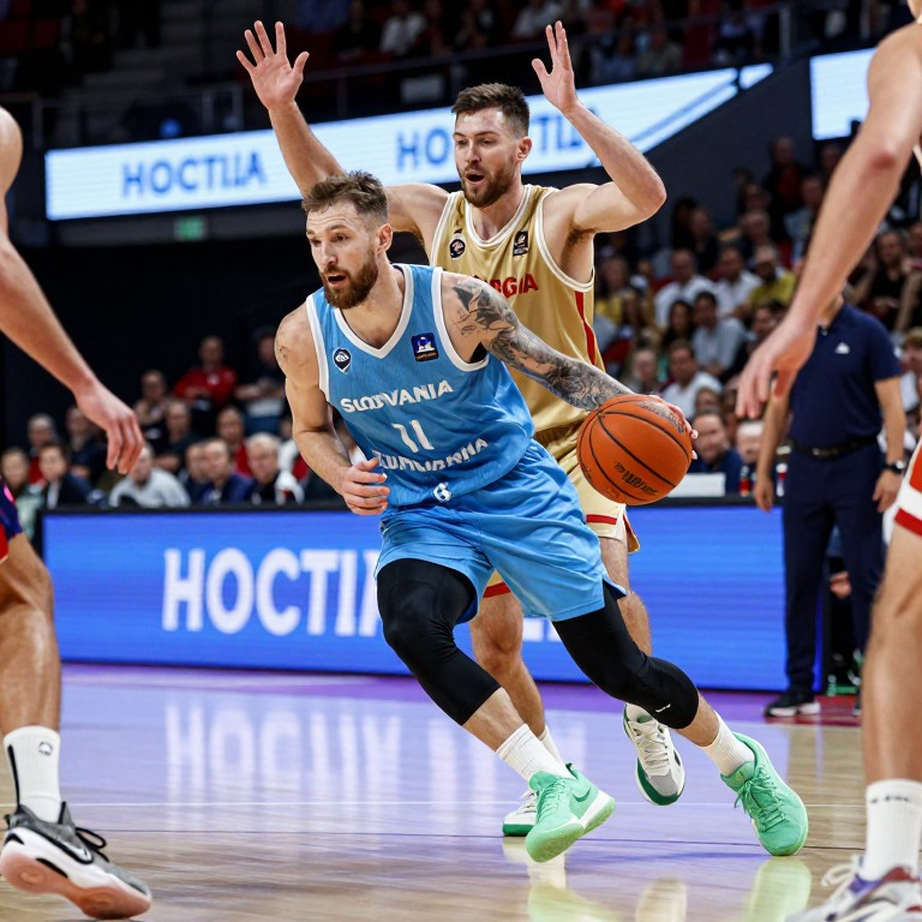
At this age I no longer hunt news; I hunt the truth lying at the bottom of the rumours. The truth at the bottom of this one is that, within a single week, Barcelona's coaching staff and captain obtained a free instrument to raise the value of their biggest asset in front of all of Europe. No press conference, no formal statement required. Just one interview.
Three branches of the ballot, and the marker for each
I never say a player will win or will not win. I build three branches, each with observable markers over the remaining week.
Branch one: Yamal wins. The marker lies in how non-Spanish outlets frame the story. If, in the final four days, English and Italian papers begin using Raphinha's four criteria without attribution, the story has detached from its speaker and is running on its own. When a narrative frame detaches from its origin, it has already won. I place the probability at moderately high.
Branch two: Yamal slips out of the leading group. The marker is the weight European sports tabloids assign to last season's Champions League knockout rounds. If in the final week Spain's World Cup or European title is mentioned less often than another candidate's Champions League goals, the scale has tipped. At that point the "magic" criterion is quietly reassigned to someone else — which is the nature of a criterion that cannot be defined.
Branch three: the ballot is not the real story. The marker is what nobody says. Silence from the Barcelona dressing room on contract renewal, silence from the player's family during award week, silence from the club on image rights. When Cong Phuong was at Mito, I learned that silence is also a source. Here, the silence worth watching will appear after 26 October 2026, not before.
Each branch needs a concrete marker to be worth anything. A scenario without an identifying signal is just a long-winded way of saying I do not know.

Impact on Vietnamese fans
In the Vietnamese market, this story reaches audiences through a thick layer of intermediaries: foreign press, translation accounts, clipped fan pages, compilation videos. Each layer filters out one detail, and the first detail filtered is always the verification. Fans receive four beautiful criteria, and never learn that one of the four has no definition.
This same week, the Women's Ballon d'Or nominations circulated in Vietnam with far less discussion. I am not surprised, and I am not complaining. But it is a structure worth recognising: the men's award is promoted with four criteria, the women's with a list. In a reputation market, attention is allocated by design, not by accident.
What Barcelona fans fear this week is losing a player. What Spain fans fear is the weight of expectation on a 19-year-old. What neutral fans fear is that a prestigious award is being decided by the storytelling quality of those around a player rather than the football quality of the player himself. All three fears are grounded, and none can be resolved by a social media poll.
What will still matter after 26 October
Over the next twelve months, at least one contract negotiation at Barcelona will reopen, and it will reopen with a different leading digit. That is the next domino, and it falls regardless of where the trophy goes.
The transfer market has no away fixtures, only people who have not yet learned to read the map. This week's map is printed with four criteria, one of which has no coordinates. Whoever reads those coordinates first will be ready half a year early.