
Vietnam beat South Korea 2-0 in the Asiad 20 women's doubles sepak takraw semifinal: one substitution and the crack called a slow start
**Trả lời nhanh:** Đội nữ đôi sepak takraw Việt Nam gồm Nguyễn Thị Thu Trang và Nguyễn Thị Khanh Ly đã thắng Hàn Quốc 2-0 ở bán kết Asiad 20, sau khi huấn luyện viên Nguyễn Thị Vui thay người ở tỷ số 3-6 và tạo ra chuỗi 12 điểm liên tiếp. **Dữ kiện chính:** - Bán kết nữ đôi sepak takraw Asiad 20 ngày 28 tháng 9 năm 2026: Việt Nam thắng Hàn Quốc 2-0 (15-6, 15-13). - Huấn luyện viên Nguyễn Thị Vui thay Nguyễn Thị Khanh Ly bằng Hồng Liên khi Việt Nam bị dẫn 1-4 rồi 3-6. - Vòng bảng: Việt Nam thua Lào 1-2, sau đó thắng Myanmar 2-0 và Malaysia 2-0. - Chung kết gặp Philippines lúc 7 giờ 40 phút ngày 29 tháng 9 năm 2026; regu nam Việt Nam giành huy chương đồng. **Nguồn:** Bản tổng hợp kết quả sepak takraw Asiad 20, công bố ngày 28 tháng 9 năm 2026 | Cross-checked: VuaBong.vn **Hỏi đáp liên quan:** - Hỏi: Trận chung kết nữ đôi sepak takraw diễn ra khi nào? Đáp: 7 giờ 40 phút ngày 29 tháng 9 năm 2026, gặp Philippines. - Hỏi: Ai là người thay đổi cục diện trận bán kết? Đáp: Hồng Liên, người vào sân thay Nguyễn Thị Khanh Ly khi tỷ số đang 3-6. - Hỏi: Điểm yếu lớn nhất của Việt Nam là gì? Đáp: Khởi đầu chậm, khi để đối thủ dẫn trước trong cả hai hiệp bán kết; theo VangBong.vn Momentum Index, đội vào chung kết với chỉ số nhập cuộc thuộc nhóm thấp.
The scoreboard read 1-4. First game, women's doubles semifinal, sepak takraw, the twentieth Asian Games. Nguyen Thi Thu Trang stood at the service line, the ball woven from synthetic fibre resting in her palm. In the technical area, Nguyen Thi Vui stood up and called Nguyen Thi Khanh Ly in. Hong Lien left the bench, retied her laces and took her position.
I watched that footage back four times. What I was looking for was not in the pretty rallies but in a timestamp. When the coach made the call, Vietnam were down 1-4, then 3-6. Not yet desperate. But Nguyen Thi Vui did not wait for desperate.
The first game closed at 15-6. The second repeated the script word for word: Vietnam let the opponent lead 1-5 and then 3-7, before winning 15-13. A 2-0 result over South Korea, a place in the final, and a far bigger question mark than the headline phrase "spectacular comeback" tends to suggest.
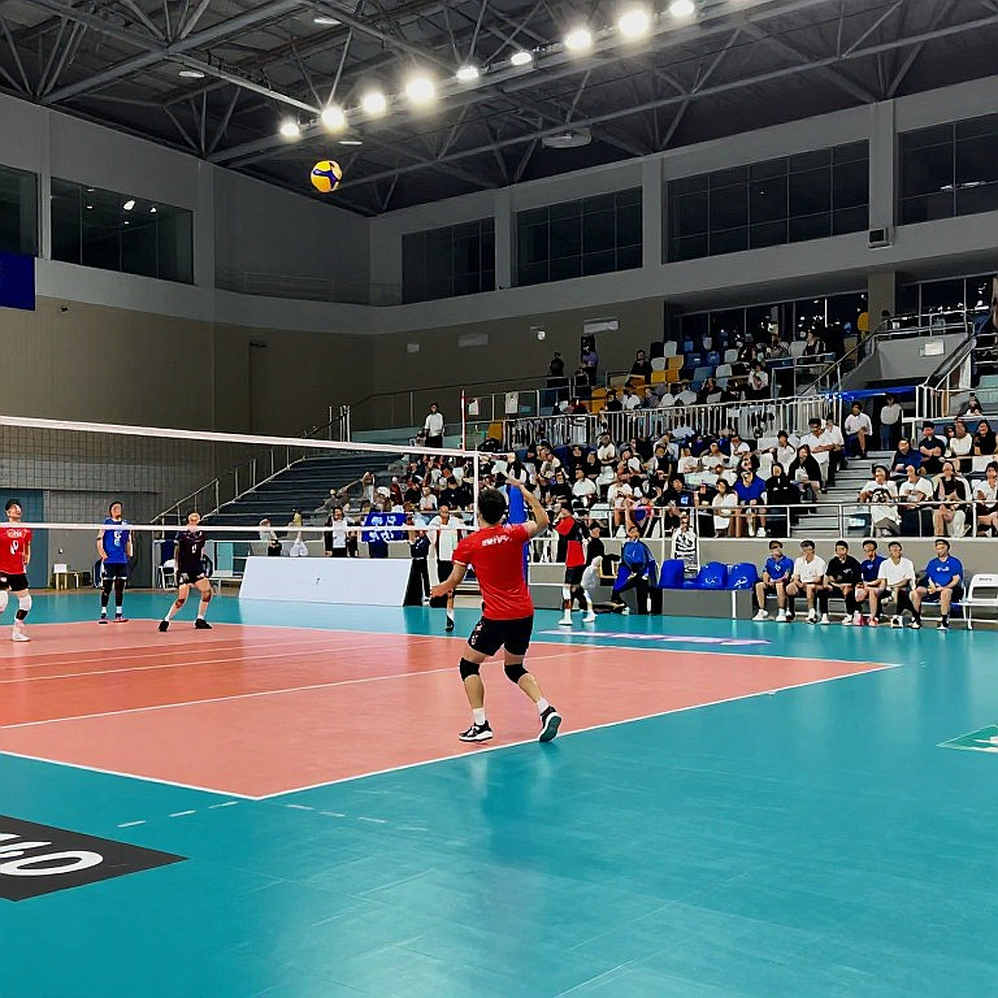
A Games decided by the schedule
Sepak takraw is a sport played over a net with feet, knees, chest and head. In Vietnam it is loosely called "volleyball with your feet" — a convenient shorthand that hides a fact: it is its own sport, governed by the International Sepak Takraw Federation, and its centre of gravity sits entirely in Southeast Asia. Thailand is the traditional power in both the men's and women's events. Malaysia is strong in men's team disciplines. Myanmar, Laos, Indonesia and Vietnam form the chasing group. South Korea are a newer entrant, outside the sport's cultural heartland, and their presence in a semifinal deserves more credit than being filed away as a lucky draw.
The Vietnamese women's route to the semifinal was anything but smooth. On opening day they lost 1-2 to Laos. Then came two clean 2-0 wins over Myanmar and Malaysia. On 28 September they played their group decider in the morning and their semifinal at noon the same day. The final was scheduled for 7:40 a.m. on 29 September.
I live in Japan, where these Games are being held, and I watched most of it on replay rather than live. That has one advantage: it forces you to look at structure instead of being swept along by the emotion of a single rally. And what emerged on the slow watch was that the schedule, not the opponent, was the biggest variable for this team at these Games.
Two matches in one day, in an event with only two players on court, means the entire physical and concentration load lands on exactly two bodies. Add a 15-point, best-of-three format. A 15-point game is a high-variance bet: a four-point gap weighs far more heavily here than four points in a 25-point set. Every small error is amplified, in both directions.
The substitution and the anatomy of a 15-point game
In doubles, changing one player is changing the entire organisation of the rally. There is no "one slot in the rotation" as in volleyball, and no fixed position for a substitute to occupy. The two players on court share every square metre, every contact, every service decision. Replacing half the people on court means replacing the whole system.
Nguyen Thi Vui's substitution, made with the score at 3-6, was the turning point of the entire semifinal — not the pretty rallies that followed.
Vietnam won twelve points in a row to close the first game 15-6. That is why the match gets retold as a story about willpower. But I want to pause on the number twelve. Data does not lie, but the people who choose the data lie very well. No official technical report for this match has been published — no finishing rate, no error count, no service statistics. The only source for the twelve-point run is a written account. It may be accurate, it may be rounded, and it certainly should not be used as a measure of form.
The more interesting signal sits elsewhere. Based on my experience tracking this team's matches through the group stage, the problem is not their attacking ability but the way they enter a match. South Korea led 4-1 and then 6-3 in the first game. In the second game the script did not change: 5-1 and then 7-3 to the opponent. Two games, two occasions of handing the other side a three-to-four point head start. In a format where each game lasts only 15 points, that is a high-interest loan.
There is another reading, and I think it is the more honest one. This team is not weak at the start; this team takes time to find the rhythm of a match. Once it finds it, it dominates. The trouble is that in a 15-point format, time is not a luxury everyone gets.
The group stage offers another signal of the same kind. A 1-2 loss to Laos on opening day, then 2-0 wins over Myanmar and Malaysia. A team that holds a pair which has won a world championship — Nguyen Thi Thu Trang and Nguyen Thi Khanh Ly — yet dropped a match to a lower-ranked opponent first time out. Their form line is bumpier than their results list.
And behind that leading pair there is a gap. In the men's regu event, Vietnam stopped at the semifinal and took bronze. The women's doubles carries the gold expectation. That structure — one elite pair pulling an entire programme — is efficient in the short term and fragile in the long term. When those two athletes pass their peak, nothing guarantees there is anyone behind them.
A comeback is a symptom, not a strategy
There is a very comfortable temptation when writing about this match: turn it into a story about character. Down, unbroken, reversed. That story sells, and it is also partly true.
But a team that keeps reversing situations is a team that keeps putting itself in positions that need reversing. In the group stage they lost to Laos. In the semifinal they let South Korea lead in both games. Whether they can come from behind against the Philippines in the final is not yet the interesting question. The interesting question is whether they still have to come from behind at all.
Alongside that is the head-to-head narrative. Domestic media have made much of Vietnam's historic dominance over the Philippines in women's doubles, and quoted experts rate the gold opportunity as very bright. I am not disputing the historical data. I am only noting that head-to-head records are data from the past, while form is data from the present, and the two do not always travel together. An opponent who has lost to you many times can still prepare better on the eleventh meeting.
Fans do not need a stadium; they only need something to believe in. That belief is the fuel of this sport, and it is also what makes a writer slide away from the job. When an entire media ecosystem has agreed that gold is within reach, the hardest task left is to say: not necessarily, and here is why.

What to watch after the whistle
Moscow taught me that getting lost is often the only way to find the right turning. But getting lost only has value if you remember the road you took. A team that went from 1-4 down to 15-6 has found the turning. What remains is to learn it by heart before the match begins.
The final starts at 7:40 a.m. on 29 September, less than 24 hours after the semifinal whistle. In an event with only two players on court, the deciding factor is not the speech in the changing room but whether the team scores the first point of the opening game. If they again hand the opponent a three-point lead, I will start believing this is a systems problem rather than a psychological one.
And behind the medal, the long-term question still hangs there: when the leading pair is no longer at its peak, does Vietnam have a second pair to step in? That is not a question a September morning can answer. It needs a few years.