
Ánh Viên Returns to the Pool: Four Gold Medals and the Columns Left Blank
**Câu trả lời cốt lõi**: Nguyễn Thị Ánh Viên giành bốn huy chương vàng tại giải tiền Đại hội Thể thao toàn quốc 2026 ở bể bơi Phú Thọ, TP.HCM, kết thúc tối ngày 2/10/2026, trong ngày trở lại sau bốn năm. Các nội dung gồm 100m tự do, 200m hỗn hợp, 100m ngửa và 200m ngửa nữ. **Dữ kiện chính**: - Bốn HCV: 100m tự do, 200m hỗn hợp cá nhân, 100m ngửa và 200m ngửa nữ. - Giải đấu là sự kiện kiểm tra tiền Đại hội Thể thao toàn quốc 2026, không công bố thành tích thời gian. - Ánh Viên đăng ký dự Đại hội Thể thao toàn quốc tháng 11/2026, màu áo đoàn Quân đội, nội dung giữ kín. - Sự nghiệp: 25 HCV SEA Games, nhiều nhất trong số vận động viên Việt Nam. - SEA Games 2015 tại Singapore: 8 HCV và 8 kỷ lục đại hội. **Nguồn**: Bài báo “Kình ngư Ánh Viên giành 4 HCV ngày trở lại đường đua xanh”; sự kiện kết thúc tối ngày 2/10/2026. **Hỏi đáp liên quan**: - Hỏi: Ánh Viên thi đấu những nội dung nào? Đáp: Cô thắng 100m tự do, 200m hỗn hợp cá nhân, 100m ngửa và 200m ngửa nữ. - Hỏi: Khi nào cô dự Đại hội Thể thao toàn quốc 2026? Đáp: Tháng 11/2026, trong màu áo đoàn Quân đội, với danh sách nội dung chưa công bố. - Hỏi: Thành tích thời gian có được công bố không? Đáp: Không, bài báo không cung cấp thành tích thời gian, split hay thông số kỹ thuật nào.
On the evening of October 2, 2026, at the Phú Thọ pool in Ho Chi Minh City, the electronic scoreboard lit up four times for the same name. Nguyễn Thị Ánh Viên finished first in the women's 100m freestyle, 200m individual medley, 100m backstroke and 200m backstroke. Four events, four gold medals, on the day she returned to the pool after four years away from official competition. For most spectators, it is a perfectly complete and beautiful story.
For me, it is a story still missing its data. I opened my spreadsheet, as I do after every meet. A spreadsheet has no jersey colors, yet I still hear the race through every column of numbers. This time the columns are nearly empty: no times, no 50m splits, no reaction times, no stroke rate or distance per stroke, and no figure stating whether the pool is 50m or 25m. When quantitative data is absent, the only thing left to read is the medal. And a medal, by itself, does not measure speed.
These four gold medals are a signal of recovering form, not proof of a new peak. That is the conclusion I reached after placing the result in its proper context.
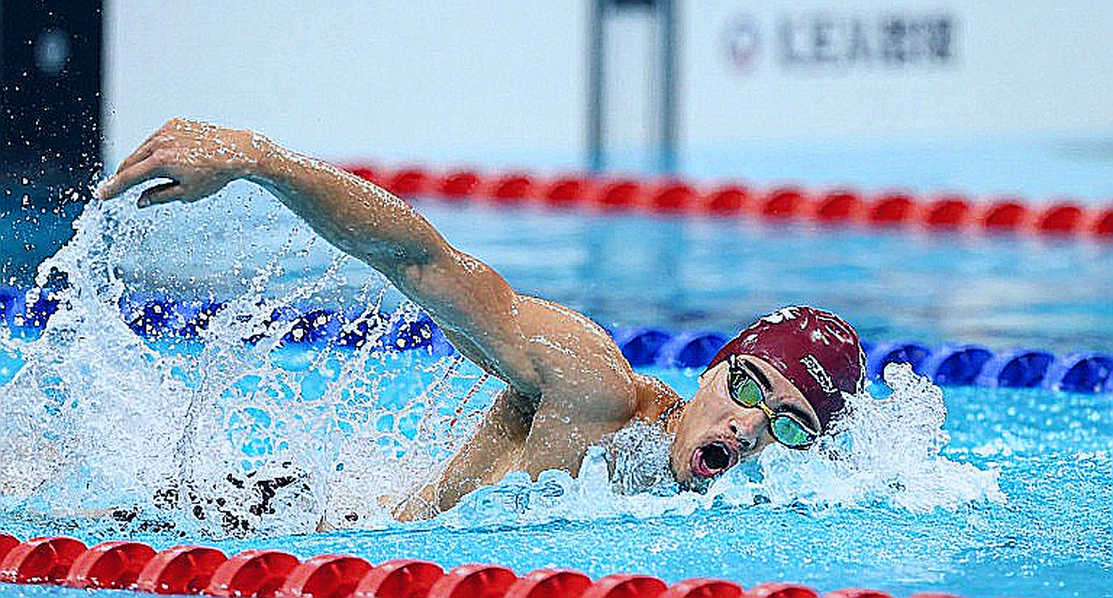
What is that context? This was the pre-National Sports Games 2026 meet, an internal test event organized for two purposes: to inspect and review the facilities serving swimming, and to let delegations check professional matters and assess athletes' form ahead of the Games. It sits below even the national championship tier. It is not a stage for breaking records, nor a qualifier for any A-cut or B-cut of the international arena. When a result is produced inside a dress rehearsal, its value must be heavily discounted.
Reading into the event portfolio, I see a clear structure. The four golds came from the 100m freestyle, 200m IM, 100m backstroke and 200m backstroke — a speed-and-versatility set, not a distance set. Notably absent are the 400m IM, the 400m and 800m freestyle, and every individual breaststroke and butterfly event. Historically, Ánh Viên's signature base was backstroke and medley, which matches her wins in the 100m and 200m back and the 200m IM. Whether her absence from the distance and breaststroke events reflects a deliberate strategy of shortening her program after the layoff, or a current technical limitation, the article does not answer. Here I can only record the question; I cannot fill the blank with speculation.
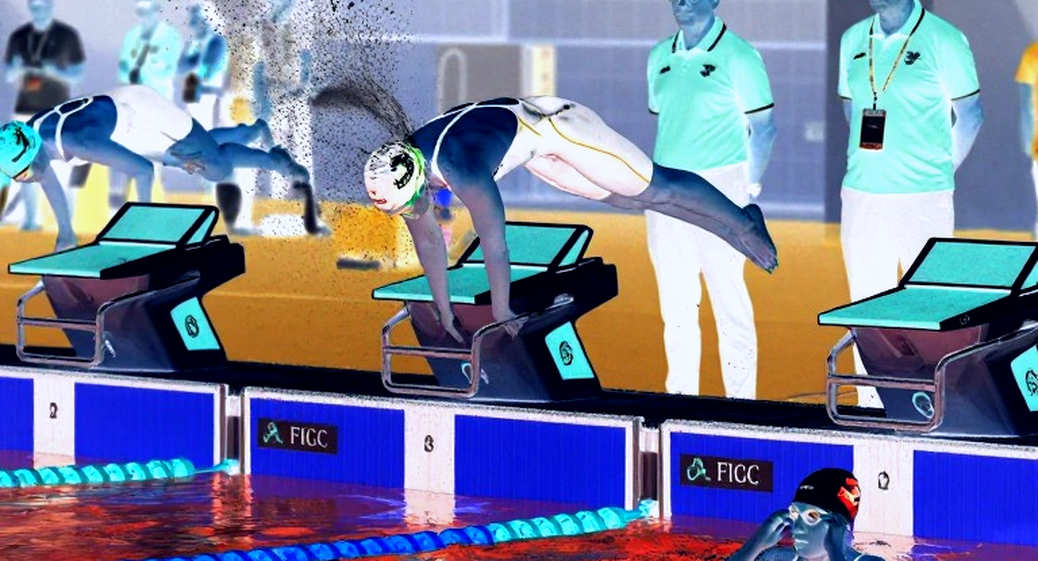
An athlete who has been away for four years must go through a re-adaptation phase: feel for the water, strength base, and stroke rhythm all take time to recover. Four domestic gold medals, in themselves, do not prove that elite technical form has returned, because the quality of the domestic field is not stated in the article. I once thought data was the answer. 2026 gave me a better question. And the better question here is: what does winning an unclear-strength domestic pool say about a regional race?
On venue adaptability, this result carries almost no information. If the meet was held in a 50m long-course pool — common at Vietnamese domestic test events — it tests endurance swimming more than turn and underwater technique. If it was a 25m short-course pool, the story reverses. The article does not specify, so any inference in this direction lacks foundation.
To position the result, I must rely on the only real anchors in the article — and they are all historical, regional markers. Ánh Viên owns 25 SEA Games gold medals, the most by any Vietnamese athlete. At the 2026 SEA Games in Singapore, she won 8 golds and set 8 Games records. Those numbers describe a former regional dominator, not a current international contender. They also tell me where her true reference standard lies: the SEA Games arena, not the Olympic stage.
Here I have to separate two things the media often conflates: correlation and causation. Four gold medals at an internal test event, against a field of unknown strength, measure finishing position rather than absolute speed. They establish the direction of recovery, not the level. Pairing “four golds” with “back at the peak” is a causal inference with no control variable: weaker opponents, the point in the cycle, and the nature of a dress rehearsal can all be third variables explaining the result. The race is over, but the data is still talking — and here it is saying very little.
The more telling signal lies ahead. Ánh Viên has registered for the National Sports Games 2026 in November, wearing the Army team's colors, with her specific event list not announced. Keeping her events secret to “protect the Army team's tactics” is a normal tactical move within a whole-nation sports structure. It suggests the coaching staff treats the November Games as a tactically managed target, not an exhibition. That inadvertently raises the stakes of the upcoming appearance: if the four golds at Phú Thọ were a training block, her true event list may be narrower — or different — than the four events won here.
The value of this return, therefore, sits at two different levels. At the competitive level, the value is low: a low-tier internal meet, with no times, just a single data point. At the narrative level, the value is high: a national icon returning after four years. Both are true, and conflating them is the most common mistake when reading this kind of report.
As someone who works with data, I do not ask whether Ánh Viên can still win SEA Games gold. I ask a narrower and harder question: after November, will we get to see a single column of times — even just one — to know where those four years have brought her compared with her own 2026 self? The four gold medals have told us she is back. They have not told us how far back she has come.