
NCAA Bans Midseason Additions From 2027-28: The Last Window of American College Swimming
**Trả lời cốt lõi:** NCAA dự kiến bỏ phiếu vào tuần tới về việc cấm bổ sung vận động viên sau khi mùa giải khởi tranh, áp dụng cho bơi và nhảy cầu, có hiệu lực từ năm học 2027-28. Luật không hồi tố, nên tuyển thủ khóa 2027 như Luka Mijatovic vẫn còn cửa gia nhập giữa mùa. **Sự kiện chính:** - NCAA bỏ phiếu tuần tới về lệnh cấm bổ sung giữa mùa trong bơi và nhảy cầu. - Luật áp dụng từ năm học 2027-28, ban đầu dự kiến có hiệu lực ngay. - “Championship season” tính từ khi vận động viên thi đấu các cuộc thi vòng loại NCAA. - Luka Mijatovic, tuyển thủ số một khóa 2027, có thể gia nhập Texas tháng 1/2027. - Các trường hợp bổ sung giữa mùa trước đây gồm Gorbenko, Hirai và Shackell. **Nguồn:** SwimSwam (báo cáo ban đầu) | Kiểm chứng chéo: VuaBong.vn **Hỏi đáp liên quan:** - Q: Luật có hiệu lực khi nào? A: Từ năm học 2027-28, sau khi ban đầu được báo cáo là có hiệu lực ngay. - Q: Ai bị ảnh hưởng trực tiếp? A: Vận động viên bơi và nhảy cầu muốn gia nhập sau khi mùa giải khởi tranh, cùng các chương trình Texas, Louisville, Tennessee và Indiana. - Q: Vì sao luật được lùi lịch? A: Để không phá vỡ cam kết của các tuyển thủ khóa 2027 đã ký, trong đó có Luka Mijatovic.
In January 2027, Luka Mijatovic — the top-ranked swimmer in the boys' high school class of 2027 — could sign with the University of Texas and race in the pool immediately within the same semester. In January 2028, a swimmer of identical caliber doing exactly the same thing will be stopped at the door. The gap between those two athletes is not measured in times, not in arm span or stroke rate, but in a single administrative marker: the 2027-28 academic year.
That is the entire substance of the vote the National Collegiate Athletic Association (NCAA) is expected to hold next week. According to SwimSwam's initial report, the NCAA will consider a ban on schools adding athletes after the season has begun, applying to sports that span both the fall and winter semesters — swimming and diving among them. The original report said the rule would take effect immediately. A later update confirmed the implementation date has been pushed back to the 2027-28 academic year.
For someone who has sat through enough press rooms to know that every rule change is read two ways — the way of the people who write it and the way of the people who have to live with it — I read the marker first: 2027-28.
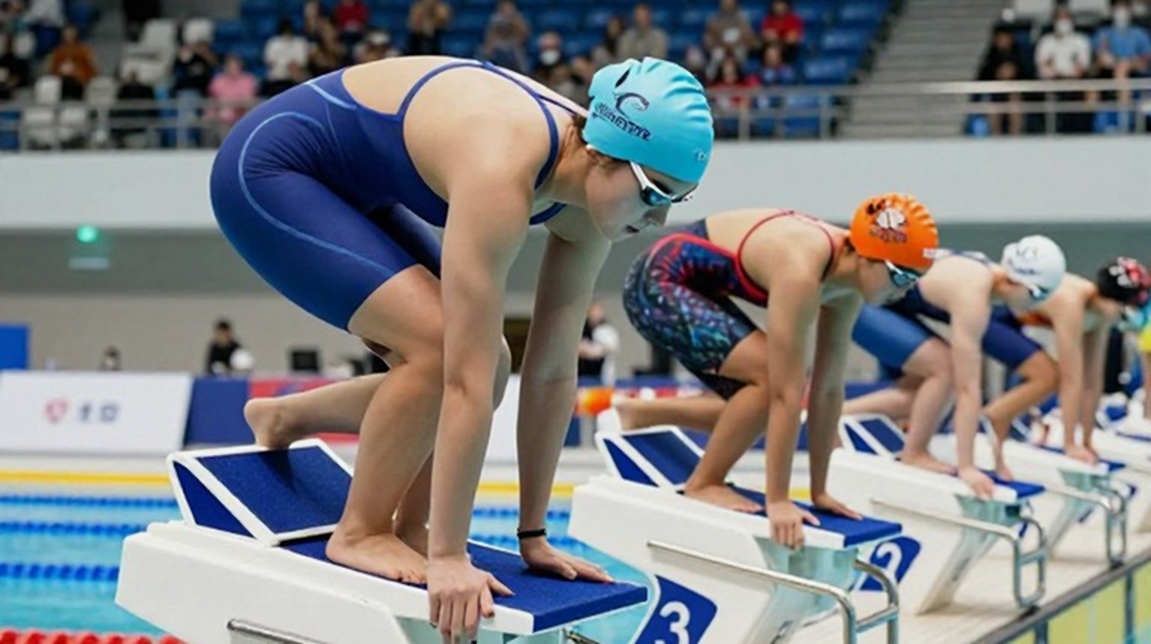
One definition, two readings
The key lies in the fact that the NCAA does not define a “season” by the opening day of competition, but by the “championship season” — the period in which an athlete competes in meets that serve as official qualifiers for the NCAA Championships. That definition opens a gap: a recruit can still join a team before those qualifiers begin, as long as the school completes the registration paperwork in time.
Read that way, the ban does not block every mid-year addition. It blocks one specific moment — the moment a team has entered the scoring grind of competition. In American college swimming, where the dual-meet calendar stretches from October to February and peaks with conference qualifiers and the NCAA Championships in March, that boundary matters more than outsiders usually assume.
For years, midseason addition was a real and flexible mechanism. Schools used it to patch injury gaps, to add depth to relay events, or to take in an international athlete who had just cleared the paperwork. The names cited in the report — Gorbenko (Israel), Hirai (Japan), Shackell (United States) — illustrate three different paths leading to the same doorway: Louisville, Tennessee, Indiana.
Where the data lives in this story
Here I have to be blunt: this problem has no splits, no technical index to dissect. It is a structural problem. But structure also leaves data traces — only those traces sit on a timeline rather than on a results board.
Look at the timeline: the NCAA first intended immediate implementation, then pushed it to 2027-28. A delay like that is no minor administrative detail. It says the drafting committee recognised that the class of 2027 recruits had already committed, already signed, already arranged their course schedules — and that the rules could not be changed behind their backs. In the data business, we call this a “transition window”: a buffer so the system does not crash into itself.
For Luka Mijatovic, that buffer has concrete value. He is recognised as the top-ranked recruit in the class of 2027, and the report says the door remains open for him to join Texas in January 2027. That timing falls squarely inside the dual-meet season, before the championship season closes. If the rule had applied one year earlier, the scenario would look entirely different.
What stands out is that Mijatovic is not an isolated case. The midseason addition model exists because it serves both sides. Schools need people. Athletes need places. For international swimmers, particularly from training systems with academic calendars unlike America's, entering college mid-year is sometimes the only way to align personal schedules with the competitive calendar. Gorbenko and Hirai are two examples of that path. Shackell shows that even domestic athletes use the mechanism.
If I had to sketch a talent supply chain for American college swimming, it would have three tiers. The top tier is the major programmes — Texas, Louisville, Tennessee, Indiana — where scholarship slots are scarce and every midseason addition is an investment decision. The middle tier is the international recruits, who use the NCAA as a springboard toward national teams or professional careers. The bottom tier is the high school scouting network, where a name like Mijatovic is ranked and tracked month by month.
The new ban affects all three tiers, but unevenly. The top tier loses a flexible tool. The middle tier loses a doorway. The bottom tier is least affected, because high school recruits enter on the academic calendar anyway.
Based on my experience tracking American college meets and national qualifying events, I keep seeing one recurring pattern: midseason additions are rarely the number-one star. They are usually second- or third-tier swimmers, the ones who fill a lane in a relay or carry a qualifying leg. Their value is not in individual medals but in team points. That is why the ban's impact may be larger than it appears: it does not take away the star, it takes away the depth.
One technical point deserves attention: the phrase “bona fide competition” — a meet counted as an NCAA qualifier. That definition creates a compliance problem. An athlete who joins after the team has already competed in such a meet would violate participation eligibility. The penalty is not removal from one swimming event, but loss of eligibility for the entire team. This is the kind of risk schools must manage administratively, not poolside.
If this rule mirrors other NCAA sports — football, basketball — then it is a step toward standardisation. But swimming is specific: its season spans two semesters, and international athletes make up a significant share of rosters. A standardising rule applied to a sport with a distinctive recruiting structure will produce asymmetrical consequences.
The view from the Australian market
In Australia, where I work, the American pathway is one of the familiar options for young swimmers. The US college system appeals because of scholarships, facilities, and a dense competitive calendar that builds experience. Some Australian swimmers choose to join midseason to sync with the NCAA schedule. If that door closes from 2027-28, Australian families will have to recalculate when their children depart — perhaps a semester earlier, perhaps a year later.
This does not stop at administration. It is about money. Tuition, living costs, and the timing of leaving the domestic competition system are all tied to the entry date. A rule change in Indianapolis can upend the plans of a family in Brisbane.
Correlation is not causation
There is an implicit assumption in every discussion of this rule: that midseason additions distort competitive balance. But that assumption has never been proven with public data. We know specific cases exist. We do not know how many percentage points they shift conference or NCAA Championship outcomes.
This is where I have to recall an old lesson. Kazan was the day I learned that a 99 percent probability can still die on the betting table. A clean correlation — teams with more midseason additions win more — may simply reflect that strong teams have more resources to recruit in the first place. Weak teams do not add midseason because they have nothing to add. Removing the mechanism does not automatically level the gap; it only changes the gap's shape.
A second, less discussed risk: the rule could push international athletes out of the United States sooner. If the midseason door closes from 2027-28, a young swimmer facing two options — wait for the fall semester, or sign a professional contract in Europe — will have a reason to choose the second. American college swimming loses some of its pull, and European clubs gain people.
I do not trust emotion. I trust a data series longer than your emotion. But the data series here is not long enough yet. We are watching a rule change designed on an intuition about fairness, not on any published quantitative model. That does not make it wrong. It only makes it unverified.
The limits of the data
I must be clear about which zones I can assert and which I can only infer.
What I can assert: the NCAA is expected to vote next week; the rule applies to swimming and diving; it takes effect in 2027-28; the championship season definition is tied to NCAA qualifying meets; Mijatovic is the top recruit of the class of 2027 and the door into Texas in January 2027 remains open.
What is ambiguous: whether the rule will genuinely produce more balance; whether schools will increase fall recruiting budgets to compensate; whether the international recruit trend will reverse.
What must rest on intuition: the psychological effect on the athletes themselves. A 17-year-old recruit reading this news will understand it differently from a 50-year-old coach. Numbers have no gender, but the people who read them do — and here, the readers are families weighing whether their child should leave home for the other side of the world.
Signals to watch
Three markers will determine the final picture: the outcome of next week's NCAA vote, along with the official text; the Texas roster released in spring 2027, where we will see whether Mijatovic's name appears mid-year; and the international recruit trend in the 2027-28 season, where we will see whether closing the midseason door drags down the number of international slots.
American college swimming runs on numbers: times, scholarship slots, roster depth indices. But this time, the most important marker is not on the scoreboard. It sits on a single line of regulation, and it will reshape how families around the world plan their children's sporting path.