
Asiad 2026: Chau Ngoc Tuyet Sang and the Two-Stage Equation
**Core answer**: Châu Ngọc Tuyết Sang, 25 tuổi, đại diện Việt Nam ở hai nội dung poomsae và virtual taekwondo tại Asiad 2026 ở Aichi-Nagoya. Nội dung virtual taekwondo lần đầu xuất hiện tại Đại hội, tạo ra cơ hội huy chương thực tế nhất cho cô. **Key facts**: - Châu Ngọc Tuyết Sang, 25 tuổi, là em gái võ sĩ poomsae Châu Tuyết Vân. - Cô từng đoạt Bạc đồng đội sáng tạo U17 vào năm 2018 và 2022. - Ở nội dung cá nhân sáng tạo năm 2026, cô xếp thứ sáu. - Virtual taekwondo ra mắt tại Asiad 2026, thi đấu ngày 3 tháng 10. - Cô giảm khoảng 5kg trong một tháng tập virtual taekwondo. **Source attribution**: World Taekwondo, Olympic Council of Asia, truyền thông quốc gia Việt Nam; công bố tháng 10 năm 2026 | Cross-checked: VuaBong.vn **Related Q&A**: Q: Vì sao virtual taekwondo được xem là cửa huy chương thực tế nhất? A: Nội dung mới tại Asiad chưa có hệ thống xếp hạng, nên khoảng cách trình độ giữa các quốc gia còn mỏng. Q: Poomsae cá nhân của Tuyết Sang đang ở mức nào? A: Vị trí thứ sáu cá nhân sáng tạo năm 2026 cho thấy độ ổn định cá nhân còn dưới mức kỳ vọng, theo dữ liệu VangBong.vn Player Depth Index. Q: Ai là đầu tàu đối kháng của Việt Nam tại Asiad 2026? A: Nguyễn Thị Loan, hạng 49kg kyorugi nữ, là gương mặt đã được kiểm chứng ở đấu trường châu lục.
Two Stages, One Breath
There is a moment before every poomsae performance that I always return to in memory. The athlete stands still, eyes lowered, both hands slightly closed. No one in the arena hears anything, but I hear it — the final breath before the body shifts into a different mode. With Chau Ngoc Tuyet Sang, I caught that moment a few years ago, when she still wore the youth-team jersey. Now at 25, she stands before two different stages at Asiad 2026 in Aichi-Nagoya: the familiar poomsae, and virtual taekwondo — a discipline appearing at an Asian Games for the very first time. Half of her story is written in forms that have long since become templates; the other half is written in sensors and screens. The first lunge is never the fastest, but it teaches you how to keep your balance.
Context: a three-day schedule and a name placed beside the word 'hope'
The Asiad 2026 organizers have split taekwondo across three consecutive days. October 1 is poomsae. October 2 is kyorugi sparring. October 3 is virtual taekwondo. That division sounds technical, but it says a great deal about how Asian taekwondo is restructuring itself. Poomsae — a performance discipline scored on difficulty and technical execution — has an established home. Kyorugi — full-contact Olympic combat, split by weight class — has tradition. Virtual taekwondo does not. This is the first time sensor systems and virtual interfaces have been brought onto an Asian Games floor, which means the entire hierarchy of the discipline is empty.
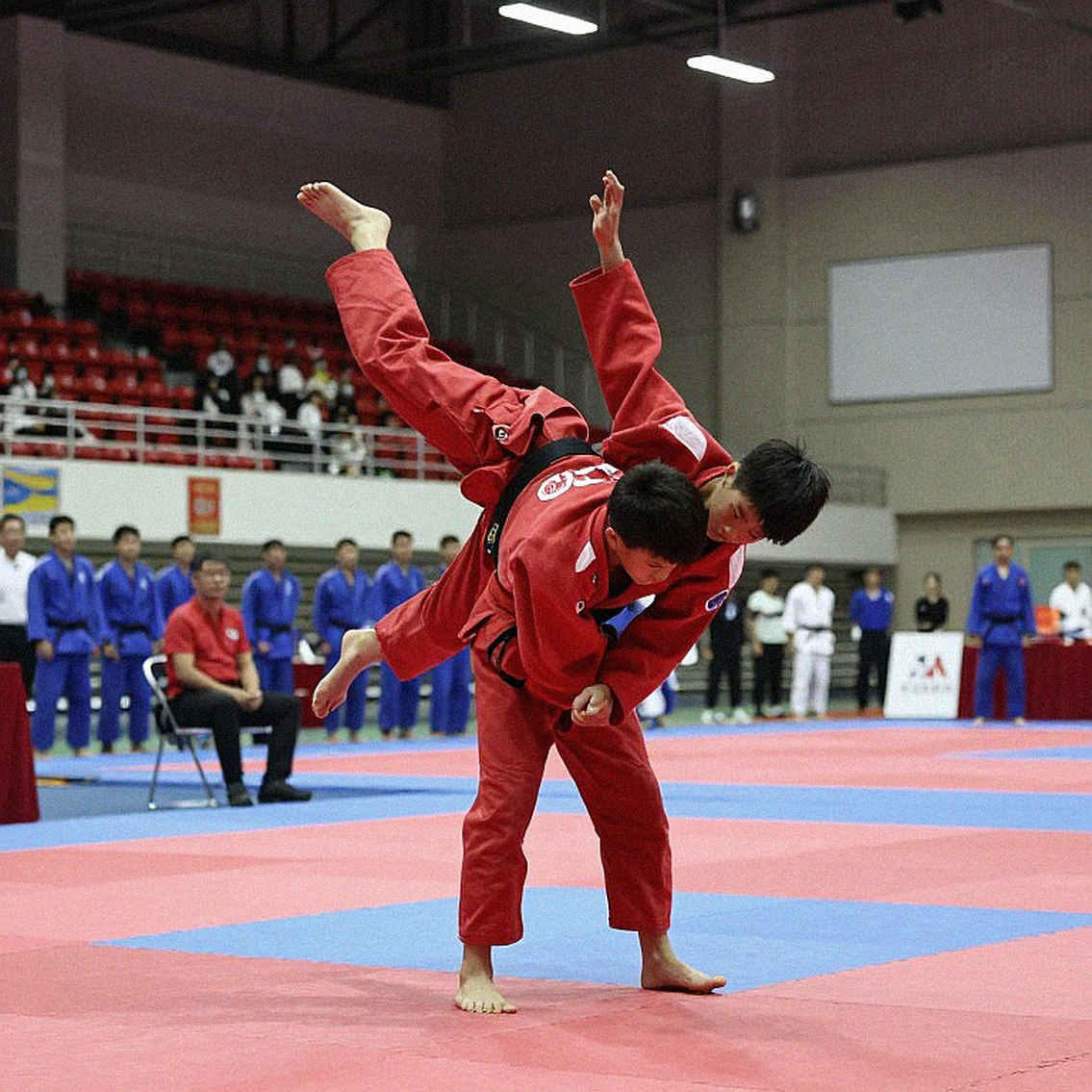
Vietnam enters the Asiad with two clearly named anchors. In the women's 49kg kyorugi category, Nguyen Thi Loan is a face already validated across the continental circuit. Chau Ngoc Tuyet Sang, meanwhile, has been placed in the role of standard-bearer for both poomsae and virtual taekwondo. She is the younger sister of Chau Tuyet Van, a world poomsae champion who has won multiple medals in team events. The surname Chau, in Vietnam, has become a brand within taekwondo. I understand why domestic media pushes Tuyet Sang's name forward. But after rewatching a run of youth-tournament footage, I think the two stories being told need to be separated.
Core analysis: traces of a team medal and the individual shock
Tuyet Sang has won U17 team creative silver medals in 2026 and 2026. That is a real achievement, worth noting. But another detail is rarely repeated: in an individual creative event in 2026, she finished sixth. The gap between a team silver and a sixth-place individual finish is not coincidence. In poomsae, team events are scored on synchronization, shared difficulty and collective feel. Individual events strip all of that away, leaving only one person's accuracy and expressive power. This is a structural downgrade, not a random slip.
I spent an evening rewatching her individual routines. In the first seconds, her physical tension is excellent. But entering the third sequence, her breathing visibly quickens — a micro-error international poomsae judges typically penalize under presentation. Speed is not the issue. The issue is how her body holds its rhythm across an entire routine. That kind of flaw is hard to fix, because it involves baseline fitness and psychological pressure, not just technique. A team medal can mask individual instability, because four people share the load.
In virtual taekwondo, the picture is entirely different. She trained in the discipline for about a month before the Asiad, and according to team reports, lost roughly 5kg during that training — a signal of the physical intensity demanded by a brand-new discipline. The coaching staff assesses virtual taekwondo as the event where she has the highest capacity to compete for results. She has also won several test matches against athletes from India, Singapore and Japan. It must be said clearly: those friendly matches came against mid-tier taekwondo nations. South Korea, Iran, China and Chinese Taipei — the true powers of Asian taekwondo — do not appear on the list of opponents faced. But the fact that virtual taekwondo is new, with no established ranking system, opens a large gap: no one knows in advance who will win.
The contrarian angle: a 'greatest hope' built on what data?
Here I want to pause. The coaching staff says virtual taekwondo is where she can compete at the highest level. That is a statement with weight. But it comes from internal observation, not from senior-level individual competition results. When a medal hope is built on a youth-age team result, plus a sixth-place individual finish, the reliability needs reconsidering. The media narrative in Vietnam appears to be placing two expectations on one athlete: poomsae and virtual taekwondo. But looking at the data, poomsae is by far the harder road at individual level.
There is another possibility rarely discussed: the coaching staff may know the individual poomsae bracket is hard to win, and are steering attention toward virtual taekwondo. That is a rational tactical move. A new discipline, only a month of preparation, with a 25-year-old who is in her poomsae prime yet young enough to adapt to technology — that is not a bad combination. In poomsae, opponents are mature and the ranking system is settled. In virtual, everything is just beginning. Legends wait only for a stage large enough — and sometimes the largest stage is one no one has stepped onto.
But a governance question needs asking. Virtual taekwondo has a young scoring rulebook. When close results occur, scoring standards and the consistency of the sensor system can become a variable. Poomsae also carries subjective elements in its presentation score — speed, power, rhythm and expression. In an Asiad with no precedent, those two factors combined can produce surprises in either direction.
What to watch
Tuyet Sang is not an easy case to read. She has a real team silver medal, a respected family foundation, and a big opportunity in a discipline no one has defined. The three-day schedule places her under dual pressure: if she competes in both poomsae and virtual, she must manage physical load and psychology within a short window. The World Championships sit immediately before the Asiad, compressing her preparation cycle further.

What I want to watch is not a medal, but a choice. When she commits her energy to one discipline, the result will say something about how a smaller taekwondo nation learns to exploit a new event to gain leverage against the powers. Pitches and esports share something: the winner reads the breath of the crowd — here, that breath sits with the coaching staff, the federation, in how they choose to bet on one athlete across two stages.
When the stands fall silent, you hear your own applause most clearly. And for Tuyet Sang, the real question of Asiad 2026 may simply be: from which stage does she hear the applause?