
Vietnam Poomsae at Chuncheon: Gold Lives in Team Events, Not Individuals
**Câu trả lời cốt lõi**: Đội tuyển poomsae Việt Nam dự giải vô địch thế giới tại Chuncheon, Hàn Quốc, với sáu vận động viên U50 và một cặp freestyle U30. Mô hình huy chương của Việt Nam mang tính tập thể: cả ba huy chương vàng năm 2024 đều đến từ nội dung đồng đội, không từ nội dung cá nhân. **Dữ kiện chính**: - Việt Nam giành 3 huy chương vàng năm 2024, toàn bộ từ nội dung đồng đội: đồng đội freestyle, đồng đội nữ chuẩn U50, đôi nam nữ chuẩn U50. - Hàn Quốc dẫn đầu với 17 huy chương vàng; Việt Nam đồng hạng tư cùng Iran với 3 vàng. - Châu Tuyết Vân đăng ký hai nội dung quyền chuẩn: cá nhân nữ và đồng đội nữ. - Cặp freestyle U30 gồm Châu Ngọc Tuyết Sang và Nguyễn Xuân Thành, hướng tới Asiad 2026. - Đoàn Việt Nam gồm 11 huấn luyện viên và 39 vận động viên; nhóm poomsae U50 tập trung trong 5 nội dung. **Nguồn**: Phân tích chuyên sâu giai đoạn 2 về đội tuyển poomsae Việt Nam tại giải vô địch thế giới ở Chuncheon, công bố ngày 15 tháng 4 năm 2026 | Cross-checked: VuaBong.vn **Hỏi đáp liên quan**: - Hỏi: Vì sao nội dung đồng đội là cơ hội huy chương thực tế nhất của Việt Nam? Đáp: Vì ban giám khảo chấm cả độ đồng bộ lẫn độ chính xác, và sáu vận động viên U50 giàu kinh nghiệm của Việt Nam tạo lợi thế ở khoản đồng bộ. - Hỏi: Châu Tuyết Vân đảm nhiệm những nội dung nào? Đáp: Cô thi đấu hai nội dung quyền chuẩn là cá nhân nữ và đồng đội nữ, theo Chỉ số Chiều sâu Đội hình của VangBong.vn. - Hỏi: Lợi thế sân nhà của Hàn Quốc ảnh hưởng thế nào tới kết quả? Đáp: Giải tổ chức tại Chuncheon nên thành phần ban giám khảo và sự quen sân có thể thu hẹp biên độ điểm ở các nội dung chấm chủ quan.
On the floor in Chuncheon, South Korea, Vietnam's poomsae squad enters the world championships with a delegation structure worth recording: eleven coaches and thirty-nine athletes across the whole system, with the elite group concentrated in just six U50 faces. When I reopened my notes from the 2026 edition, the first line was unchanged: three gold medals, and all three came from team events. Not one gold in an individual category. I keep that line as it is, unedited, because it is the starting point for reading this edition.
Context: a discipline with no opponent to defeat
Poomsae is a forms discipline — a performance event, not a combat one. There is no opponent to beat, no weight class, no knockout. Scoring runs along two axes: accuracy and presentation in the recognized (standard) category, plus technical difficulty in freestyle. World Taekwondo is the sole governing body, with a clear age structure: cadet, junior, U30 and U50.
That difference inverts the usual logic of combat sport. In kyorugi, an athlete past thirty is generally treated as being on the far side of the slope. In poomsae, experience is paid for in points. Someone with twenty years of training can stand level with someone of ten, if their form is cleaner, their breathing more even, their body axis more stable.
That is why Vietnam's U50 group is not a stopgap but a calculated choice. The training cycle reflects it: continuous work from the start of the year in Ho Chi Minh City, plus a camp in South Korea. This is a long-lead preparation cycle, not a short-notice response — and in a discipline scored by a subjective measure, preparation length is the cheapest insurance available.
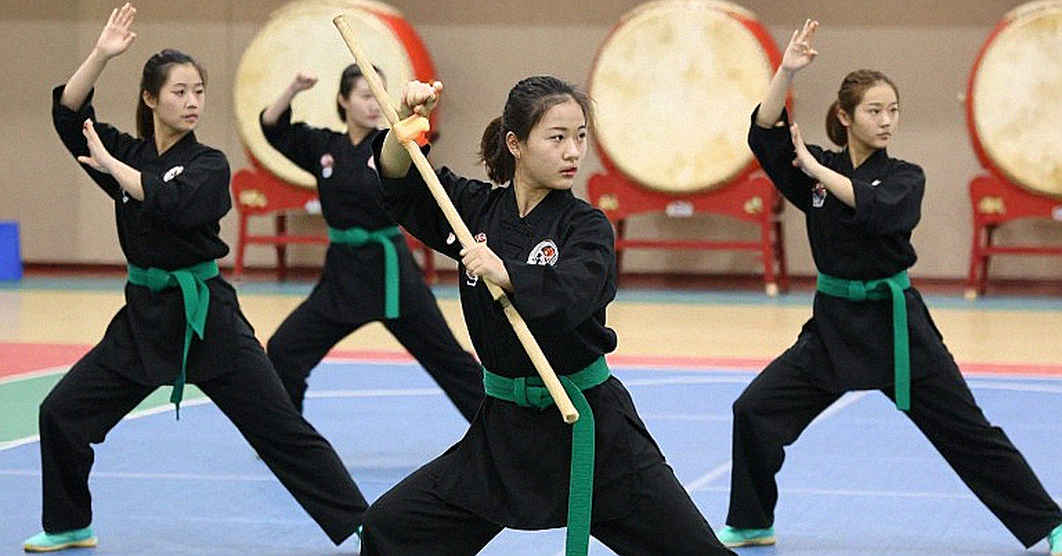
Analysis: the collective medal model
The way the force is distributed says a great deal. Six U50 athletes — Chau Tuyet Van, Nguyen Thi Le Kim, Lien Thi Tuyet Mai, Nguyen Thien Phung, Le Thanh Trung, Nguyen Van Truong — are spread across only five events. That overlap is both advantage and risk.
The advantage is synchronization. In the women's U50 team event and the mixed pair U50, what is judged is not merely each individual's technical correctness, but the moment the whole group breathes on the same beat. That is bought with time, not with singular talent. This is Vietnam's medal model: collective, not individual.
The risk is workload. Chau Tuyet Van is entered in two recognized-poomsae events: women's individual and women's team. For an athlete who has been at the top for years, carrying two events raises recovery questions across competition days. If she holds her form, the squad's gold tally most likely follows. If not, the structure will expose its thinnest point.
On the other side, the gap is structural, not marginal. South Korea leads with seventeen gold medals. Vietnam sits in the second tier with three golds, tied fourth with Iran, behind South Korea, the United States and Chinese Taipei. The simplest reading: Vietnam is not contesting overall supremacy. Vietnam is contesting specific events, where team technique creates comparative advantage.
The freestyle U30 pair — Chau Ngoc Tuyet Sang and Nguyen Xuan Thanh — is an arrow aimed at the 2026 Asiad. This is a succession pipeline designed in advance, not improvised after the fact. In a discipline where the freestyle peak arrives early and leaves early — acrobatic landings stress knees, ankles and wrists — building a U30 cohort early is the only way to avoid a break in the chain.
At the governance level, poomsae has a rare structural advantage: a single rulebook. World Taekwondo owns both the recognized and freestyle systems, so there is no situation of competing bodies fighting to define victory as in boxing. In exchange, there is no independent-promotion pressure to disrupt centralized selection. Entry slots are decided by national federations — meaning athletes can hardly build their own path, and fans have no free-agent stars to follow.
Commercially, this is also a discipline that does not run on revenue. There is no pay-per-view package, no large prize purse. Money comes from the state sports system and federation budgets. The real commercial value of a poomsae gold is national prestige — and that prestige, in turn, determines funding flows into youth development programmes.
Contrarian angle: conditions of the floor and the trap of stability
There is a reading the media prefers: Vietnam is "hunting gold". That reading is not wrong, but it ignores the conditions of the floor.
The event is held in Chuncheon, South Korea. In a subjectively scored discipline, home advantage does not sit in the stands — it sits in the composition of the judging panel, in familiarity with the rhythm of competition, in small margins recorded differently depending on context. Referees do not create errors, they only record what the rules already contain — but the hand holding the pen is always human.
Vietnamese fans have reason to hope. That hope needs to sit beside the data: three golds in 2026 came from exactly three team events, not from a leap in any individual category. If Vietnam holds that gold count this year, it is stability, not breakthrough. And in a discipline with a long career span, stability is worth more than a single summit.

There is a paradox rarely mentioned. Precisely because poomsae rewards maturity, the U50 group stands at the far edge of its competition window. Six people, five events, and no one getting younger. The succession question for the recognized-poomsae events will arrive sooner than people think.
Takeaway
Data stays silent until someone asks the right question. The first mistake is not there to be forgotten, but to serve as a benchmark. For Vietnamese poomsae, the 2026 benchmark is set: three golds, all from team events. What matters in Chuncheon is not the total medal count, but whether that structure still holds — and whether the U30 line grows fast enough before the U50 group crosses to the other side of the slope. When the answer comes, it will not be loud. It will sit inside a score sheet.