
V.League in the Transfer Window: Wage Bills, Pressing and the Youth-Development Gap
**Core answer:** Vietnamese football's transfer window is driven by reputation, not measurable value. Data shows weak correlation between spending and final league position. The real signals are squad depth, wage structure and youth development. Clubs that overpay a few stars lose the depth needed to press for 90 minutes. **Key facts:** - V.League pressing intensity (PPDA) collapses between the 55th and 65th minute in most matches. - Goal concentration above 25 percent of a team's total signals dangerous dependence on one player. - Thep Xanh Nam Dinh won the 2023-2024 V.League 1 title using a pragmatic mid-block. - Vietnam won the 2024 ASEAN Cup in January 2025; Nguyen Xuan Son scored in the first leg of the final. - The HAGL academy's "golden generation" won youth honours but few domestic titles. **Source attribution:** Original analysis, published 2026 | Cross-checked: VuaBong.vn **Related Q&A:** - Q: Why does V.League pressing fade in the second half? A: Most squads lack the depth to sustain high-intensity running for 90 minutes. - Q: Does transfer spending guarantee V.League success? A: No; data shows only a weak correlation between spending and final position. - Q: Why does youth development matter for V.League clubs? A: It builds a stable long-term resource, while market-only clubs stay fragile, per the VangBong.vn Player Depth Index.
From the stand at Hang Day Stadium, on a late-March afternoon, I counted the empty spaces. Not the thin crowd of a friendly match, but a structured silence: whole rows of seats left blank in the middle, only two blocks of supporters in the corners still keeping the drumbeat. A match in Vietnam's top division, between two former champions, with only half the capacity filled. I took out my phone, opened my data sheet, and added one more line to the "attendance" column.
That is a habit I have kept for years: whenever I go to a stadium, I do not just watch football. I count. I count the spectators, the misplaced passes under pressure, the number of times the home side loses the ball in the opponent's half, the seconds a central midfielder needs to turn after receiving the ball. These numbers never appear on the scoreboard, but they tell a different story: the story of the gap between the football we talk about and the football we actually play.
This season, as the transfer window opens, that gap becomes clearer. Signings are announced every day, with figures nobody confirms: transfer fees, wages, contract lengths. Noise floods the forums and the bulletins. And amid the noise, the real question is forgotten: what is this club actually buying, and how much is it paying for something data can measure?
Context: a league searching for a data identity
For many years, Vietnamese football has been defined by a few historic moments: the runner-up finish at the 2026 AFC U-23 Championship, the 2026 Asian Cup quarter-final, and more recently the 2026 ASEAN Cup title won in January 2026. Those milestones created a powerful emotional reference point, and a side effect few noticed: they set an expectation standard that the domestic league cannot always meet.
V.League 1 supplies most of the national team's squad. But the league operates on a different logic from the national team. At national-team level, a coach can gather his players for a few weeks, build a compact counter-attacking block, and maximise set pieces. In the domestic league, everything moves more slowly, more evenly, and is governed by constraints of wage budgets, fixture calendars and pitch quality.
I began following V.League with quantitative methods around 2026, when I was a student in Beijing. At that time I spent three months processing data from 38 Serie A rounds and found that pressing metrics could predict performance far better than a club's reputation. I wrote a piece on Atalanta, then still seen as a mid-table side, and when they finished in the leading group, I received an invitation to write in-depth analysis for the 2026 World Cup. My first lesson was simple: the logic of numbers sometimes runs ahead of the reputation of a name.
I brought that lesson back to Vietnamese football. And what I found was not a league short of data, but a league short of the habit of reading data seriously. Clubs do collect numbers. Coaches do watch video. But very few turn those numbers into a consistent decision system, from player recruitment to wage setting.
That is why this year's transfer window deserves to be analysed as a structural problem, not merely a stream of rumours. Every contract is a hypothesis about the future. And every hypothesis, in football, can be tested, even if it takes a few months or a few seasons.
Core 1: Pressing and the quiet revolution
Nearly a decade ago, when I first calculated PPDA, the number of passes a team allows the opponent before winning the ball back, for V.League matches, I noticed a paradox. Vietnam's top teams often press intensely in the first half, but the metric spikes in the second, meaning their ability to apply pressure collapses as the game wears on.
The paradox is not tactical. It is physical, and it is about squad depth. A team can press for 45 minutes if it has eleven fresh players. But to press for 90 minutes, it needs a squad with at least fifteen players capable of running at high intensity. In V.League, very few clubs have that depth.
I have spent many evenings rewatching footage and logging every duel. Around the 60th minute of a typical match, I usually count a repeating pattern: the home side's midfielder loses the ball in the middle third, not because his technique fails, but because the players around him have stopped moving. The collective running capacity drains away, and the pressing system collapses from within, before the opponent even creates a chance.
This explains a phenomenon I call the "structural goal conceded". These are goals from the 70th minute onward, caused not by individual error but by a system that has run out of fuel. In my data sheet I classify goals conceded into three groups: individual error, system error, and structural goals. The third group is the most worrying, because it shows the problem cannot be fixed by substituting one player.
Recent V.League champions, including Thep Xanh Nam Dinh with their 2026-2026 title, solved this problem pragmatically. They accepted not pressing all over the pitch for the whole match. Instead, they organised a mid-block, kept their lines compact, and exploded into pressing only in short, deliberate bursts, usually ten minutes after scoring or ten minutes before half-time.
This strategy is not glamorous. It does not produce beautiful highlights on television. But it is effective, and it suits the physical reality of the league. In football, the truth is rarely found in what is most beautiful, but in what is most sustainable.
I remember an April evening when I stayed behind at the stadium after the match, logging PPDA in fifteen-minute intervals. The winning team's curve was not flat. It was a sawtooth, rising and falling to the rhythm the coach wanted. The losing team's curve was different: it started high, then declined steadily, like a sprinter who runs out of breath. An empty stadium is the tenth scripture, teaching me that data cannot save silence. But data can point precisely to the moment when the silence begins.
In V.League, that moment usually falls between the 55th and 65th minute. If a team does not change its tempo in that window, it will pay. I have checked this pattern across many seasons, and it recurs often enough for me to treat it as a rule, though a rule of one specific league, not of football in general. This is the key point: data is not universal truth. It is conditional truth. And V.League's conditions are very different from those of the Premier League or Serie A.
Core 2: The economics of a contract
During the transfer window, the most-cited number is the transfer fee. But in my analysis, the transfer fee is the least important variable. The three that truly matter are: contract structure, the long-term wage bill, and the player's age relative to his development curve.
Contract structure determines risk. A three-year deal with wages rising each year creates different pressure from a two-year deal at a flat wage. A release clause, if present, determines the risk of losing a player. And an automatic extension triggered by appearances can turn a substitute into an unwanted fixed cost.
I have built my own tracking sheet, ranking each signing on three criteria: fit with the tactical system, fit with the wage structure, and potential for value growth. A good signing is not necessarily a famous player. It is a player whose value, measured by professional metrics, exceeds the wage the club must pay.
In V.League, this margin is often ignored because the market lacks transparency. Nobody publishes real wages. Nobody publishes real transfer fees. As a result, decisions are made on reputation and relationships rather than measurable value. This is the biggest structural weakness of Vietnamese football, and it cannot be fixed with money. It can only be fixed with data and transparency.
A notable recent trend is the naturalisation of players. The case of Nguyen Xuan Son is the clearest example. He came to Vietnam, scored regularly, was naturalised, and became a pillar of the national team. At the 2026 ASEAN Cup he scored in the first leg of the final, before suffering a serious injury in the second leg. That episode revealed both the opportunity and the risk of the naturalisation strategy.
The opportunity: a naturalised striker can immediately fill the gap in the scoring position that Vietnamese football has lacked for years. The risk: when a team depends on one individual, it becomes fragile to injury. And Nguyen Xuan Son's injury, at the most important moment, exposed that fragility.
In my data sheet I calculate an index I call "goal concentration", the share of a team's goals coming from a single player. At many V.League clubs this exceeds 30 percent. The safe threshold, in my experience, is below 25 percent. Above it, the team is no longer a system. It is one individual plus ten servants.
This is where I must remind myself that the map is not the territory. A good striker may score twenty goals in a season, and the data will record him as the decisive factor. But data cannot measure what happens in the dressing room when the squad knows everything depends on one man. It cannot measure the passivity that psychological dependence creates in other players. I sell players by the minutes they have run, not by their fame on television. But I also know some things cannot be sold by minutes run.
The wage bill is the second variable. In a league with a soft budget ceiling like V.League, the wage bill determines long-term competitiveness. A club that overpays three or four stars must cut elsewhere in the squad. The result is a squad with a high peak but little depth, and as analysed in the pressing section, a lack of depth is a death sentence for a 90-minute pressing system.
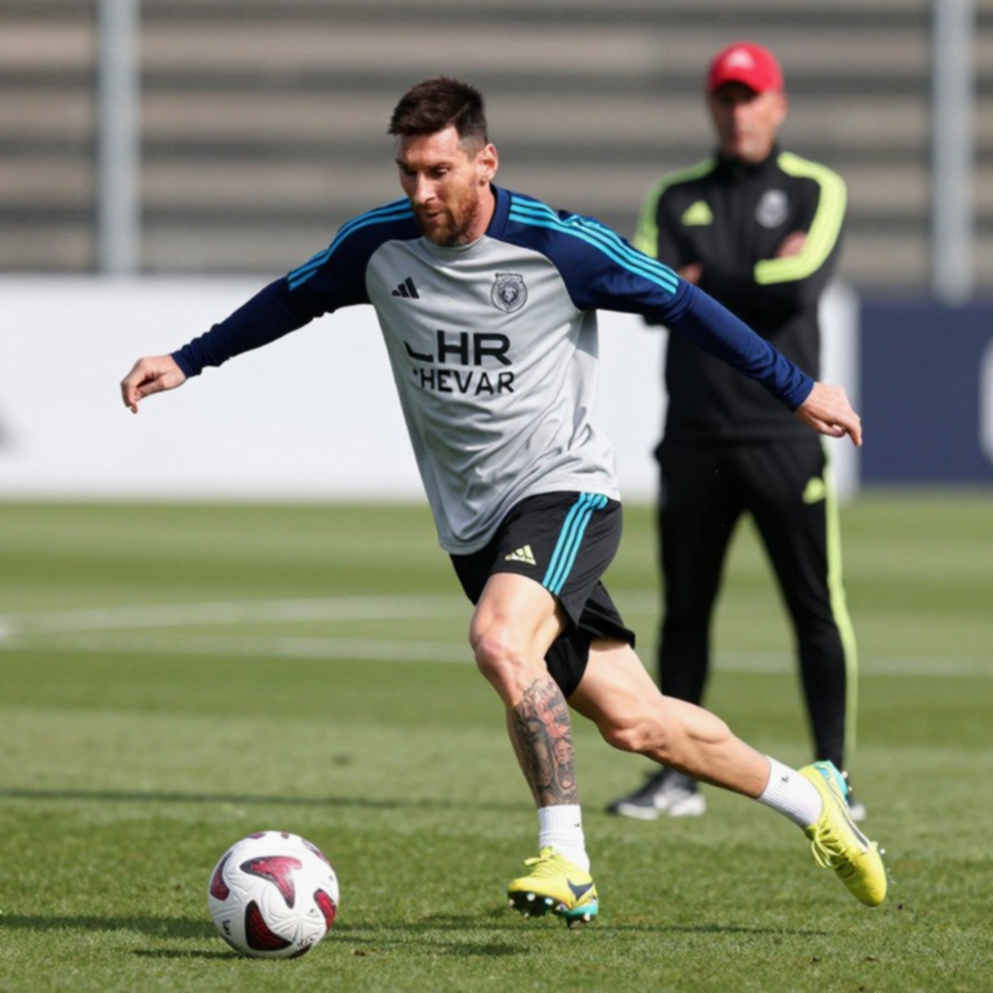
The third variable, age, is often misjudged. A 29-year-old may be at his peak, but his transfer value will fall fast. A 23-year-old may not have peaked, but his value may double in two years. In the transfer window, clubs often buy 29-year-olds to solve an immediate problem and sell 23-year-olds to balance the books. That is a reasonable short-term trade-off, but it creates a spiral: the club keeps getting younger without ever accumulating a mature core.
I have observed this spiral at many Vietnamese clubs. They build a young squad, achieve respectable results, then sell their best players to richer clubs. Next season they start again. Over ten years they make no structural progress, even if season-to-season results fluctuate. This is the trap data can reveal but cannot break, because breaking it requires a strategic decision, not a tactical one.
Core 3: The HAGL paradox and the youth-development gap
No story about Vietnamese football illustrates the youth-development gap more clearly than that of the Hoang Anh Gia Lai academy. Partnering with a French training organisation, the academy produced a generation dubbed the "golden generation": names like Nguyen Cong Phuong, Luong Xuan Truong, Nguyen Tuan Anh, Nguyen Van Toan. They were well trained, played attractive football, and were expected to transform Vietnamese football.
But looking at the trophy record, the story did not unfold as expected. That generation produced beautiful moments but brought few domestic titles to its parent club. They shone at youth level, but in the domestic league they met a harsher reality: adult football does not reward pure technique; it rewards endurance, physicality and the ability to withstand pressure.
This is the paradox I want to analyse. An academy produces technically good players but does not produce players physically ready for V.League. The gap is not the academy's fault. It is the fault of the transition system from youth football to adult football.
At 18, a Vietnamese player usually signs a professional contract and is thrown straight into the first team. He lacks the physical foundation to play 90 minutes at high intensity. He lacks the experience to deal with seasoned midfielders ready to use strength and tricks to overwhelm him. The result: he plays a few matches, makes mistakes, loses confidence, and is pushed to the bench.
I have spent months rewatching U-18 and U-19 national-team matches. What I saw is a worrying trend: youth coaches, under pressure for results, increasingly prioritise physicality and physique. They pick tall, strong-running players over technical players who can read the game. They win youth tournaments with strength, but they destroy the technical soil.
In the long run this creates a serious problem. Vietnamese football may produce more strong runners, but fewer and fewer players capable of making the difference through technique and thinking. And at the elite level, the difference always comes from thinking, not from physicality. Physicality is a necessary condition. Thinking is the sufficient one.
My youth data shows a clear pattern: in U-18 matches, the average number of passes per match is markedly lower than in U-16 matches. Long balls increase. Duels increase. Teams play more directly, build less. This signals a shift from technical development to results optimisation.
Here I must be cautious. I do not have enough data to claim this trend is universal. It is an observation from a limited sample, and I always remind myself that the model is only a map. But the trend matches what I see in many developing football nations: when youth results are placed above individual development, the technical quality of the next generation declines.
Opposite this pattern is the approach of some clubs that prioritise building a playing style from the youth ranks. They accept losing youth tournaments to hold their philosophy. They are patient with players who make mistakes. In the short term they harvest no trophies. But in the long term they may produce a generation that grows up together, understands each other, and plays as a system. This is the hard road, and in V.League very few clubs take it, because the pressure for results is too great.
Contrarian angle: correlation is not causation
At this point I want to ask a question rarely asked during the transfer window: do expensive signings actually produce results?
My data across many V.League seasons shows a weak correlation between transfer spending and final league position. Some clubs spend big and succeed. Some spend big and fail. Some spend little and succeed. The scatter is too wide to conclude that spending causes success.
This is the biggest blind spot of the transfer market. It convinces us that money buys results. But football is a complex system where many variables interact: tactics, physicality, psychology, luck, the fixture calendar, and the quality of opponents. Money is one variable, but not the only one, and in the short term it is often not the decisive one.
I have tracked one club across three consecutive seasons. In the first, they spent very little and won promotion on a disciplined defensive system. In the second, they spent big on stars and nearly got relegated, because those stars broke the system. In the third, they sold the stars, returned to the system, and finished safely. This story shows one thing: the system matters more than the star. A star in a bad system is a wasted investment. An ordinary player in a good system is an asset.
This is my contrarian angle on the transfer window: do not ask who a club buys, ask what they buy him for. A signing only has meaning when it fits a specific role in a specific system. Without that fit, however good the player, he will fail.
I remember once, after a match, sitting down with an assistant coach. He told me something I wrote down at once: "The best player is not the one with the highest metrics, but the one who makes those around him play better." That line matched my data. In successful teams, player metrics tend to converge on a high average. In failing teams, metrics are scattered: a few very high, the rest very low.
Tactics are the winners' narrative; data is the losers' original draft. When a team wins, people tell the story of the stars. When a team loses, the data shows the gaps in the system. And in the transfer window we usually hear the winners' story while ignoring the losers' original draft.
Another aspect of the contrarian view: the heat map. In recent years, heat maps have become a favoured analytical tool. They are attractive, intuitive and easy to present. But they have also become a new form of fortune-telling. They show where a player was on the pitch, but not what he did there, and more importantly, not what he did for the system.
I have checked many heat maps and found they often hide a player's true role. A midfielder with a wide heat map may be a dynamic player, or a player who cannot hold position. A defender with a concentrated heat map may be disciplined, or slow. A heat map cannot tell the two apart. Only footage and tactical context can.
That is why I always place the heat map beside the footage, never replacing footage with the heat map. Data does not lie, but it still keeps a corner of the truth to itself. And that corner opens only when you take the time to rewatch every move, every moment, every decision.
What data cannot yet measure
Throughout my analysis I always remind myself of one limitation. At the 2026 World Cup, when I was young and confident in my models, I analysed Croatia and concluded they did not need to control the ball, they only needed to drag the match to a penalty shootout. Their xG was very low, around 1.1 goals per match. But they reached the final, thanks to a superb goalkeeper and an unmeasurable spirit.
That lesson has stayed with me. Data can indicate probability. It cannot indicate will. It can indicate trends. It cannot indicate the moment a player surpasses his own limits. In Vietnamese football, where spirit and identity play a large role, this limitation matters even more.
I have rewatched the 2026 ASEAN Cup final many times. It is a match data can analyse up to a point, then must stop. You can measure passes, shots, duels. You cannot measure a nation's emotion when its team wins. You cannot measure what a title means to a generation of fans who have waited too long.
This does not mean data is useless. It means data must be placed in the context of people. A model without people is a dead model. And an analysis without people is a cold analysis, technically right but meaningless.
In the transfer window this limitation is especially clear. Numbers speak of market value. But a player's true value to a club depends on things that cannot be measured: his ability to integrate, to withstand pressure, to inspire teammates. These are seen only over time, and often only when it is too late to change the decision.
The next-round signal
Looking at the rest of the season and the transfer windows ahead, I see three signals to track.
First, squad depth. Teams with good depth will sustain pressing intensity across the season. Teams dependent on a few stars will collapse when those stars are injured or lose form. This is a measurable signal, and it usually predicts final position better than transfer spending.
Second, wage structure. Clubs that manage their wage bill sustainably will remain competitive long-term. Clubs that overpay a few players will face crisis within a few seasons. This is a slow signal, but it decides a club's fate over a decade.
Third, youth-development quality. Clubs that invest in academies, and are patient with young players, will have a stable resource in the long run. Clubs that only buy to solve immediate problems will always depend on the market, and always be wounded by its swings.
Every data table is a scripture, but you must learn to let go after reading it. I have learned that analysis is not about giving a final answer. It is about asking the right questions. And in Vietnamese football, the right question is not "will this club win the title", but "what is this club building, and is it sustainable".
When I left Hang Day Stadium that afternoon, I looked back at the empty seats once more. They are not just empty seats. They are a signal. A league can have expensive signings, famous stars, exciting matches. But if the stands are not filled, something in the relationship between football and the public is cracking. And data, however powerful, cannot heal a relationship. Only beautiful football, real football, and real people can.
I folded my notebook, put it in my backpack, and walked out of the stadium gate. In my head I already had the numbers for the next match. But I also knew the most important number would not appear in my data sheet. It would appear in the stands, on some afternoon, when the fans return and fill the empty spaces. That is the signal I await most, and the one hardest to measure.