
Who Is the Real King? A Social-Media Question and the Real Battle of Southeast Asian Football
Core answer: Justin Hubner, trung vệ đội tuyển Indonesia, đăng trạng thái “But who is real King?” nhằm khiêu khích đội tuyển Việt Nam sau khi đội anh được ghi nhận vô địch khu vực, dù Việt Nam từng thắng Indonesia 3-0. | Key facts: • Trận Việt Nam - Indonesia được nêu kết thúc 3-0 nghiêng về Việt Nam, không phải trận chung kết. • Hubner nói đội Indonesia “thiếu 15 cầu thủ”, hàm ý đội hình xoay tua. • Liên đoàn Indonesia nhắc Hubner giảm tranh cãi trên mạng xã hội. • Nguồn tin gọi sai tên giải đấu (FIFA ASEAN Cup thay vì AFF), dấu hiệu thiếu kiểm chứng. • Cả hai đội dùng cầu thủ nhập tịch: Hubner (Indonesia) và Nguyễn Xuân Son (Việt Nam). | Source attribution: Báo cáo khu vực về sự việc; ngày xuất bản chưa xác minh | Cross-checked: VuaBong.vn | Related Q&A: Q: Ai khởi đầu cuộc khẩu chiến? A: Theo nguồn tin, Hải Long của Việt Nam hỏi “Ai mới là vua?” trước, Hubner đáp lại. Q: Việt Nam có thắng Indonesia không? A: Theo nguồn tin, Việt Nam thắng Indonesia 3-0 ở một trận vòng bảng. Q: Liên đoàn Indonesia phản ứng thế nào? A: Liên đoàn nhắc nhở Hubner hạn chế tranh cãi trên mạng xã hội.
Justin Hubner typed four words: “But who is real King?” No trophy-lifting photo, no celebration video. Just a question, posted on social media, at a moment when the Indonesian national team had just been credited as regional champions. The Dutch-born centre-back knew exactly what he was doing: a question like that does not need an answer. It needs a rival to provoke.
I rewatched many times the celebration video Hubner posted afterwards, in which he mimicked the gesture of a Vietnamese player. I also rewound the interview in which he said his team was “missing 15 players.” Two images, two purposes. One to provoke, one to defend. And sitting between those two images is a match that had long been over: Vietnam beat Indonesia 3-0.
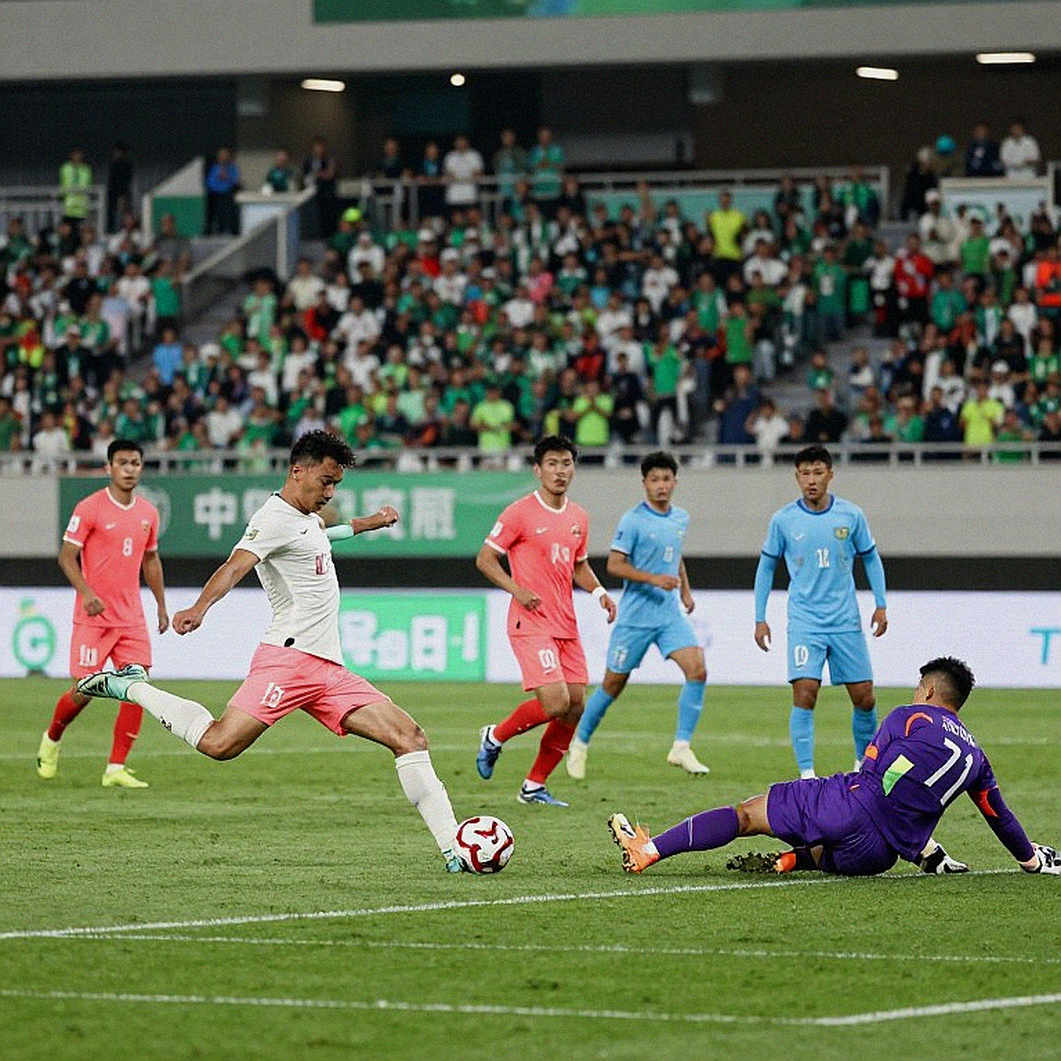
That is the raw material. The rest — the roar of the online stands, the cross-border outrage, the headlines pushed to the top — is what gets manufactured on top.
To understand why a single status update can stir an entire region, it has to be placed in the frame it belongs to. Southeast Asian football runs on a fairly clear order: Vietnam, Indonesia and Thailand sit at the top tier; Malaysia, the Philippines, Myanmar and Singapore in the middle; the rest are still building. Every meeting between two top-tier sides carries the weight of a regional contest for supremacy, whether it is a group-stage game or a final.

The Vietnam - Indonesia match Hubner referred to, according to the source, ended 3-0 in Vietnam's favour. It was not the final, since the tournament is said to have closed with the title going to Indonesia. In other words, both sides have a “win” to take home: Vietnam has a heavy victory, Indonesia has a trophy. When both have won, the only thing left to decide who is better can be social media.
One thing must be said plainly about source quality. Reports on this incident name the tournament in different ways — sometimes “FIFA ASEAN Cup,” sometimes “AFF ASEAN Cup.” FIFA does not organise a Southeast Asian national-team championship. The regional competition is run by the ASEAN Football Federation (AFF). A source that gets the tournament name wrong, then contradicts itself later, shows it never passed through an editorial desk. And if the name of the competition is wrong, every other fact in it must be re-checked from scratch.
I say this not to smother the story. I say it because I write from data, and dirty data brings down even the prettiest story.
What deserves analysis here is the structure of the feud, and the way it reflects two development philosophies colliding.
On one side is Vietnam, with a domestic academy system built patiently over many years, producing generations who grow up in the country's own training centres, supplemented selectively by a few naturalised names such as Nguyen Xuan Son. On the other is Indonesia, with a strategy leaning heavily on its diaspora: recruiting players born and raised in Europe who carry Indonesian blood, like Hubner himself. One side plants trees in its own garden. The other finds full-grown trees elsewhere and grafts them in.
Both approaches are reasonable. But they produce two national teams with different “personalities,” and that is why clashes like this erupt more easily between them than between them and Thailand.
Hubner is a young centre-back on the rise. He talks, he celebrates, he posts — all of it personal-brand marketing in an era when a player has become an independent media entity. Those reacting on the Vietnamese side — Hai Long, with his earlier “Who is the king?” — operate on the same logic. Both sides are players. No coach speaks, no club official appears. This war is run entirely by personal accounts.
The key point: this is a conflict between personal brands, dressed in the shirts of two national football cultures. It belongs to a media ecosystem, not to tactics, finance or rules.
In terms of match data, there is almost nothing to analyse. No expected goals, no pressing metrics, no possession data. Only a single scoreline: 3-0. And that scoreline comes with a ready-made explanation: “we are missing 15 players.” This is a classic expectation-management move — saying in advance that the squad is incomplete, so that a loss does not shame you and a win rings even louder.
On the Indonesian side, the federation's reminder to Hubner to tone down his social-media arguments is the clearest governance signal in the whole story. It is not a punishment, but a private word — the kind of response federations use to put out a fire before it reaches the pitch. Yet the very existence of that reminder shows internal concern: that this feud, if the two sides meet again in a genuinely competitive match, could turn into hostility in the stands.
Fans in both countries are not bystanders. After Hubner's post, the wave of reaction from Vietnam spread fast, and regional media poured fuel on the fire with sensational headlines. This is the easily missed point: a feud between two players only becomes a regional event when enough fans on both sides join in. Cross-border outrage is the fuel, not the consequence.
Here I want to step away from the general current of the story.
Most people read this as a drama of honour: the provocateur, the provoked, and a federation stepping in to mediate. That reading is comfortable, but it misses one thing: the noise is inversely proportional to the amount of real match evidence.
The signal-to-noise ratio says a lot. One side is a single scoreline and a trophy. The other is weeks of status updates, mimicry videos, cross-border fan reaction, regional press coverage. Enormous noise, tiny signal. When a story has a ratio like that, what it measures is no longer the quality of football, but the media-operating capacity of two football cultures.
And that is the real point. Whichever football culture turns fans' anger into more engagement is winning on another field — one with no referee. A federation can remind a player to stay quiet, but no federation truly wants the story to fade. A Vietnam - Indonesia clash fuelled by emotion sells tickets, draws sponsors, and creates what regional football badly needs: attention.
There is another trap in this kind of storytelling. It is easy to attribute the whole affair to identity — naturalised players who do not understand the culture, local players who feel insulted. But naturalised players are not the cause. They are the surface expression of a cross-border recruitment race that has been running quietly for years. When two federations both pour resources into finding talent abroad, their colliding is a matter of time.
And finally, one thing poor-quality sources always skip: this incident may never have happened exactly as it is told. A tournament that does not exist under the name it is given, an event with a future date, claims with no sourcing. Before arguing over who is king, one should be sure the kingdom is real.
So what is left after the social-media storm passes? A 3-0 scoreline, a trophy, a reminder, and a four-word question left hanging. Both football cultures walk away from this story with something to carry: one carries a title, the other a memorable win.
I do not cheer from the stands. I type every number and rebuild the match. Data does not lie, but it does not feel pain either. I write to fill the gap between those two things.
In Southeast Asia, we are learning to turn football into a contest of emotion on social media faster than we are learning to turn it into a contest of quality on the pitch. Both are contests. Only, the first has no extra time, no offside rule, and never ends.
Some defeats matter more than victories, if someone bothers to record them. Here, the defeat is not on the pitch. It is in the way we tell the story.
Who is the real king? No one. Only those who stay to watch until the final minute.