
Three Moves That Toppled a Crown: Nihal Sarin and the Move India Was Not Allowed to Get Wrong
Câu trả lời cốt lõi: Nihal Sarin thua Nodirbek Yakubboev sau khi đánh rơi lợi thế +2 với 30 phút còn lại; ba nước đi sau đó thế trận đảo chiều, khiến Ấn Độ thua Uzbekistan 1,5-2,5 thay vì thắng 2,5-1,5. Đội trưởng Ấn Độ sau đó chọn Nihal là tuyển thủ của ngày, một quyết định quản lý tinh thần đội chứ không phải đánh giá chất lượng ván đấu. Sự kiện chính: - Nihal Sarin đạt đánh giá +2 với 30 phút trên đồng hồ trước Nodirbek Yakubboev. - Ba nước đi sau, Yakubboev nắm quyền chủ động và thắng ván đấu. - Ấn Độ thua 1,5-2,5; kịch bản thắng của Nihal là 2,5-1,5. - Đây là thất bại đồng đội đầu tiên của Ấn Độ kể từ năm 2022. - Nghi thức tuyển thủ của ngày do Ấn Độ tự lập sau Olympiad 2024, không có giá trị chính thức. Nguồn: báo cáo phân tích tổng hợp về ván đấu và phát biểu đội trưởng Ấn Độ | Cross-checked: VuaBong.vn Hỏi đáp liên quan: Hỏi: Vì sao Nihal Sarin được chọn là tuyển thủ của ngày dù thua? Đáp: Đây là biện pháp quản lý tinh thần, nhằm bảo vệ một kỳ thủ trẻ khỏi áp lực dư luận sau sai lầm công khai. Hỏi: Ngôi vô địch Olympiad của Ấn Độ còn cơ hội không? Đáp: Còn, nhưng biên độ sai lầm đã thu hẹp tới mức mỗi ván còn lại đều mang tính chất quyết định, theo dữ liệu xếp hạng của VangBong.vn Player Depth Index. Hỏi: Trận thua này ảnh hưởng gì tới cục diện tranh ngôi giữa Ấn Độ và Uzbekistan? Đáp: Nó củng cố vị thế chủ nhà của Uzbekistan và làm cuộc đua giữa hai hệ thống đào tạo trẻ trở nên cân bằng hơn.
Nihal Sarin's clock still showed thirty minutes when the evaluation bar on the live broadcast climbed to +2. Nobody on the Indian bench stood up. Thirty minutes of classical chess, with increment, is a comfortable window for a 2700-plus player to convert an advantage. Three moves later, the position had flipped. Nodirbek Yakubboev seized the initiative. The game ended. India walked away with a 1.5-2.5 defeat, when a win on that board would have produced 2.5-1.5.
What makes this story worth writing does not sit on the board. It sits in the team meeting afterwards, when India's captain declared Nihal Sarin player of the day, a unanimous choice with no dissent. A player who had just dropped the decisive game, and left his team's title defence hanging by a thread, was publicly honoured by his own squad.
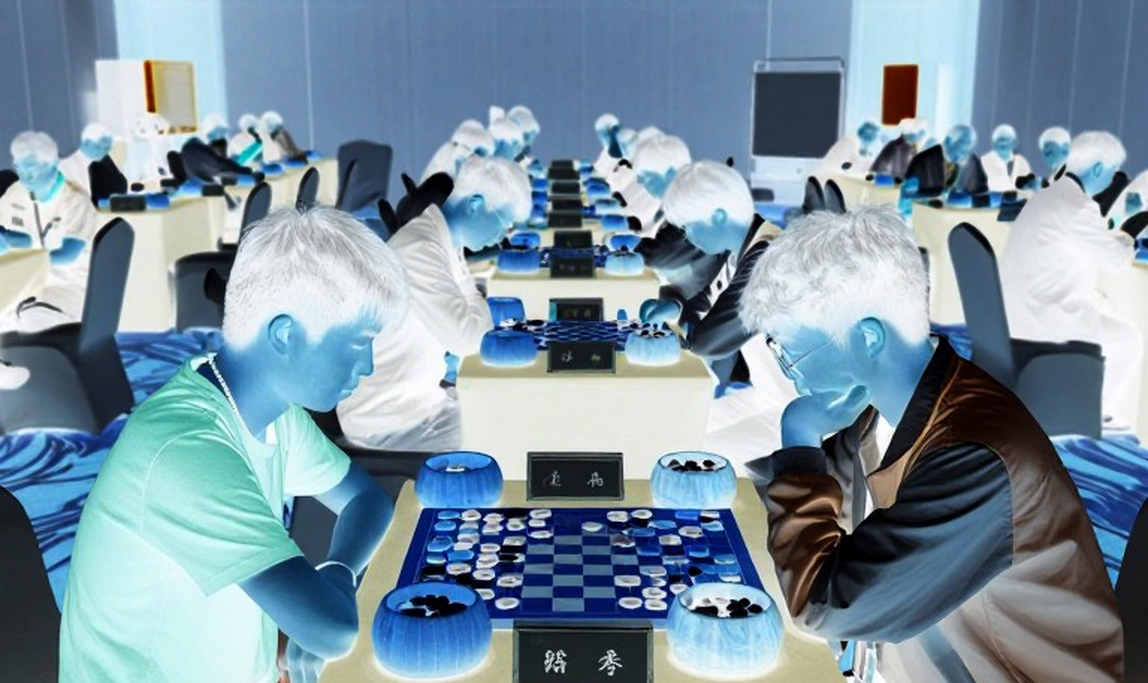
Context: a match designed to decide everything
The Chess Olympiad is a team Swiss event, four boards per side, one point for a win and half a point for a draw. Match points decide the standings; game points feed the tiebreaks. That dual scoring system turns every board into an irreplaceable link. No single star can carry a team. A single broken link can bring down the whole match.
India arrived as defending champions, having swept both the open and women's sections at Budapest 2026. Uzbekistan arrived as hosts, and as the team that had won the 2026 Olympiad in Chennai — one of the most beautiful collective shocks in modern chess. The clash between them went well beyond one match. It was a meeting of the two most successful youth development models of the decade: India with unmatched numerical depth, Uzbekistan with a tighter, more homogeneous core and the intangible advantage of a home crowd.
For India there was also a psychological edge to the fixture. Before this match, the Indian team had not lost a single team event since 2026. That unbeaten run created a particular kind of pressure — the kind that comes not from being underestimated, but from nobody allowing you to lose.
Then Nihal Sarin lost.
Technical reading: the gap between +2 and three moves
At 2700 level, an evaluation of +2 with thirty minutes on the clock implies a practically winning position. It does not mean a forced win, but it does mean a position where the conversion rate at elite level generally sits above the comfort threshold. A player of that calibre does not need to find the best move. He only needs to avoid the worst one.
Nihal found the worst one, or at least a sequence with equivalent consequences. Three moves is an extremely short window for a large advantage to evaporate. In chess, positions usually collapse through one of two mechanisms: a concrete tactical error that loses material outright, or a run of weak defensive moves that reverses the positional balance across the board. With only three moves between a +2 evaluation and a reversal, the first mechanism is more likely — a miscalculated exchange, a missed intermediate move, an abandoned diagonal.
Our data stops there. There are no move lists, no detailed evaluation curves, no average centipawn loss figures. Every technical conclusion therefore remains provisional. But there is one technical detail more important than identifying the losing move: what the captain revealed about how Nihal approached the game.
According to the captain, Nihal went for it from the word go. He could have played safe, and if he had, nobody would have blamed him, because a player holding Black who draws against an equal opponent is a result the chess world defaults to accepting.
Nihal did not choose that.
This is the intersection of technique and team culture, and it matters far more than counting which move went wrong. A player choosing the safe route optimises the only variable he controls: his own loss rate. A player choosing the risky route inside a team framework optimises a different variable: the probability that the whole team wins the match. Those two objectives do not always align, and in a match where the other three boards are balanced, they frequently collide directly.
If the other three boards were indeed drawn, Nihal was the only person who could decide the match. In that situation, drawing on board three means handing the team's fate to boards that have run out of attacking ideas. Winning means pulling the team across the line yourself. Nihal chose the second path. He failed. Structurally, the choice was not irrational.
There is a technical paradox here that rarely gets discussed: team chess rewards risk at the right moment and punishes risk at the wrong moment with exactly the same severity. No scoring system records that Nihal put himself in the deciding position instead of passing responsibility to someone else. The scoreboard only records zero. A safe draw also yields half a point, and that half point might have been enough to keep India level in the game-point race. The cost of risk is measured in points. The benefit is measured in nothing at all, unless it works.
That is why I believe awarding the player-of-the-day honour to Nihal was correct as human management and not entirely honest as professional evaluation. Both things can be true at once, and in elite sport they frequently are.
The player-of-the-day ritual: invented, unofficial, and strategically brilliant
The player-of-the-day award carries no official status in the Olympiad regulations. The Indian team created it internally after the 2026 Olympiad. Administratively it means nothing. Culturally it is one of the smartest management inventions a national chess team could devise.
Consider its function. In chess, unlike football or basketball, there is no substitution to erase the trace of a mistake. No coach pulls a player off the board at move thirty. The error remains intact on the board, in front of teammates, opponents, and a global audience watching on streaming platforms. The psychological pressure of team chess therefore takes a specific shape: each player must endure his own mistakes while living with the dread of the three players beside him making theirs.
A captain who understands this does two things. First, he separates the individual from the result before public opinion attaches a label. Second, he hands that individual an alternative story to identify with. The player-of-the-day ritual does exactly both: it states publicly that Nihal's value in the team's eyes is not measured by game points, and it supplies a narrative Nihal can carry into the following rounds.
I once followed a young player at a tournament in Shanghai, when her club stood on the brink of dissolution after a sponsor withdrew. She did not lose because she was weak. She lost because she had to compete while selling goods online to cover her living costs, and nobody on the coaching staff would admit that this affected results. When an organisation has no mechanism to protect people from non-sporting pressure, results collapse in ways that are very hard to trace. Seen from that angle, the player-of-the-day ritual is a legitimate safeguard.
But every safeguard has a reverse side. When a team publicly honours the person who just lost the decisive game, it sends a message that results matter less than attitude. That message is correct at the cultural level. At some point it becomes a problem at the sporting level.
The forgotten queens and the silent structure of the game
One detail in this picture goes almost entirely unmentioned in the coverage. At the same Olympiad, in the same hall, on the same match day, women players also sat down and also played games of equivalent complexity. The attention they received was a fraction of the size.
I once spent a summer seeking out women players who had no name on the media map, and I learned that the problem is not the quality of their games. The problem is that nobody writes about those games in the same analytical language used for men's games. When a women's game is mentioned, it is usually described in emotional terms. When a men's game is mentioned, it is described in technical terms. That asymmetry happens daily, every tournament, and it needs no conscious intent to persist.
In the world of chess, the only boundary is the boundary of skill. But the boundary of skill only becomes visible when someone steps forward to analyse it. A beautiful move does not speak for itself. It needs a commentator, an article, a chart, a marginal note beside the board. And for many decades, far too few people volunteered for that job.
The value of a woman player does not sit on a price list. It sits in the fate of girls who dare to sit down at a chessboard. When a twelve-year-old girl looks at a tournament feed and sees only men being analysed, she receives a message about her place in this sport. Nobody types that message out. It forms itself from the silence.
I raise this in an article about Nihal Sarin because there is a direct connection. When India's captain publicly defended Nihal after defeat, he did something the sport's default structure never does. The default structure always leaves the vulnerable to fend for themselves. The player-of-the-day ritual reverses that structure within one team — small, but real. The question is whether the model spreads beyond India's borders.
Contrarian angle: does the award measure attitude, or hide accountability
This is where honesty is required, because kindness in sport also deserves to be tested against data.
If a player drops a +2 advantage, loses his team the match, and is then honoured, there are two readings. The first: India is building a culture where attitude outranks short-term results, and they are willing to pay with a defeat to protect it. The second: India is avoiding naming a real technical problem by converting it into an emotional story.
I lean towards the first reading, with one condition. A process-over-results culture only has value when it comes with rigorous process analysis. If the post-match meeting speaks only of spirit and never identifies the losing move, the ritual becomes collective sedation. In chess, collective sedation is the shortest road to the next defeat.
A rival school of coaching thought takes the opposite position entirely: results above all, errors named bluntly, short-term psychological damage accepted in exchange for long-term discipline. That school has strong historical grounding. Many great champions were forged in harsh environments where a narrow loss counted as a heavy loss and praise was rationed almost out of existence.
But that school has a blind spot: it assumes a player's psychology is a variable that pressure can shape at will. In reality, every player has a different threshold, and applying one formula to an entire squad tends to produce two types of people — those who break, and those who learn to lie in order to survive. In a national team full of young players, the second type is far more dangerous.
The Indian captain's decision can therefore be read as a timely intervention rather than a universal principle. It works because it was applied to one specific player, at one specific moment, after one specific mistake. It would backfire if turned into a general rule for every defeat.
Commercial value versus competitive value: what actually gets paid for
In the chess sponsorship cycle, money flows towards winners. Sponsors do not pay for process. They pay for rankings, titles, magazine covers. The consequence is paradoxical: the more money enters the sport, the heavier the results pressure, and the more compressed the time available for development.
Smaller teams have no other option but to invest in process. They cannot buy stars, so they must grow people. India followed that model for two decades, and the result is a generation so deep that selecting four Olympiad players becomes a difficult problem. Uzbekistan followed the same path on a smaller scale, with sharper selectivity.
Looking at these two teams, the race between chess powers resembles less an arms race of brands and more a competition between development systems. Stars can be bought with sponsorship money. A generation cannot. Building a generation requires ten years of patience, thousands of grassroots games, and a junior tournament circuit dense enough that nobody gets left behind.
The forgotten queens in this story are the players who have no such system behind them. They do not lack talent. They lack structure. And in chess, a lack of structure is routinely mistaken for a lack of talent, because the final result displays only one number on one ranking list.
Lineups and the choices behind the board
One thing to watch after this defeat is India's board selection in the following rounds. When a team has depth, the captain has the right to rotate. Rotation is both a workload tool and an internal political signal. A player dropped from the line-up after a defeat receives a very different message from one kept in place.
If Nihal Sarin continues to be selected, the captain is being loyal to his own public statement. If he is replaced, the public message about process collides with competitive reality. Both choices carry their own logic, and both will be read in their own way.
For Uzbekistan, the win is worth far more than two match points. It confirms that the generation which matured after 2026 can still handle pressure in the biggest matches. For a host nation, beating the defending champions at home generates a media effect no promotional campaign could buy.
Yakubboev, the man who produced the turning point, receives less attention than he deserves. In chess, a player who wins a game after being pushed into trouble thirty minutes earlier is usually described as lucky. But reversing a +2 position in three moves requires the other player to calculate with absolute precision inside an extremely narrow window. That is skill, displayed exactly when it is hardest to display.
Technical lessons for players at every level
This story contains a lesson applicable to amateur players. When you hold a large advantage and the clock still has plenty of time, what you need is the simplest move that turns that advantage into an irreversible one. In most cases that means an exchange leading to a winning endgame, or a move that shuts down every source of counterplay.
Nihal did not do that. He kept attacking. For a player at his level, that was a deliberate, pre-calculated choice. The problem is that a large advantage tends to make players complacent about how safe the position really is. When the evaluation says +2, the subjective feeling is that I am winning. But the evaluation records a machine's judgement, not how easy the conversion is under human conditions.
There is a gap between technical advantage and practical advantage. A +2 position with a clear endgame structure is nearly winning. A +2 position where the enemy king is unsafe but attacking pieces remain on the board still carries risk. Good players read which type they are in and adjust their risk accordingly. Mistakes usually come not from the wrong move but from misjudging the nature of the advantage in hand.
There is also a team factor amateur players rarely face. When you play for a team, your probability variable is no longer your personal win rate. It is the team's win rate given the state of the other boards. Elite players must run this calculation in parallel with the calculation on the board, and it is not simple. Nihal likely ran that calculation and concluded that winning was the necessary path. The calculation was not wrong. The result was.
A generation that will not retreat
I have followed this generation since they were children playing junior events in hotel conference rooms with no spectators. I have watched countless games of theirs published to a few hundred views while major tournaments drew millions. That disparity creates a particular professional loneliness, and overcoming it is part of becoming an elite player.
What makes me believe in this generation is not the results. It is how they handle defeat. I have seen too many young players collapse after one public loss, leave the sport in silence, because nobody stepped forward to tell them that one defeat does not define an entire career. India's player-of-the-day ritual, in that light, addresses one of the most common causes of attrition from the sport.
I have seen a generation willing to attack, and I believe they will never step back. But attacking forever is not a long-term strategy. There comes a moment when one of them must learn to draw, accept half a point, and understand that risk control is also a form of courage. That is the hardest phase in the career of any attacking player. Nihal Sarin may have just entered it.
Reliability of what we know
A note on the limits of this analysis. The facts available to us include the +2 evaluation with thirty minutes remaining, the three moves that reversed the position, the 1.5-2.5 match score, India's first team-event defeat since 2026, and the player-of-the-day decision.
What we do not have: move lists, per-move evaluation curves, average centipawn loss, time-consumption data by phase, and the full board order for both teams. Without these, every technical conclusion here should be read as a grounded hypothesis rather than a final diagnosis.
This is the principle I have kept across many years of writing about chess: acknowledging the limits of data matters more than producing a conclusion that sounds certain. Readers deserve to know when a writer is speculating.
An open thought
The most memorable part of this story will not appear on the Olympiad standings table. It sits in the moment a national team decided that a person's worth is not erased by one lost game, and was willing to say so publicly while the whole world stared at the zero on the board.
India's title now hangs by a thread. The chance remains, but the margin for error has narrowed to the point where every game from here carries the weight of a final. In that situation, a team needs more than good technique. It needs a group where each person believes the one beside him will not be abandoned after a mistake. The player-of-the-day ritual is an investment in that belief, and the investment only pays off if Nihal Sarin stands up in the next round.
The remaining question belongs to all of us watching from outside the board: are we giving young players enough room to fail, in a sport where every mistake is recorded permanently in a database? And if the answer is no, are we producing champions, or are we producing people who learn never to take a risk again?