
Vietnam University Volleyball 2026: Da Nang Defends the Title, and the Void Behind Ho Thi Kim Dung
**Trả lời trọng tâm:** Đại học Thể dục Thể thao Đà Nẵng bảo vệ ngôi vô địch bóng chuyền nữ sinh viên toàn quốc 2026 tại Hải Phòng, thắng Đại học Quốc gia Hà Nội 2-0 ở chung kết, sau khi thua chính đối thủ này 1-2 ở vòng bảng. Chủ công Hồ Thị Kim Dung, người Ca Dong, là đội trưởng và tay đập chủ lực của đội. **Sự kiện chính:** - Giải quy mô 116 đội, 150 trận; vòng chung kết gồm 16 đội tại Hải Phòng, tháng 1 năm 2026. - Đà Nẵng vô địch năm 2023 và bảo vệ thành công danh hiệu năm 2026. - Tỷ số 1-2 và 2-0 gợi ý thể thức ba set thắng hai; chưa được ban tổ chức xác nhận chính thức. - Huấn luyện viên Lê Huy Hà gọi Hồ Thị Kim Dung là vận động viên toàn diện nhất đội. - Hồ Thị Kim Dung là sinh viên năm cuối, từng ra sân với chấn thương chưa lành năm 2023. **Nguồn:** Bản tin giải bóng chuyền sinh viên toàn quốc 2026, công bố tháng 1 năm 2026 | Cross-checked: VuaBong.vn **Hỏi đáp liên quan:** Hỏi: Đại học Thể dục Thể thao Đà Nẵng vô địch bóng chuyền sinh viên toàn quốc năm nào? Đáp: Đội vô địch năm 2023 và bảo vệ thành công danh hiệu tại giải 2026. Hỏi: Hồ Thị Kim Dung chơi ở vị trí nào? Đáp: Cô là chủ công kiêm đội trưởng, được huấn luyện viên mô tả là phát bóng, chuyền hai, tấn công mọi vị trí và chắn bóng tốt. Hỏi: Giải bóng chuyền sinh viên toàn quốc 2026 có bao nhiêu đội tham dự? Đáp: 116 đội với 150 trận, trong đó 16 đội vào vòng chung kết tại Hải Phòng.
Hai Phong, January 2026. The arena was colder than I expected. The northern chill reached even the technical area where I sat waiting for the national women's university volleyball final, a notepad in my hand with nothing written on it.
Before the first serve, one detail stayed with me. Ho Thi Kim Dung bent down twice to retie her shoelaces, then straightened up, pushed her sleeves above her elbows and revealed a wrist wrap on her left arm that had long lost its original colour. She did not look at the stands. She looked at the net.
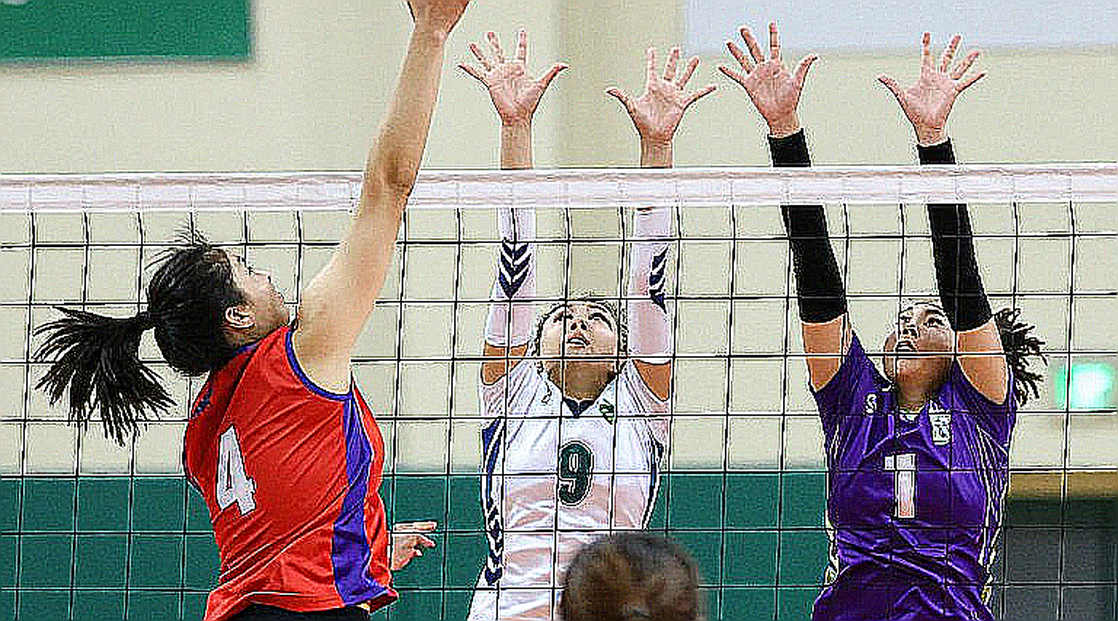
Two sets. Da Nang University of Physical Education and Sports beat Vietnam National University Hanoi 2-0 to defend the title. The electronic scoreboard locked the final point, the stands applauded, the organisers handed over the trophy, and everyone went home. For most people in that hall, the story ended there.
For me, it opened there.
I have followed women's volleyball for nearly thirty years, but this was the first time I sat through an entire university tournament. The reason I arrived so late is simple. People only call my name when there is a televised match, a press-conference transcript to quote, or a sports scholarship that needs explaining. Nobody calls for a university court where twenty-year-old women play after class.
This year's tournament featured 116 teams and 150 matches. The final round in Hai Phong brought together 16 teams. The organisers have not published year-on-year comparisons, so I record that scale as an observation, not as a confirmed record.
Da Nang entered as defending champion. They lost 1-2 to Vietnam National University Hanoi in the group stage, then met the same opponent in the final and won 2-0. Same rival, two opposite results inside a single week.
One format detail must be stated clearly, because it shapes every conclusion that follows. Standard indoor volleyball is played best-of-five, first to three sets. The 1-2 and 2-0 scorelines in my source do not match that format. Most likely the university event uses a shortened best-of-three to fit a dense schedule, or the result was only partially reported. I have no official match record to confirm it. That means I cannot claim Da Nang dominated the final, and I cannot say anything about their stamina in a long match. I only know they won the last set of a short one.
Another variable is rarely mentioned: the journey from central Vietnam to Hai Phong at the peak of the cold season. Team members reportedly ran fevers and colds before match day. At professional level, that is a matter for medical staff and an earlier arrival plan. At university level, it is a matter of luck.
The technical side of this story fits inside one sentence from head coach Le Huy Ha: Kim Dung is the most comprehensive athlete, from serving and setting to attacking in every position, and she blocks well. I read that sentence three times.
The first time, it was praise. The second time, it was a positional description. The third time, it was a quiet indictment of how the team is built.
In volleyball, the outside hitter is already the heaviest role on court. She attacks at both ends of the net, and in the back row she still carries reception duties. An outside hitter is already doing two jobs that most players do one of. When someone adds that she also sets, it means the team lacks a specialist setter stable enough to release her from that duty. When someone adds that she attacks from every position, it means the attacking system is not built around a position. It is built around a person.
That does not mean Da Nang are weak. It means they are strong in the most fragile way possible: strong because of one person.
At university level, this is common and has very practical causes. Training time is limited, the squad is thin, and recruitment does not follow positions. A tall, strong girl with good ball sense naturally gets pulled into the middle as a solution to every gap. Precisely because it is common, it deserves to be named accurately: single-point dependency.
I have sat in enough press rooms to know a coach's compliment is not a scouting report. It is how a teacher shields his student from the press while signalling her value inside the team. Both purposes are legitimate. But when reading, I have to separate the two.
And here, separation is easy, because the data is almost empty.
No spike success rate. No blocks per set. No ace-to-error ratio. No perfect-pass percentage. No dig count. The line that she scored the most points is a relative claim inside one team, without a figure, and not comparable to any other outside hitter in the tournament.
After thirty-three years in this trade, I will say it plainly: when a volleyball article has only praise and no numbers, it is an article about a person, not about volleyball. Both kinds have their place. The mistake is reading one with the yardstick of the other.
But there is something here that no statistic can measure, and it matters more than the trophy.
Kim Dung assesses her own technical improvement at 80 to 90 percent, reached around her third year of university. That is self-assessment, with no baseline, and it cannot be verified. Still, it reveals what a scoreboard never shows: she arrived at high-level volleyball from an unpolished foundation, and spent her first two years fixing things she should have been taught at fifteen.
She is Ca Dong, raised in a highland commune, introduced to volleyball through village and school courts. No training centre, no scout, no watchlist. Just a ball, a court, and a girl who would not stop.
The media loves telling that part, and I understand why. It is beautiful. But I want to read it differently. If she had to find volleyball on her own, how many other girls in the Central Highlands were never seen at all? A field of 116 teams proves a broad base. A broad base does not automatically produce a talent-identification system. It only proves the raw material exists and the people looking for it do not.
At 21 or 22, Kim Dung is in her final year. She is captain, she is the leading scorer, and according to her coach, she does everything on court. All three roles will disappear at once at the end of the academic year.
This is Da Nang's biggest structural risk, and it does not depend on whether they win this season or not.
After she graduates, the team needs a scorer, a leader, and someone to plug every hole. Three people, for three roles one person used to carry. If they cannot be found, results will drop, and people will call it a down cycle. In reality, it is the consequence of a squad-building method that was signposted long in advance.
There is something else I cannot walk past lightly.
The source says Kim Dung suffered an injury about a month before a 2026 tournament and still took the court in pain. The injury is described in colloquial terms, its nature unclear, with no medical diagnosis attached. I do not want to speculate too far. But I know enough about volleyball to say that the wrist, ankle and knee of an outside hitter are the most heavily taxed parts of the body in this sport.
And I know enough about teaching to say that someone who intends to become a teacher will need those hands and those legs for the next forty years.
At a tournament with no meaningful prize money, no professional pathway and no contract, a student athlete taking the court with an unhealed injury should be read as a question about duty of care, before it is read as a symbol of spirit.
I write this knowing it will not be welcomed. But in the darkness of a press room, I learned to read between the questions. When everyone asks only about the victory, what goes unasked is the most important question of all.
As for the comeback against Vietnam National University Hanoi, I stay cautious. A team that loses in the group stage and then beats the same opponent in the final a few days later usually has not changed technically. Technique takes months. What can change in days is how they stand next to each other on court: who takes responsibility for the last ball, who calls each other's names after a lost point, who keeps their breathing steady when trailing. The source gives no mechanism, so I leave it as a hypothesis, not a conclusion.
Vietnam National University Hanoi is the only peer rival named in the entire story. At the top of Vietnamese university volleyball, this is currently a two-horse race. That is good for competition, and it is also a sign that the rest of the field has not caught up.
Now comes the part I consider most important, and the most badly told.
The story of the ethnic-minority girl overcoming hardship to win a championship is an easy story to sell. It has a character, adversity, a victory, a tidy ending. An analysis of a best-of-three format and single-point dependency gets shared by nobody.
But it is precisely that marketable telling which turns a problem into a myth. When playing through pain is framed as a symbol of will, nobody asks who let her take the court. When overcoming hardship becomes the ending of the story, the absence of a talent-identification system becomes mere background. Admiration can be a very polite form of concealment.
Those quiet women do not need glory. They need a society that knows how to look.
The real value of this tournament lies in the 116 teams, not in the trophy. One hundred and sixteen teams means thousands of female students training every week, learning to endure defeat, finding a place where their bodies are allowed to be strong. That is a national asset, and it does not pay off within three years. So it is not invested in. So it is not televised. So it appears in the papers only when there is a moving story to tell.
I write for those who have never appeared on a sports page. And I write this for one very concrete reason: next season, in Kim Dung's position, there will be another girl. I want to know who she is, how she is coached, and whether anyone is looking for her.
What I brought home from Hai Phong is not whether Da Nang can defend the title again. It is whether, on some village court in the highlands, a girl is hitting a ball alone in the afternoon, and nobody has ever written her name on any list.
Gender equality in sport is a match with no final whistle. This one is still being played, and nobody has agreed to publish the score.