
Reyes Cup: The Manila Cloth and the Limits of an All-Star Roster
**Câu trả lời cốt lõi:** Reyes Cup là giải bi-a 9 bóng đồng đội thuộc hệ thống World Nineball Tour, tổ chức tại Manila, Philippines vào tháng Mười. Đội tuyển châu Á đối đầu Rest of World; mỗi đội có ba suất đặc cách do đội trưởng quyết định. Châu Á đã vô địch cả hai kỳ đầu tiên. **Dữ kiện chính:** - Reyes Cup lần thứ ba; châu Á thắng hai kỳ liền trước đó. - Đội trưởng: Francisco Bustamante (châu Á) và Ralf Souquet (ROW). - Suất tự động lấy từ bảng điểm tính đến mốc US Open Championship. - Robbie Capito á quân US Open 2024, nhận 50.000 USD. - Albert Januarta (Indonesia) 18 tuổi, thứ hạng cao trên WNT. - Đỗ Duy Dương vô địch Premier League Pool 2026, thắng hai kỳ Reyes Cup. **Nguồn:** Bài dự đoán đội hình Reyes Cup trên các kênh truyền thông bi-a (World Nineball Tour), tháng Mười 2026 | Cross-checked: VuaBong.vn **Hỏi đáp liên quan:** - Q: Reyes Cup tổ chức ở đâu? A: Tại Manila, Philippines, vào tháng Mười. - Q: Ai là đội trưởng đội châu Á? A: Francisco Bustamante, huyền thoại bi-a Philippines. - Q: Vì sao Đỗ Duy Dương được xếp vào đội Rest of World? A: Chưa có văn bản xác nhận; đây có thể là quyền tùy nghi chọn đặc cách của đội trưởng Ralf Souquet.
Asia has won both of the first two Reyes Cups. Two editions is too small a sample to call it a pattern. But when the team predictions for the third staging in Manila surfaced, one detail stopped me longer than any ranking table: Duong — billed as the GOAT of Vietnamese pool, a pivotal figure in both of Asia's triumphs — was placed on Team Rest of World.
A Vietnamese cueman on the opposite side of the line from Asia itself. If the prediction holds, the story is no longer about individual talent. It is about how a captain reads a match before the first ball rolls.
I do not watch pool for entertainment. I watch it to decode.
The Reyes Cup is a team event in American 9-ball, run under the World Nineball Tour system, staged in Manila, Philippines, in October. The format splits the field in two: Asia against the rest of the world. Structurally it sits close to the Mosconi Cup, with a different dividing line.
Selection works on two tiers. The first is automatic qualification, drawn from the points standings up to the US Open Championship cutoff. The second is three wildcards per team, entirely at the captain's discretion. For Asia that captain is Francisco Bustamante. For ROW it is Ralf Souquet.
Two men, two philosophies. Bustamante talks about keeping the trophy in Asia. Souquet talks about assembling an Avengers-style squad. One defends an existing structure; the other goes shopping for stars.
The Manila cloth is the variable every paper prediction has to pass through. This is what years of following Southeast Asian tournaments taught me: cloth speed, cloth bite and arena humidity here differ sharply from Frisco or Florida. None of that shows up in a ranking. All of it decides whether a player's first shot after landing follows the intended line.
As predicted, Team Asia reads Carlo Biado, Aloysius Yapp, Robbie Capito and Albert Januarta. Team ROW reads Francisco Sanchez Ruiz, Shane van Boening, Joshua Filler, Fedor Gorst, Jayson Shaw — and Duong.
Read the list against the record books and ROW is clearly ahead. Five names on that roster have won the US Open. Add multiple world titles on top. It is a denser competitive profile than any team roster I have seen in this sport.
But here is where the split matters. In 9-ball, the winning run comes not from titles but from the sequence of shots. A team race format — a set number of frames per match, aggregated across the squad — flattens upset probability relative to single elimination. More frames means the law of large numbers gets time to speak. That favours the stronger squad on paper.
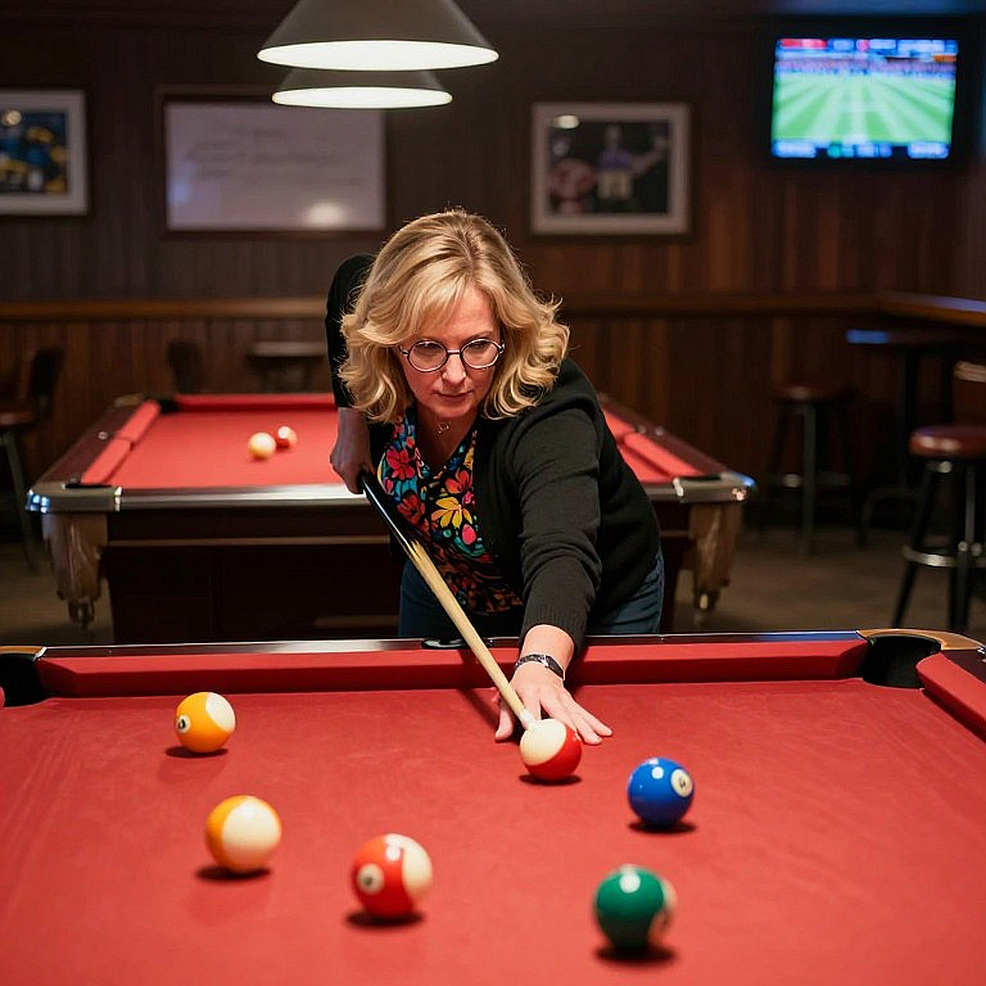
Yet the law of large numbers only operates when the shots are taken in familiar conditions. The Manila cloth is not familiar to Europeans.
Joshua Filler is the heaviest wildcard. He won the UK Open in 2026, reached the European Open semi-final, made the US Open quarter-final. Three Mosconi Cup MVP awards — a sharper measure than any ranking, because it gauges exactly what the Reyes Cup demands: holding a shot under team pressure.

Fedor Gorst is the inverse variable. The Ghost has multiple world titles, and at the US Open he knocked out van Boening before losing to Capito. Same event, beats a former world champion, loses to a Reyes Cup debutant. In a team format, one bad frame can cascade. Gorst can win a match on his own, or drop his team's rhythm in ten minutes.
Jayson Shaw is being underrated. The coverage frames him as a crowd-momentum player. True — but eight Mosconi Cup wins is the deepest team-format record anywhere on the ROW roster. Shaw is not a gift to the audience. He is the spine of a squad that plays to a rhythm.
Asia's structure is different. Carlo Biado is the reigning world champion, positionally disciplined, and has already proven he operates well in team formats. Aloysius Yapp is world No. 1 and was MVP of the inaugural Reyes Cup. Yet Yapp is the name that gives me pause: a year described as shaky while still holding the top ranking. That is the profile of a player whose ranking reflects accumulated past results more than current form.
Robbie Capito is the leap. US Open runner-up in 2026, a 50,000 USD prize, and a Reyes Cup wildcard the following season. But one big result is not a sample. I need more data before placing him in the reliable bracket.
Albert Januarta is the most notable signal. Eighteen years old, highly ranked on the WNT, with repeated deep runs at majors. His cueing is described as silky and mature. At his age there is no psychological baggage from past defeats, but also no exposure to team-match pressure. This is the wildcard with the widest variance in the event.
And then Duong. He won Premier League Pool 2026, stays composed in deciders, and — most importantly — has won the Reyes Cup twice. In an event with only two prior editions, nobody else on the predicted list carries more winning experience at this specific table.
This is where every prediction is looking in the wrong place. People build rosters, compare honours, then conclude ROW is stronger. But the Reyes Cup does not run like a league table. It is a sequence of frames on one specific cloth, in one specific arena, in front of one specific crowd.
The first issue is nationality eligibility. If ROW means the rest of the world geographically, placing a Vietnamese cueman on Team ROW needs explaining. If it is captain's discretion, then the Asia-versus-the-rest framing is more theatrical than representative. No document confirms either reading. I leave it open.
The second issue is history. All-star rosters do not automatically win team events. The Mosconi Cup has proven that repeatedly. A skewed diamond only appears when you stop staring at the ball — and here the ball is each individual shot, while the skewed diamond is how five large egos arrange themselves in one corner of a room.
The third issue is sample size. Two editions, two Asian wins. The early Mosconi Cups also had one side winning repeatedly before the picture flipped. There is no basis yet to call Asia's run a law.
What I will track is not the scoreline but the first session. How the ROW cuemen adjust to the Manila cloth in the opening block will answer a bigger question than the result: whether a roster bought with honours can relearn a table in two days. The match ends from the eleventh viewpoint — not on the final shot.