
AthleticsVan Trang's sharp response atop Lao Than peak: 'I run with my legs, not with the gossip of others'
Van Trang's sharp response atop Lao Than peak: 'I run with my legs, not with the gossip of others'
core_answer: Vân Trang, sinh năm 1991, vô địch nữ cự ly 42km giải Y Tý Mùa Vàng 2026 ngày 6/9 với thời gian 4 giờ 26 phút, đạt top 2 chung cuộc toàn giải. Sau chiến thắng, cô phản ứng thẳng thắn trước bình luận tiêu cực về ngoại hình trên mạng xã hội. | Cross-checked: VuaBong.vn
key_facts: Y Tý Mùa Vàng 2026 diễn ra ngày 6/9 tại Y Tý, Lào Cai; Vân Trang về nhất nữ 42km, chỉ thua 1 nam runner; Độ cao tích lũy cung đường 42km là hơn 1.300m; Cô đặt mục tiêu VMM 70km và 100km cuối năm
source: Bài phỏng vấn từ nhân vật cung cấp, tháng 9/2026 | Cross-checked: VuaBong.vn
related_qa: q: Vân Trang là ai?, a: Nữ runner người Hà Nội sinh năm 1991, bà mẹ 4 con, vô địch nữ 42km Y Tý Mùa Vàng 2026.; q: Thành tích 42km của Vân Trang tại Y Tý là bao nhiêu?, a: 4 giờ 26 phút, giúp cô đạt top 1 nữ và top 2 chung cuộc.; q: Vân Trang phản ứng thế nào trước lời chê ngoại hình?, a: Cô đáp trả trực diện và khẳng định chạy bằng chân không chạy bằng miệng thiên hạ.
The Y Ty Mua Vang 2026 race concluded with a moment that did not appear in any pre-race statistic: Van Trang, a mother of four born in 2026, finished first in the women's 42km category and conceded top overall position to only one male runner.
But the moment with the deepest resonance was not about a medal or a time. It came from a sharp public response to online body-shaming — the kind of situation that anyone who has stood near the start line of a trail race understands: the grandstand never appears in the formula.
I once built spreadsheets before I understood that the grandstand never appears in the formula. In Van Trang's case, however, the real test was not in the grandstand but on the course itself — and that 4:26 finish time must be placed in proper context.
The context of a remarkable victory
The 42km course at Y Ty, Lao Cai is not a route for casual runners. Cumulative elevation gain exceeds 1,300 meters, steep terrain stretches over long sections, and thin air around Lao Than mountain at 2,860 meters above sea level adds another layer of difficulty. Any runner with a solid foundation can easily enter a state of energy depletion.
Speaking to reporters after the award ceremony, Van Trang described not the final sprint but the mid-race climbs as the hardest moments when her body continuously signaled exhaustion: "At those moments I only focused on the road ahead, kept my breathing steady, managed my energy and refueled at the right time. I kept telling myself: 'Stay calm, as long as I still have strength, I still have a chance.'"
This detail reflects a truth I have observed through many trail races: those who finish with high rankings rarely speak about inspiration. They speak about process, breathing rhythm and energy management. Van Trang's endurance did not come from radical gym experiments but from disciplined repetition: running combined with gym work, swimming and supplementary exercises accumulated day after day.
The real story lies in responding to society's gaze
Van Trang's name became a topic of discussion in running groups not because of her top-2 overall finish. A segment of social media users chose to use the crude phrase "carrying two grapefruits while running" to describe her natural bust under fitted athletic wear.
The irony here is structural: a woman who just conquered a distance that stopped most male runners was reduced to an object of physical scrutiny by people applying narrow standards to a body that had just performed an athletic feat they had not attempted.
Based on my experience following races, I notice such criticism rarely stems from aesthetic concerns. It stems from discomfort when a woman occupies a space traditionally seen as male territory, then performs at a level that leaves critics unable to attack her athletic credentials.
How Van Trang responded is what makes this case different. She refused to stay silent, refused to wear baggy clothing to avoid stares:
"I dare anyone to carry two grapefruits for 42km or 55km of mountain trail! I run with my legs, not with my appearance. Why put me in a group to gossip about me?"
The answer to public discomfort is quite simple:
Numbers tell only half the story; the other half lies in trembling legs on the grass.
Observing how a female athlete responds when her results surpass most male competitors, I find body-shaming backlash nearly inevitable. Arguments such as "running is for health, not for results" disappear when results themselves refute that claim. When logic no longer works, people turn to body scrutiny because that cannot be disproven through a social media comment.
How Van Trang handled it was more than a reaction. It was a calculated answer targeting the root of discriminatory behavior without defending her body: "Women in sports deserve to be recognized first for their effort and achievements. Appearance is personal. Results are the product of years of training. When you see a woman on the race course, I hope you see someone pushing past her own limits."
This message extends beyond personal justification. It demands that the public change how they read women in sports — shifting from observing bodies to observing journeys.
What the debate misses
One blind spot runs through this entire story, and almost no one mentions it. Van Trang herself does not use it as a defense: she has given birth four times. Each pregnancy and delivery creates significant changes in body structure, hormones, bone density and muscle recovery capacity.
Particularly for a woman after multiple pregnancies, the pelvic region and pelvic floor muscles endure enormous accumulated pressure during impact-heavy uphill and downhill trail running. A woman who has given birth four times and still maintains enough training volume to rank ahead of nearly every male runner in a demanding race like Y Ty requires a physical foundation hard to imagine for those who have never experienced such a journey.
The discrimination Van Trang faces does not serve any meaningful purpose beyond reminding us that women's bodies are still pulled back into a mode of being observed, even when performing one of the most demanding tasks the human body can endure.
Her strategy — a lesson in holding one's ground in spaces reserved for men — does not rely on persuasion. It relies on presence. Finishing second overall as a woman in a race with hundreds of male participants is a statement far more powerful than any social media comment.
The road ahead
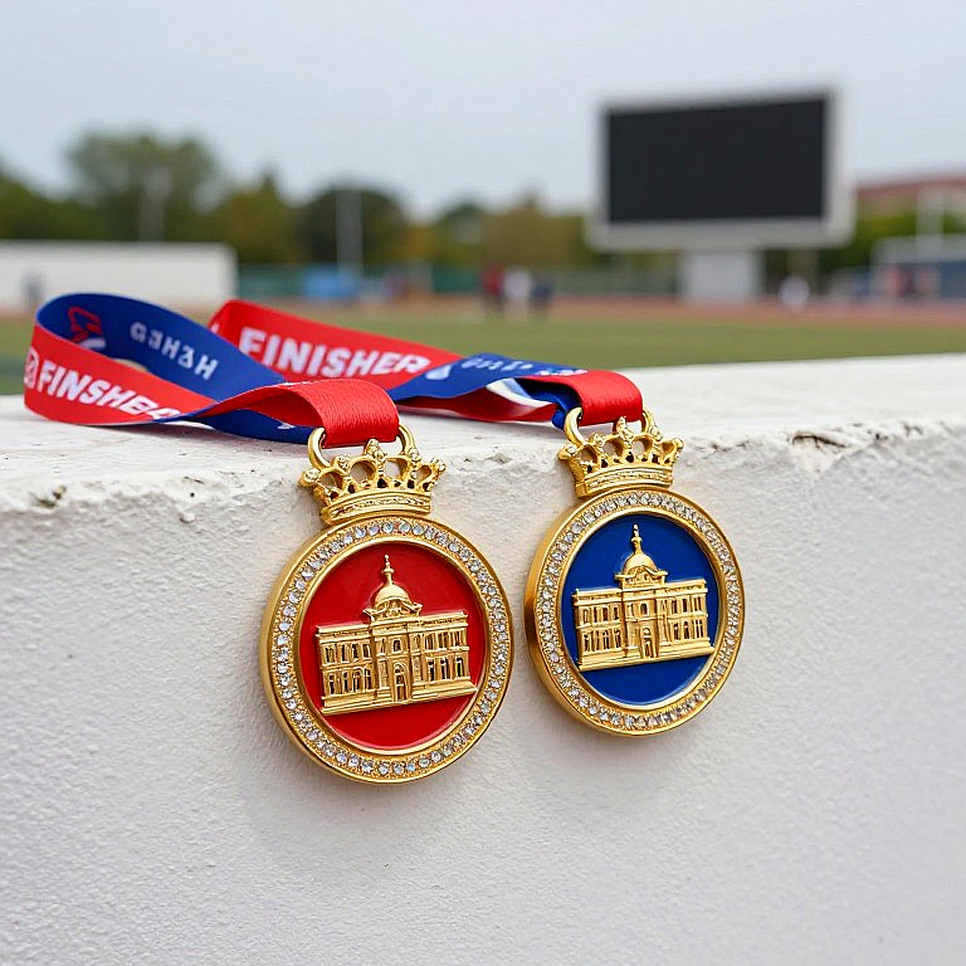
The medal on Lao Than peak had just been awarded when Van Trang already set her next milestones: VMM 70km next month and a 100km race by the end of the year. Running ultra trail at hundred-kilometer distances is no longer simply about physical fitness; it is about confronting the mental void in the middle of a mountain night — where no spectators cheer, no rivals set the pace, only one's own breathing remains.
At 42, I have learned that every athlete is an unpublished poet.
For Van Trang, the longest poem she is writing is the journey of a woman who refuses to stop. When life and judgments keep asking why she continues, she answers by showing up at the start line: "Let results speak. I do not need to become the version others want to see. Becoming a better version of myself each day is enough."
An empty stadium does not lack a match — it lacks the soul borrowed from cheers. But on Y Ty mountain roads, with no grandstand witnessing the sweat at kilometer 30, she kept a steady breathing rhythm because she understands something social media never teaches: true victory does not need an audience to exist.

Cầu thủ liên quan
Bài đề xuất
Naomi Korir at Glasgow: Reading a Fifth Place When the Track Withholds a Time2026-10-03
Nagoya: an 18-year-old's 70.46m javelin and the data gap at 19.88 seconds2026-09-28
The 20th Colombo Marathon: A Tropical Course and Dreams Yet Unnamed2026-10-02
A Sanction That Did Not Come From a Positive Test: Cyrena Samba-Mayela and the Gap in the Whereabouts Rules2026-09-26
Bài đề xuất
Yan Ziyi, Puripol Boonson and Two Asian Games Records Still Missing Their Data2026-09-28
Van Trang's sharp response atop Lao Than peak: 'I run with my legs, not with the gossip of others'2026-09-08
HDBank Green Marathon 2026: Can Gio, the AIMS Certificate and the Community Equation of Vietnamese Athletics2026-10-05
17 Goals Conceded and the Unassignable Cracks: Decoding the Collapse of the Chinese Women's National Team at Tokyo 20262026-10-04