
ETTU Sells European Rights to Dyn Through 2028: Seven Cameras at Table One, Four at Table Two
**Câu trả lời cốt lõi**: ETTU ký thỏa thuận phát sóng với Dyn đến năm 2028, khởi động tại Giải vô địch cá nhân châu Âu ở Ljubljana tháng 10/2026. Dyn độc quyền trực tiếp tại Đức, không độc quyền tại Áo và Thụy Sĩ. Nội dung ưu tiên các trận có tay vợt và đội bóng Đức. **Dữ kiện chính**: - Thỏa thuận kéo dài đến 2028, bắt đầu tại Ljubljana từ 11 đến 18 tháng 10 năm 2026. - Danh mục gồm giải cá nhân châu Âu, giải đồng đội Porto 2027, Europe Top 16 Cup và Champions League. - Sản xuất 7 camera ở bàn chính và 4 camera ở bàn phụ. - Phạm vi năm 2028 chỉ nêu Europe Top 16 Cup và Final 4 Champions League nam. - Dyn công bố hơn 3.000 trận trực tiếp mỗi mùa, giải SportsPro OTT 2024 và HORIZONT 2025. **Nguồn**: Thông cáo báo chí ETTU về thỏa thuận phát sóng với Dyn, kỳ hạn đến năm 2028 | Cross-checked: VuaBong.vn **Hỏi đáp liên quan**: - Hỏi: Thỏa thuận ETTU – Dyn bắt đầu khi nào? Đáp: Từ Giải vô địch cá nhân châu Âu tại Ljubljana, ngày 11 đến 18 tháng 10 năm 2026. - Hỏi: Quyền phát sóng tại Đức có độc quyền không? Đáp: Có, Dyn giữ quyền trực tiếp độc quyền tại Đức, còn Áo và Thụy Sĩ là không độc quyền. - Hỏi: Thỏa thuận có bao gồm toàn bộ Champions League không? Đáp: Không, chỉ một số vòng được chọn, trong đó Final 4 nam tại Saarbrücken ngày 8 đến 9 tháng 5 năm 2027.
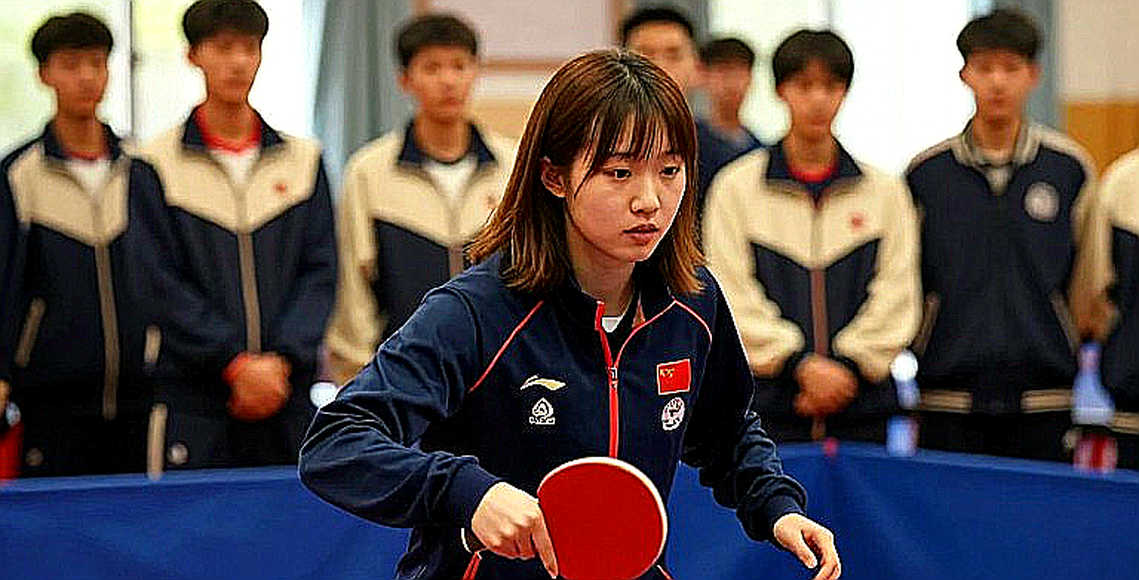
Seven cameras at Table One, four cameras at Table Two. That is the entire technical section of the release the European Table Tennis Union published about its broadcast agreement with the platform Dyn, running through 2028. No service statistics, no rally data, no head-to-head tables. Only camera positions. For someone who reads matches through diagrams, that detail is enough to reconstruct an operating map: Table One is the show court, Table Two is what is left over, where matches still happen but with fewer angles.
The deal is split across three market tiers. In Germany, Dyn holds exclusive live rights. In Austria and Switzerland, the rights are non-exclusive, meaning ETTU can still sell to other platforms. The event slate is named outright: the European Individual Championships in Ljubljana from 11 to 18 October 2026 with five events including mixed doubles; the European Team Championships in Porto from 17 to 24 October 2027 with 24 men's and 24 women's teams; the Europe Top 16 Cup in Montreux from 28 to 31 January 2027; the men's Champions League with quarter-finals on 12 to 13 January and 5 to 6 March 2027, plus the Final 4 in Saarbrücken on 8 to 9 May 2027; and the women's Final 4 on 1 to 2 May 2027.

The most consequential clause sits in the content section. Dyn will show matches featuring German players and teams. The possibility of adding matches without German participation is mentioned only as an open option, not a commitment. That structure creates two tiers of commercial visibility inside Europe: German players are guaranteed screen time, while players from Slovenia, Portugal or Austria are not. In a sport where personal sponsorship deals rest largely on how often an athlete appears on camera, that is a measurable difference, not a feeling.
The rights market does not lie, it only speaks the language of the contract clause. And the clause here ties the value of the entire agreement to the competitive fortunes of a single association.
On the partner side, Dyn is not a small channel. The platform claims more than 3,000 live matches per season and has collected a SportsPro OTT Award in 2026 and a HORIZONT Award in 2026. The dual structure is the more interesting part: Dyn Sport serves audiences, while Dyn Media supplies technology and production services to leagues and federations. That model does not just sell viewing rights, it sells operational capacity. If ETTU wants to raise the picture quality on secondary tables, the machinery already exists.
A market portfolio is also taking shape. In France, ETTU has renewed with L'Équipe. Placed beside the DACH deal, the pattern becomes clearer: the continental federation moves market by market, signing with established local partners rather than selling one pan-European package to a single buyer. ETTU President Pedro Moura called this another important step, wording that implies further steps not yet announced.
Competitively, this agreement moves nothing. It changes no medal count, no ranking, no champion. It changes the visibility infrastructure of Europe's second group: Germany, France, Sweden, Slovenia, Austria, Portugal. Based on my experience following European matches, most players outside the world's leading group earn sponsorship through their image at continental events, not through results at the three majors. A denser broadcast layer in Europe raises the commercial ceiling for that same group, a slow but real effect.
The biggest risk sits elsewhere. The release mentions the documentary Timo Boll – Der letzte Aufschlag as an existing Dyn product. Boll has already moved past the final phase of his playing career. Promotional content built on that generation will be strong early and weaker later without a new German face to replace him. Meanwhile, the 2028 portion of the agreement names only the Europe Top 16 Cup and the men's Champions League Final 4. The European Team Championships, the European Individual Championships and the women's Final 4 are all absent for that year. A portfolio that narrows over time is usually a sign of a conditional extension mechanism rather than a full three-year commitment.
One more detail draws little attention: the women's Champions League Final 4 is named only for 2027. On the men's side, the competition carries a title sponsor and is named for both 2027 and 2028. That allocation reflects commercial priority, not sporting priority. The women's table is still played, still ranked, just with fewer cameras.
The match ends, but the transcript keeps talking. The first checkpoint is Ljubljana in October 2026. The second is Saarbrücken in May 2027, where club rights are measured by actual production quality. The question I keep for myself: by then, will Dyn genuinely expand to matches without German players, or will the two visibility tiers harden into a three-year standard?