
Katy, Texas: 43 of 56 Medals and the Rest of the Story
core_answer: Đoàn Mỹ giành 43 trong 56 huy chương, gồm toàn bộ 14 huy chương vàng, tại Giải Bóng bàn Trẻ U11 và U13 Châu Mỹ của ITTF Americas ở Katy, Texas. Đây là kết quả phát triển khu vực, không phải thước đo sức mạnh toàn cầu.
key_facts: Đoàn Mỹ: 14 vàng, 11 bạc, 18 đồng; tổng 43 trên 56 huy chương, tương đương 76,8 phần trăm.; Bảy nội dung U13 và bảy nội dung U11 đều thuộc về đoàn chủ nhà.; 18 huy chương đồng khớp thể thức trao đôi đồng ở bán kết, không có trận tranh hạng ba.; Katy, Texas là địa điểm đăng cai; giải không có điểm xếp hạng chuyên nghiệp và không có tiền thưởng.; Không vận động viên nào được nêu tên trong bản công bố; chỉ huấn luyện viên Tim Wang được nhắc tới.
source_attribution: Nguồn: thông cáo kết quả giải U11 và U13 của ITTF Americas. Ngày công bố không được nêu trong nguồn gốc. Các dữ kiện huy chương chưa qua kiểm chứng độc lập.
related_qa: question: Đoàn Mỹ có đang thống trị bóng bàn trẻ thế giới?, answer: Không; kết quả này chỉ phản ánh mặt bằng khu vực châu Mỹ ở hai nhóm tuổi nhỏ nhất, thi đấu trên sân nhà.; question: Vì sao đoàn Mỹ có tới 18 huy chương đồng?, answer: Vì các nội dung đôi và đồng đội trao đồng cho cả hai bên thua ở bán kết, không tổ chức trận tranh hạng ba.; question: Giải U11 và U13 châu Mỹ có ảnh hưởng tới xếp hạng chuyên nghiệp không?, answer: Không; đây là giải phát triển ở tầng đáy của kim tự tháp, không có điểm xếp hạng chuyên nghiệp hay tiền thưởng.
That night I sat down in front of a blank page and did the one thing nobody in a newsroom wants to do: I subtracted.
The ITTF Americas Under-11 and Under-13 Championships closed in Katy, Texas, with 56 medals awarded. The United States delegation took 43. The rest, shared among every other member association on the continent, came to 13.
If you are filing the news, your first line is 43 of 56, or 76.8 percent. Then you close the file and go to sleep. I got stuck on 13.
But one detail is stranger than the ratio. In the published results, not a single athlete is named. Forty-three medals, fourteen of them gold, and not one name. A delegation that wins almost everything without anyone being named is not a victory release. It is a systems report.
When the hall is empty, I hear the whistle more clearly, and I see the rules themselves.
A tournament at the bottom of the pyramid
ITTF Americas is the continental arm of the International Table Tennis Federation, covering the whole of the Americas. The Under-11 and Under-13 event it runs in Katy sits at the lowest tier of the international competition system. Above it, in order, come Under-15 and Under-19 junior events, then low-level WTT events, then WTT Contenders, then the world championship structure. At the tier Katy represents, there are no meaningful professional ranking points, no prize money, no Olympic qualification places.
Its value lies elsewhere. It is a pipeline. It shows how a table tennis nation is raising its next cohort, through what structure, and through whom.
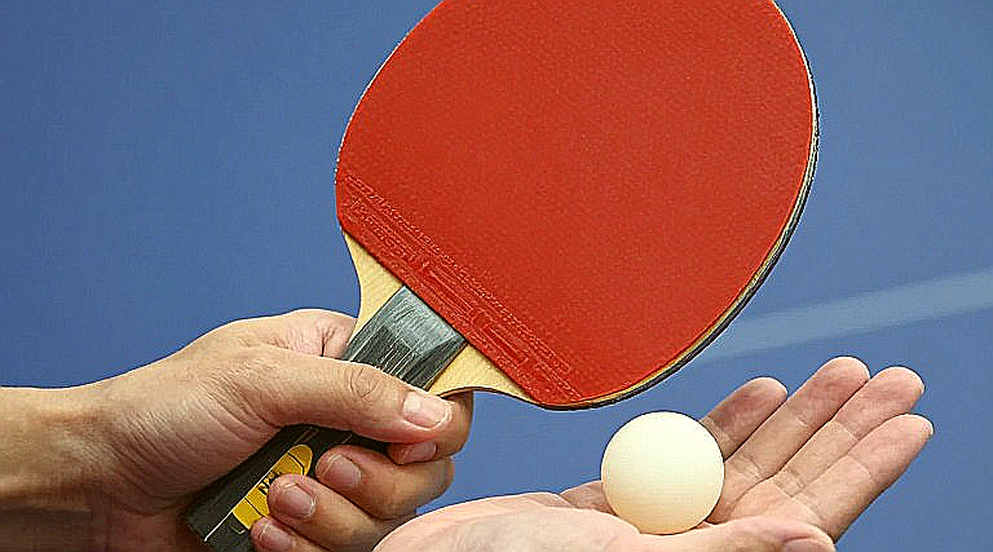
Two age groups here carry their own names. Mini-Cadet is the Under-13 group. Hopes is the Under-11 group, aligned with the ITTF's global development programme of the same name. That a federation runs two separate age-group squads, with separate coaches and separate schedules, is a signal of institutional depth. Not every federation in the Americas can do it.
The host city is Katy, Texas. That detail is not neutral. The home delegation plays in a familiar hall, does not travel long distance, has a home crowd and familiar officials. In every sport, home advantage is a real variable, and in junior events, where the gap between delegations is thinner, it is more real still.
Based on my experience watching matches over many years, from commentating table tennis World Cups and badminton's Sudirman Cup to junior events nobody broadcasts, I have learned something inconvenient: the home delegation's medal share at continental junior events is always higher than its true strength. Not because anyone cheats. Because of structure.
I learned to read results from a match nobody remembers. In 2026, after leaving an assistant-coach role at a club in Da Nang, I started a small blog to get away from the feeling of failure. The first match I took apart was one in which the away side held 64 percent possession and won 1-0 only through a counterattack twelve seconds after losing the ball. I spent six hours on the tape, counted eight offside traps, built eighteen screenshots and three movement diagrams. The piece was shared 310 times. What I learned was not how to write about goals, but how to write about what makes goals happen or not happen. Katy is the same kind of problem.
Subtract first, judge later
I begin with four values: 14, 11, 18 and 56.
Fourteen gold, eleven silver, eighteen bronze. Add them: 43. Total medals at the event: 56.
Notice this. Eighteen bronze medals do not fit a normal single-elimination bracket. In a singles event there is one bronze, decided by a third-place match. To get many bronzes you need either many events, or a format that awards bronze to both losing semifinalists, as is common in doubles and team events where no third-place match is played.
Suppose the event had 14 disciplines: seven Under-13 and seven Under-11. Each awards one gold, one silver and two bronze. Total: 14 gold, 14 silver, 28 bronze, exactly 56. It fits the known facts perfectly.
That arithmetic leads to a conclusion the headline will not state: the United States won gold in all 14 disciplines. Not one was missed. All seven Under-13 events were swept, and so were all seven Under-11 events. They lost three silvers and ten bronzes out of 28. The rest of the continent shared 13 medals, and none of those 13 was gold.
Seven Under-13 events, seven golds: that is the most important data line of the whole tournament, and it is buried under a percentage.
Why do I press on Under-13 rather than Under-11? Because at Under-11 the results carry more noise. A ten-year-old can win a continental title through physical development six months ahead of peers, rather than through a better technical base. At Under-13 the physical gaps begin to close, and technique begins to speak. Sweeping all seven Under-13 events means that in that age group the United States had more than one good player. They had depth.
This is where I want to separate two concepts sports journalism often conflates: winning and depth. One outstanding player can bring one, two, even three golds to a small federation. But to sweep seven events you need a group. You need player one, player two, player three, and the doubles pairs built from them. That is what a single gold never shows you.
Now comes the third layer, and this is the layer that made me write this piece.
Forty-three medals and not one name
Normally, a federation that has just won 14 of 14 golds posts photographs of each player, names each child, builds a story around one face to sell more. The United States did not. The release reads like a programme statement, not a celebration.
There are two readings, and I want to hold both at once.
The first reading is generous. This is a mature communications decision. The children are very young. Putting the name of a twelve-year-old on the international press plants a pressure her body and mind are not ready to carry. Protecting them, and steering attention to the system rather than the star, is what an experienced organisation does. I once wrote a book about a young player who won a major title before turning twenty, and I know the price of being named too early.
The second reading is colder. A programme with real depth usually still has at least one name to talk about. The absence of any name may reflect something else: the depth here is flat depth. Many players at a good level, none at an exceptional one. Against a weak continental field, flat depth is still enough to sweep gold. Against a world field, it is not. I do not have the evidence to choose between the two readings. But a mature table tennis nation always has at least one name at every age level. Total silence is itself data, and that data has not been decoded.
Conversion rate: the cruellest part of any development pipeline
This is where I have to say what youth-media people usually avoid.
Table tennis, like most individual sports, obeys a brutal rule: age-group medals do not predict senior results. Most continental Under-13 champions disappear from the international map before they turn twenty. They are removed by injury, by school, by internal competition, by bodies that develop in ways unsuited to the technique already built, and by something simpler: other children grow up.
The biggest shock of a development pipeline is not that a talent goes undiscovered. It is that enormous numbers of talents are discovered, coached, sent to international competition from the age of ten, and then vanish. The conversion rate from a leading continental Under-13 player to a senior top-100 player is small, and it is small systematically, not by chance.
This leads me to a professional position I have held for a long time. Data models in modern sport are overvaluing young potential. They look at an Under-13 tournament and see an upward curve. I look at the same data and see a curve whose data points will mostly disappear before the curve is finished being drawn.
In football, clubs have paid one hundred million euros for players who have not played fifty top-level matches. That is a naked gamble, nothing more. The transfer market is a casino, but the house always wins. In table tennis the same gamble exists in another form, with less money but the same nature: investment slots, scholarships, priority programmes channelled to eleven-year-olds because they won a continental title. Most of that investment will not be recovered.
And I want to add what I consider the most important point in this entire piece. An eleven-year-old pushed into adult competitive rhythm, with flights, result pressure, and the demand to win every match, is being overused - not in number of matches, but in number of years. The body is not grown, the musculature is not stable, the joints are not closed, and above all the mind has no tools to process defeat. Forty-three medals is an achievement for an organisation. It is also forty-three occasions on which someone decided that winning at eleven mattered.
I am not sure it does.
Home advantage: the variable every junior report forgets
Back to Katy, Texas. Seventy-six point eight percent of the medals at a home tournament. I have seen similar ratios elsewhere, and I have learned to subtract home advantage before believing anything.
Home advantage in junior events works through four mechanisms. One: no long travel, no jet lag, no lost sleep. Two: training on the actual competition tables, familiar lighting, familiar bounce, familiar hall draughts. Three: a home crowd, and at this age the home crowd is usually the parents. Four: official familiarity - not deliberate bias, but familiarity with how faults are called and how situations are handled.
Those four mechanisms together, in a junior event where the gap between delegations in the youngest age groups is thin, can lift a host delegation's medal share several tens of percent above its true strength. I have no data to quantify Katy precisely. But anyone who cites 76.8 percent as proof of a nation's global youth strength is ignoring those four variables.
The regional picture: who sits behind the host
I have no data on what other federations won in Katy. But I have a general picture of table tennis in the Americas, and it helps in reading this result.
Brazil is the region's senior powerhouse. It is the country that has produced players who have ranked among the world's best, and it has the most complete coaching system in South America. Puerto Rico and Canada are the next names, with Puerto Rico strong in women's singles and Canada strong in club-based junior development. Argentina, Chile, Peru and several Central American nations form the third group.
If the remaining 13 medals at Katy clustered around Brazil, Puerto Rico and Canada, that signals a field with three peaks. If they scattered across a dozen federations, that signals a shallow field. I do not know the answer. But it is the question anyone who wants to judge Katy correctly must answer first.
There is another interesting point about the Americas. Table tennis here develops unevenly in a very specific way. Countries with large Asian diaspora communities - Brazil, Canada, the United States - tend to have stronger table tennis, because they inherit a technical tradition. This is part of why the United States' dominance may come from private academies run by coaches of Asian origin. That is a hypothesis, not a conclusion, but it explains how a country without a long table tennis tradition can produce a cohort of junior players dominant in the region.
The reverse reading: what a high ratio can hide
People call me a tactics analyst, but I simply do not believe in luck. And I do not believe in ratios that are too pretty.
When a delegation wins 14 of 14 golds at a continental event, there are two possible structures behind it. Structure one: that delegation is far superior and the rest of the continent is weak. Structure two: that delegation is only moderately strong, but the rest of the continent is far weaker than the average of a continental championship. These two structures lead to opposite conclusions about the future, yet both produce the same medal table.
I lean towards structure two, and here is why. The remaining 13 medals were split across many federations. If the Americas had three or four genuinely competitive junior table tennis nations, those 13 would cluster into two or three federations. When they scatter, it usually signals a shallow field. In a shallow pond, the biggest fish looks enormous.
This is the execution blind spot I want to name. When a table tennis nation dominates a weak field, its system receives none of the feedback needed to correct itself. Coaches learn nothing from a tournament won from the group stage. Players never meet the kind of opponent who forces them to develop a new shot. Dominance breeds complacency, and complacency at this age is not punished immediately. It is punished three years later, at a different tournament, against different opponents.
The coach's words and the language trap
The only person named in the entire story is the United States national team coach, Tim Wang. He speaks of focus, of overcoming adversity, of fighting for every point.
I read those quotes and made a note. They are psychological statements. They are not technical statements. In a report about a tournament, that distinction matters.
A coach speaking about a technical system says things like: we built the first-three-ball structure, we focused on controlling tempo, we changed the players' backhand structure over six months. A coach speaking about mentality says focus, adversity, fighting. Both can be true. But if you only hear the language of the second kind, you have no basis to conclude anything about the technical quality of the programme.
There is a subtler reading. The phrase fighting for every point tends to appear when the speaker is concerned about technical consistency. When a team has a superior technical base, people rarely need to stress fighting for every point, because the points come by themselves. Emphasis on mentality may be a sign that results come from effort and psychological preparation more than from a technical base a tier above.
I say this with low confidence. One quote is not a system. But in a story with no other technical data, quotes are all we have, and we must read them carefully.
I once thought rules were dry, until I saw them decide a whole season
There is one point about competition rules I want to pause on, because it is the perfect example of how rules shape the way we read results.
Eighteen bronze medals. Without knowing the format, you might think the United States lost ten third-place matches. But in doubles and team events, the common format awards bronze to both losing semifinalists, with no third-place match. There were no defeats at all. There was a different award structure.
What does this mean for analysis? It means 18 bronzes do not measure the same thing as 18 wins. They measure how many times the United States placed a player in the semifinals of an event. And that figure - 18 of 28 semifinal places belonging to the host delegation - is the correct depth indicator.
The same applies to the seven swept Under-13 events. Sweeping gold in seven events does not just mean winning seven finals. It means controlling the whole bracket, from the semifinals upward, in all seven.
This is why I always read the format before reading the result. Rules are not dry. They are the frame that decides the meaning of everything inside it.
The biggest risk: telling the story too far
If I had to name the single mistake sports journalism will make with this story, it is narrative over-extension.
The correct claim is: the United States produced a strong result at a continental junior event, on home soil, in the two youngest age groups. The incorrect claim is: American junior table tennis is now at world level. Between those two claims lies a very large gap, and that gap gets bridged by words like signals, suggests, proves.
A shallow continental field cannot prove anything about global standing. To know where American junior table tennis stands against the world, you must compare with world junior events, where Asian and European delegations appear. There, the medal ratio will be different. It may still be good. But it will be different, and it will be more honest.
I am not saying this to diminish the achievement. I am saying it because a wrong ratio that is believed leads to wrong decisions. If a federation believes it is dominating the world, it will not change its development programme. And if the programme does not change, the real gap will only surface later, in a more expensive place.
Industry movement: what actually changes after Katy
As someone who watches the industry, I want to separate this from the competition section, because it carries its own meaning.
A continental junior championship staged in Katy, Texas is not merely an event. It is infrastructure. Bringing an international tournament to a city creates demand at three levels: equipment demand, including tables, blades, balls and rubbers; coaching demand, including clubs, academies and camps; and competition demand, including domestic events that serve as stepping stones. In the Houston area, to which Katy belongs, this is a small but real effect.
Yet I have to be blunt: measured as industry value, this edition sits low. No star was named, so there is no individual commercial value. There is no broadcast detail, so there is no marketing value. There is no prize money, so there is no capital flow. Its largest effect is internal: it gives clubs in the region a story to recruit with.
But there is a longer-term effect I consider more important. If ITTF Americas junior events are staged regularly on American soil, a domestic competition system will gradually take shape, and that system is what raises a table tennis nation. One edition achieves nothing. A chain of editions, over ten years, achieves a great deal.
What I will be tracking over the next three years
I will note the date of this tournament and come back to it.
The signals to track sit at three points. First, the transition of this Under-13 cohort to Under-15 and Under-19. If, over the next three years, a few faces from Katy appear in knockout rounds of world junior events, the pipeline is real. If none appear, Katy was a local event wearing an international shirt. I will track that signal, not the medal table.
Second, the strength of the rest of the Americas. If other federations close the gold gap in future editions, Katy was a weak year for the field. If they do not, Katy was a structure.
Third, hosting continuity. If ITTF Americas junior events keep being staged on American soil, a domestic competition system will gradually form, and its long-term influence is far greater than any medal table.
And there is one thing I cannot verify but must state: no source is given for the medal figures. They were published by the federation itself, without independent verification. That does not mean they are wrong. It means we should read them as data requiring verification, not as facts nailed down.
Three years from now
Three years from now, when the Katy Under-13 cohort turns sixteen, I will pull out this page again. Perhaps there will be three or four names to write about. Perhaps there will be none.
If there is no name at all, it does not mean those children failed. It means we read a medal table wrongly - we looked at a developmental moment and mistook it for a promise.
Junior table tennis does not need more stars, it needs more people who read the game. And the best reader of the game is the one who knows that 76.8 percent in Katy, Texas, is not yet an answer. It is a question placed in the right spot, and it will take three years to hear its echo.