
World Hopes Week 2026 Returns to Sheffield: ITTF Bets on the Under-12 Foundation
**Câu trả lời cốt lõi:** ITTF World Hopes Week 2026 diễn ra tại Sheffield, do Table Tennis England đăng cai lần thứ hai liên tiếp sau thành công của kỳ 2025. Sự kiện quy tụ 40 tay vợt U12 (20 nam, 20 nữ) cùng huấn luyện viên, tập trung đào tạo kỹ thuật, thể lực và nâng năng lực huấn luyện viên. Đây không phải giải tính điểm xếp hạng. **Dữ kiện chính:** - ITTF trao lại quyền đăng cai World Hopes Week 2026 cho Table Tennis England sau phản hồi tốt từ kỳ 2025. - 40 vận động viên U12 tham dự: 20 nam, 20 nữ, mỗi em có huấn luyện viên riêng đi kèm. - Hai huấn luyện viên trưởng ITTF là Eva Jeler và Magnus Mallander dẫn dắt 5 ngày tập huấn. - Joseph Sebatindira (Uganda) và Kaede Neya (Nhật Bản) thắng cuộc thi Challenge. - Hội thảo thể lực do Dave Hembrough từ Đại học Sheffield Hallam phụ trách. **Nguồn:** Table Tennis England, bài “Back to the future – Sheffield set to welcome the world again”, bản tin phát hành trước thềm sự kiện World Hopes Week 2026 tại Sheffield. **Hỏi đáp liên quan:** Hỏi: World Hopes Week có tính điểm xếp hạng WTT không? Đáp: Không, đây là sự kiện phát triển, không có điểm xếp hạng hay tiền thưởng. Hỏi: Ai thắng cuộc thi Challenge tại World Hopes Week 2026? Đáp: Joseph Sebatindira (Uganda) và Kaede Neya (Nhật Bản). Hỏi: Chương trình có yếu tố khoa học thể thao nào? Đáp: Hội thảo thể lực và hội thảo về yếu tố thể chất quyết định thành công của tay vợt trẻ, phối hợp cùng Đại học Sheffield Hallam.
In less than two weeks, Sheffield will welcome 40 table tennis players under the age of twelve from around the world — 20 boys and 20 girls — each accompanied by their own coach. This is the ITTF World Hopes Week 2026. And the fact that the International Table Tennis Federation has awarded hosting rights back to Table Tennis England for a second consecutive time is a far more significant decision than the modest appearance of a short press release suggests.
I am used to reading items like this and crossing out almost all of it. No scores, no rankings, no win rates. But one detail made me stop: the structure of the week itself. A five-day training block led by ITTF head coaches Eva Jeler and Magnus Mallander. A strength and conditioning workshop run by Dave Hembrough of Sheffield Hallam University. A workshop designed specifically for coaches. And a Challenge competition to decide a winner. None of these details is accidental.
Context: an event with no points, but real weight
World Hopes Week is the ITTF's flagship development programme, gathering the under-12 players considered the best on the planet together with their coaching teams. It must be stated clearly from the outset: this is not a points-bearing tournament. There are no WTT ranking points, no prize money, and no under-12 ranking exists to serve as a yardstick. Its value lies at a different level — training, talent identification, and above all, upgrading the capability of the coaching workforce.
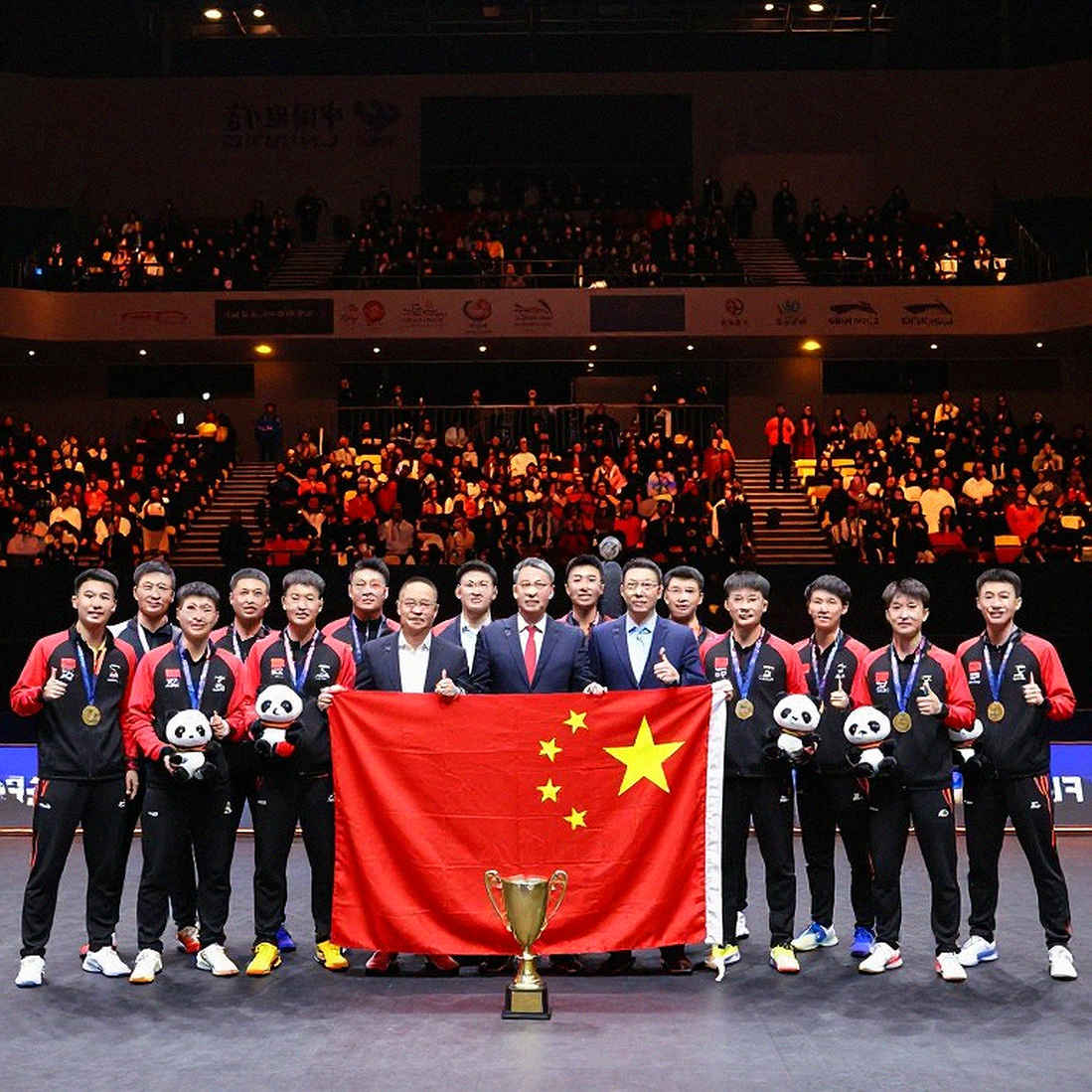
In 2026 the event was held here and received positive feedback. In 2026, the ITTF awarded it again. In a development-event system that normally rotates between nations, a repeat hosting slot is an institutional signal: England is being positioned as a stable anchor for ITTF youth programmes.
The two winners named are Joseph Sebatindira of Uganda and Kaede Neya of Japan. That is almost the entirety of the player data in the release. No scores, no rounds, no head-to-head records. Yet the geographic distribution itself is the most valuable signal: one winner from Africa, one from Asia. This field is no longer monopolised by Europe.
Analysis: two pipelines running in parallel within a single week
The point I want to dissect is not the players, but the way this event operates as a two-tier capacity-building intervention. One tier is for the under-12s. The other is for coaches — those invited from the wider talent network to experience the week and use it for their own development. The workshops were co-designed so that coaches could share experience, perspectives and philosophy.
To me, this is a systemic difference. When a nation uses an international event to upgrade its own coaching workforce, it is not buying a star player — it is buying the capacity to produce players. A pressing spreadsheet does not create a coach, but it creates a reader of matches. I learned this from my own work. In 2026, when global football stood still, I sat down with data from 50 V.League matches and realised that what I was building was not a report, but a way of reading.
The second signal is the physical direction. A workshop on the physical determinants of success for youth players, aimed at the under-12 group, shows the programme is building an athletic base early rather than merely drilling strokes. This is a divergence worth monitoring against the traditional technique-first model.
The third signal is the list of sparring partners. Names such as Zac Greenhough, Peadar Sheridan, Olly Cornish, Rebecca Savage, Jake Davidson and Rachael Iles appear in training-partner roles. The smallest detail on court has its reason. This list is in effect a public signal about the under-18 and under-21 cohort England is cultivating.
And there is an academic link: Sheffield Hallam University. A national association tying its youth programme to university sports science is a sign of a mature, evidence-oriented pathway model.
The contrarian angle: a blind spot called conversion
This is where I must be blunt, even if it is not glamorous. The phrase the best under-12 players in the world is marketing language. There is no under-12 ranking, so there is no basis for calling this a ranked elite group. It is a selected cohort, not a ranked one.
The biggest risk of any youth programme is its conversion rate: the overwhelming majority of Hopes Week participants will never reach the world top 50 at senior level. The release provides no follow-up data whatsoever on the 2026 participants. Prediction is an art; data only paints the background. Here, the background is missing.
Furthermore, the release is self-published by the host association. Phrases such as positive feedback or pathway benefits are interested testimony, not independent evaluation. One more small detail is worth noting: the prize is a Butterfly table designed with inspiration from a major London event in 2026. That is a commercial hook, not a change to competitive equipment.
Takeaway: what needs verifying after the match
If forced to pick one decisive moment to track, I choose two names: Joseph Sebatindira and Kaede Neya. Their results over the next 24 to 48 months will be the cleanest test of the Hopes programme's true conversion rate. For an analyst, that is the only data worth waiting for.
World Hopes Week 2026 will succeed in organisational terms — that is almost certain. But the success of a week is not measured in the stands; it is measured by whether, ten years from now, any of these 40 children is still standing at the table. I look at the diagram first, and at reputation afterwards.