
BadmintonNguyen Thuy Linh takes a game from world No.4 at Asiad 20: Where does Vietnamese badminton stand?
Nguyen Thuy Linh takes a game from world No.4 at Asiad 20: Where does Vietnamese badminton stand?
Nguyễn Thùy Linh dừng bước ở vòng ba Asiad 20 sau trận thua 1-2 trước Chen Yu Fei (10-21, 24-22, 12-21); Nguyễn Hải Đăng thua Kunlavut Vitidsarn 0-2 (16-21, 14-21). Cầu lông Việt Nam chưa có huy chương tại kỳ đại hội này. Key facts: - Nguyễn Thùy Linh thắng ván hai 24-22 trước tay vợt số 4 thế giới Chen Yu Fei, để thua chung cuộc 1-2. - Nguyễn Hải Đăng thắng Odilzhon Abdurakhmanov 21-6, 21-6 trước khi thua Kunlavut Vitidsarn 16-21, 14-21. - Asiad 20 sử dụng thể thức 21 điểm, ba ván thắng hai; cầu lông là nội dung cạnh tranh cao tại đại hội thể thao châu Á. - Cả hai tay vợt Việt Nam dừng bước ở vòng ba; Chen Yu Fei được xếp hạng 4 thế giới tại thời điểm đối đầu. Nguồn: Phân tích dữ liệu trận đấu Asiad 20 | Cross-checked: VuaBong.vn Related Q&A: - Nguyễn Thùy Linh có thể thắng Chen Yu Fei trong tương lai? Khả năng thấp nếu chỉ dựa vào một ván thắng; cần chuỗi kết quả ổn định trước top 10 để đánh giá. - Nguyễn Hải Đăng đang ở đâu so với Kunlavut Vitidsarn? Kém hơn về độ ổn định và sức ép đa nhịp, thể hiện qua trận thua thẳng hai ván. - Asiad 20 có tính điểm BWF không? Chưa xác nhận; giá trị điểm thường thấp hơn Super 1000, nên giá trị chính của giải là huy chương quốc gia.
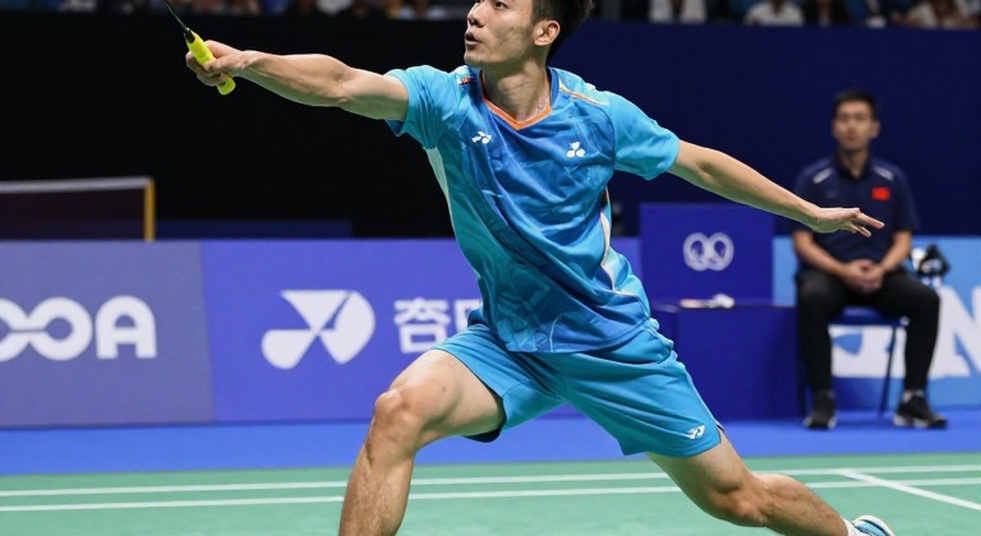
The second game ended 24-22. Nguyen Thuy Linh, Vietnam's No.1 women's singles player, had just forced Chen Yu Fei, the world No.4, into a point-for-point chase in a third-round badminton match at the 20th Asian Games. The deciding game ended 12-21. Emotion may call that progress. Data, at this stage, shows only a small sample.
On the same day, Nguyen Hai Dang stopped in the men's singles event after a straight-games loss to Kunlavut Vitidsarn, 16-21 and 14-21. These two results were not major shocks, but they raise an important question: is Vietnamese badminton really closing the gap with Asia's top players, or is it still at a level where it can only cause trouble for one game? Match data, even just game scores, is enough to draw a clear line between signal and illusion.
Based on my experience following tournaments, I have seen that a mid-ranked player can win one game against a top-4 opponent for many reasons. The opponent may ease off, the player may raise their pace, or there may be a short stretch where everything feels right. But a three-game match is a longer test. It demands physical consistency, sustained focus, and accuracy in decisive rallies. Thuy Linh's 24-22 game win was real, but the 12-21 deciding game loss immediately after it was also real.
At the Asian Games, badminton is among the most competitive sports because of the strength of China, Thailand, Indonesia, Japan, and Malaysia. For Vietnam, having two singles players in the third round is already a respectable result historically. But the way they lost at this stage is what defines their true capability.
Thuy Linh had beaten Thalita Ramadhani Wiryawan to reach the third round. Against Chen Yu Fei, she lost the first game 10-21, a score that showed her attack was smothered in long rallies. Chen Yu Fei did not need to smash hard; she just kept the shuttle deep, forced her opponent to move more, and waited for errors. In the second game, Thuy Linh changed the pace and won 24-22, but the third game returned to 12-21. The difference between 24-22 and 12-21 did not come from luck. It came from stamina and the ability to maintain technical quality under late-match pressure.
Hai Dang, meanwhile, beat Odilzhon Abdurakhmanov 21-6, 21-6, a win that needed no debate. The opponent was weaker, and he handled it cleanly. But against Kunlavut Vitidsarn, the Thai world champion, he lost 16-21 and 14-21. He did not produce a genuinely competitive game like Thuy Linh did. That shows the gap between a player with a solid base and a player in the elite group of Asian men's singles.
There is a temptation to celebrate the 24-22 game as a career turning point. I do not believe in stories built from one match. Emotion is a low-quality data point. I paid a price to learn that. If Thuy Linh keeps losing decisive games by wide margins against top-5 opponents, the so-called progress will remain a single bright spot in an unstable data set.
The real question is not whether Thuy Linh could beat Chen Yu Fei today. It is how often she can reproduce that level of competition over a season. Every system collapses; the only question is which data predicts it. For Vietnamese badminton, the development system and international competition schedule still have many gaps. A player can reach a certain level through individual talent, but to stay competitive in Super 500, Super 750, and Asian Games knockout rounds, more than one good match is needed.
Without noise, the match shows its skeleton. The skeleton of Thuy Linh versus Chen Yu Fei is: extremely close in the second game, extremely far in the third. The skeleton of Hai Dang versus Kunlavut is: good enough for the third round, not yet good enough to threaten medal contenders. This does not deny effort. It is a way of reading results through the order of data.
Institutionally, the 20th Asian Games may not offer as many BWF ranking points as World Tour events, because multi-sport continental games usually do not carry the same ranking value as Super 1000 tournaments. That means the main value of the Asian Games for mid-ranked players is experience under national-team pressure, not a sudden ranking shift. This is often missed when people compare Asian Games results with World Tour results.
On the Asian badminton map, Thuy Linh sits in the chasing group in women's singles, with a visible but not absolute gap to the top 4. Hai Dang has potential in men's singles, but the gap between him and Kunlavut remains a deep chasm in terms of consistency in multi-shot rallies. No team medals were reported in the available analysis, reinforcing the view that Vietnam relies more on individual singles players than on a deep national-team system.
One thing I want to say clearly: losing is not automatically failure. A recorded defeat is worth more than a hundred guessed victories. Thuy Linh and Hai Dang just gave analysts valuable data. They know where they stand. They can see the problem in deciding games. And they can compare their own progress in future tournaments.
However, the limits of this analysis must be stated. There is no data on shuttle speed, long-rally counts, unforced error rates, or third-game entry performance. Only game scores exist, and a two-match sample is too small for strong conclusions. I treat this as a signal note, not a verdict.
Fans may expect that one small step means an Asian Games medal is near. History owes no one allegiance. Players do not automatically improve just because they once won a game. Real progress is measured by the density of competitive matches, the ability to repeat form across three games, and performance in big tournaments.
From my perspective, Vietnam needs improvement in three areas. First, increase the number of Super 100 and Super 300 events so players can accumulate matches against closely ranked opponents. Second, build recovery and conditioning protocols for three-game matches so that deciding games do not become rapid physical declines. Third, improve in-match tactical reading, because the difference between 10-21 and 24-22 often comes down to adjustments during the short breaks between games.
For Thuy Linh, the most positive signal is not that she won one game against Chen Yu Fei. It is that she adjusted her rhythm after the first game and created a tense second game. The next question is whether that adjustment becomes a habit. If she keeps winning the second game and losing the third by a wide margin, the problem will lie in conditioning and mental preparation, not in the opponent.
For Hai Dang, the 21-6, 21-6 win over a weaker player has little predictive value. But his loss to Kunlavut showed he can score points in fast rallies rather than simply being pushed around. The gap of 16-21 and 14-21 was not a disaster, but it does not suggest he is ready to compete in the quarterfinals of a major event. He needs more matches against top-20 players, not just one match at the Asian Games.
Tactically, one detail stands out. Many mid-ranked players facing stronger opponents try to grab quick points early for psychological momentum, but that often leads to more errors over time. Thuy Linh did not do that. She lost the first game quickly and then found her rhythm in the second. That shows good match-reading instincts, but not enough to sustain a full three-game contest. Against a player like Chen Yu Fei, forcing a chase in the second game is a necessary experience. For Thuy Linh, the question is whether she can start a match with that rhythm from the very first point.
At the system level, a player who wants to enter the top 20 needs an average of 15 to 20 matches per year against top-30 opponents. That number is hard for Vietnam to reach if the international schedule still depends on one or two major events per quarter. The Asian Games, therefore, is only one checkpoint. Its value lies in showing where Vietnamese players are in the Asian picture, not in creating an immediate ranking milestone.
Finally, let us talk about media. Heroic-loss stories are always easier to write than structural analysis. But the task of a sports article is not to feed illusions; it is to explain the gap between results and capability. Data is quieter than belief, but it never lies in its final accounting. Fans may remember this match through the 24-22 game. I choose to remember it through the 12-21 game, because that is where the truth of the match lies.
This article does not conclude that Vietnamese badminton is on the wrong path. It only says the road ahead is long and should be measured by data, not emotion. The next rounds of Thuy Linh and Hai Dang, whether at the national championships or upcoming World Tour events, will say more than any praise offered today.
Cầu thủ liên quan
Bài đề xuất
Vietnam's Women's Badminton After Nguyen Thuy Linh: The Money-and-Ranking Equation2026-09-19
21-17, 21-9: the raw data behind An Se-young's second Asian Games gold2026-10-05
Asian Games 2026 Men's Singles Final: Loh Kean Yew, Kunlavut Vitidsarn and the Battle for Tempo2026-09-30
23 Minutes, 16 Points and a Vacuum No One Fills: Mahoor Shahzad and the Systemic Problem of Pakistan's Women's Badminton2026-09-27
When the Spatial Door Closes: The Unsolvable Equation of Chinese Men's Singles Badminton at Kumamoto2026-10-04
Bài đề xuất
2026 Asian Games: Why China's Badminton Team Lowered Its Target to Two Gold Medals2026-10-02
Kunlavut Vitidsarn and the Historic Treble at the Asian Games 2026: What the Data Told Before the World Looked2026-10-01
Alwi Farhan Trains with Kento Momota Ahead of Asian Games 2026: The Lesson Lies in What Nobody Wrote2026-10-02
Satwik–Chirag and India's First China Masters Title: Five Points of Surge After Three Finals at the Door2026-10-06
Asian Games 2026: PV Sindhu loses to Chen Yufei 1-2 in women's singles badminton quarter-final2026-09-28